Top 100 (are on this page)
Page 1 (this page) is here, page 2 here, and page 3 here. Other pages have Tetrarchal, Constantinian, and late Roman coins.
In the list here, coins 1-10 are marked @, 11-25 are marked #, 26-100 are marked * or • .
Top coins, chosen with the criterion: I'm glad I have them.
They please me, considerating what I have been attempting to do with my collection. Some are common but important types. Most have historical interest, some have rarity, and some are in remarkable condition.
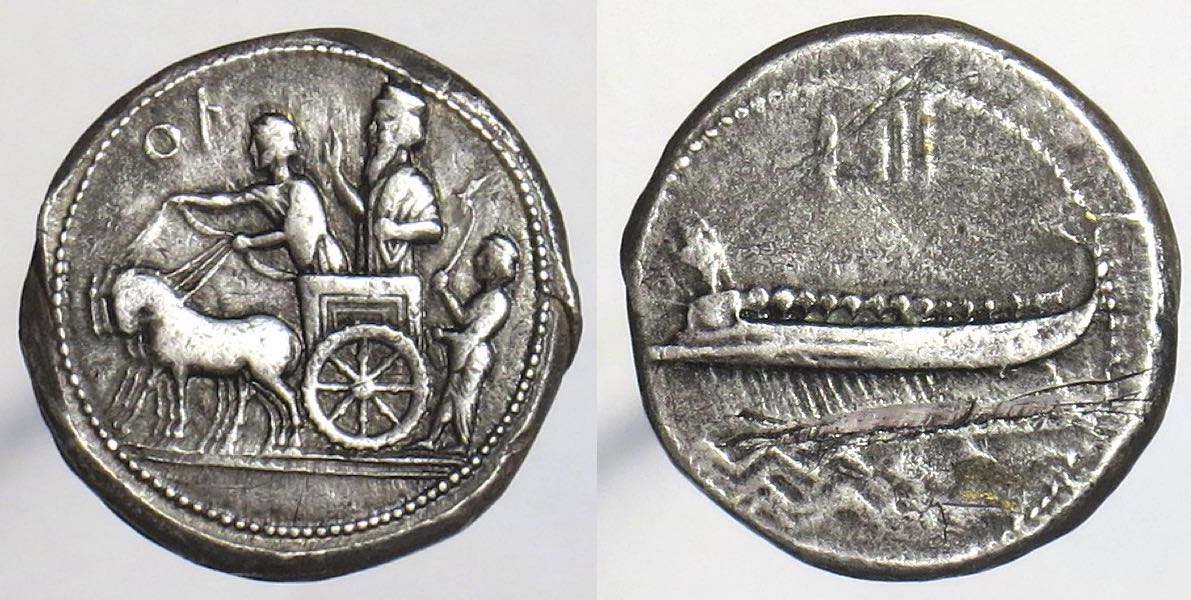
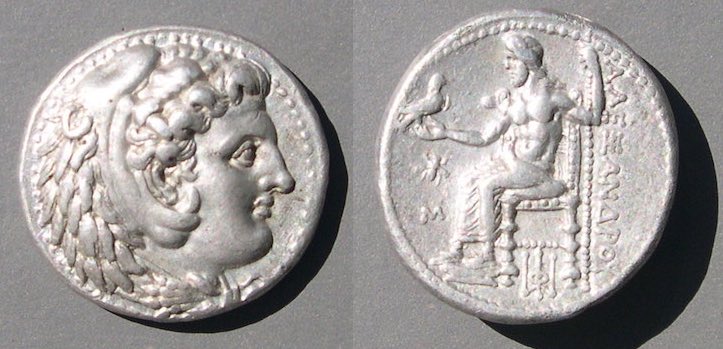
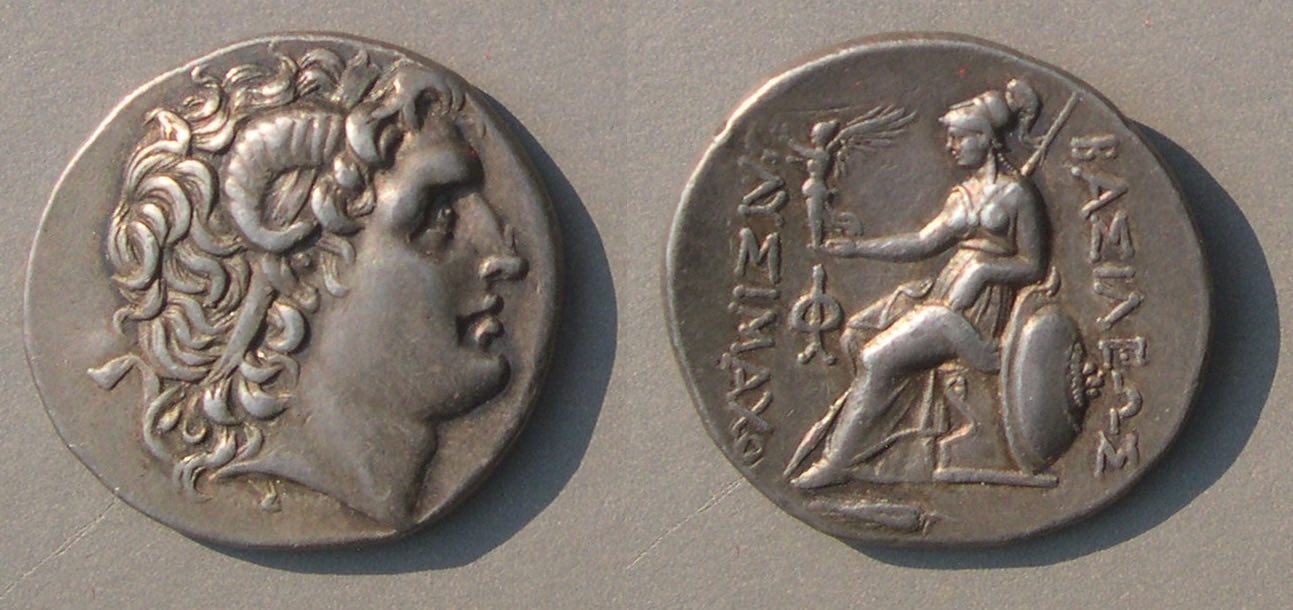
Greek cities and kings: (Cities) Poseidonia in Lucania • , Sybaris # , Taras dolphin • , Akragas (Agrigentum) • , Athens owl @, Corinth pegasus • , Perseus with Medusa from Amisos in Pontus • , Neopolis in Macedonia, Pantikapaion • , Pantikapaion • , Macedonia under the Romans, Macedonia AESILLAS Q • , Cyzicus lion obol • , Lydian bull and lion * , Tarsos in Cilicia with Hercules 3/4 facing • , Mallos with Satrap in Cilicia * , Phoenicia Sidon double shekel @ , (Kings) Alexander the Great @ , Lysimachos # , Attalus I of Pergamon # , Hieron II of Syracuse • .
Oriental Greek: Sasanian: Shapur I *, Khusru II • , Bahram II • , Parthian: Mithradates I • , Phraatakes/Musa * , Kidarites facing bust •
Celtic: Corosolite *, Bolskan AE in Spain • .
Roman
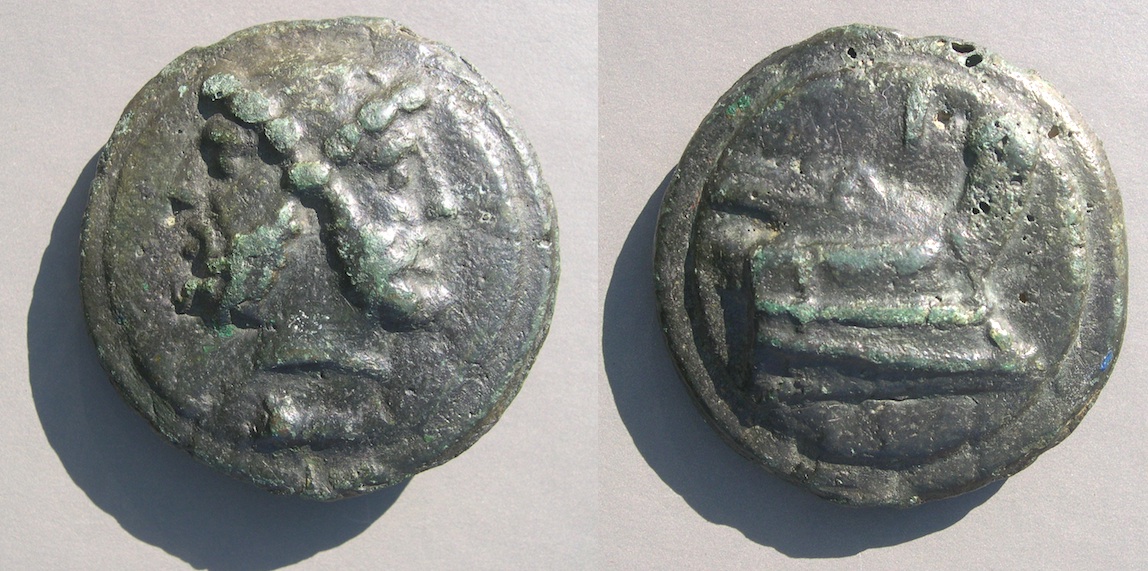
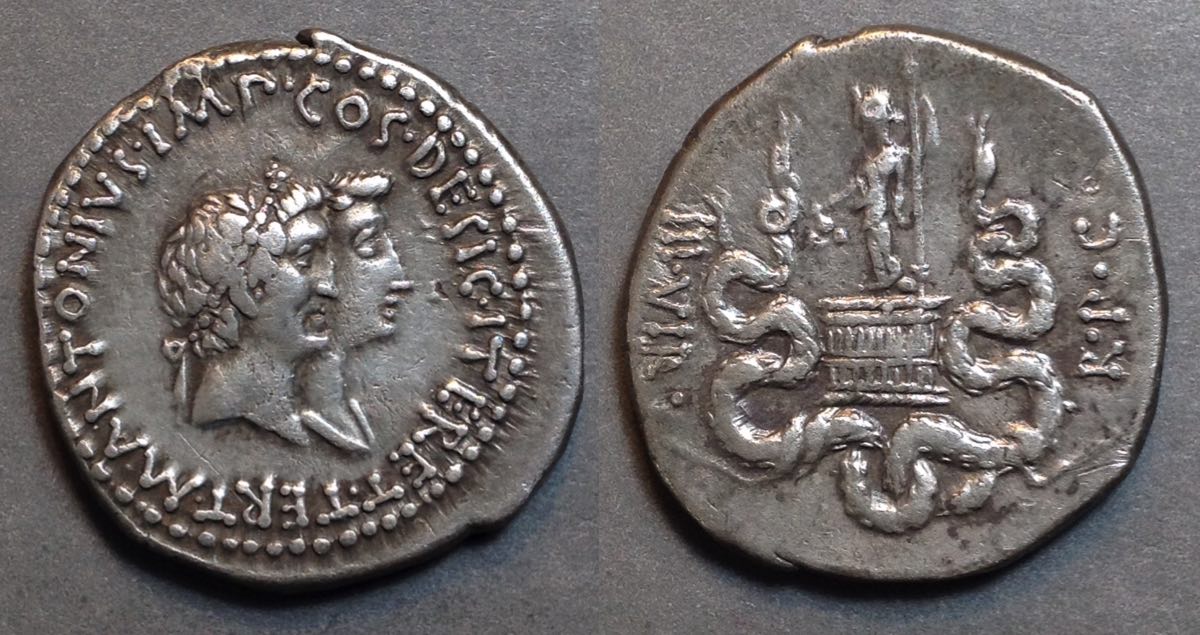
Republican: Janus as @, Janus quadrigatus *, sphinx • , Muse of Astronomy • , FAVSTVS for Sulla • , gladiators battle animals # , Brutus *, Julius Caesar elephant #, Julius Caesar portrait *, Marc Antony and Octavia #
Imperial and provincial
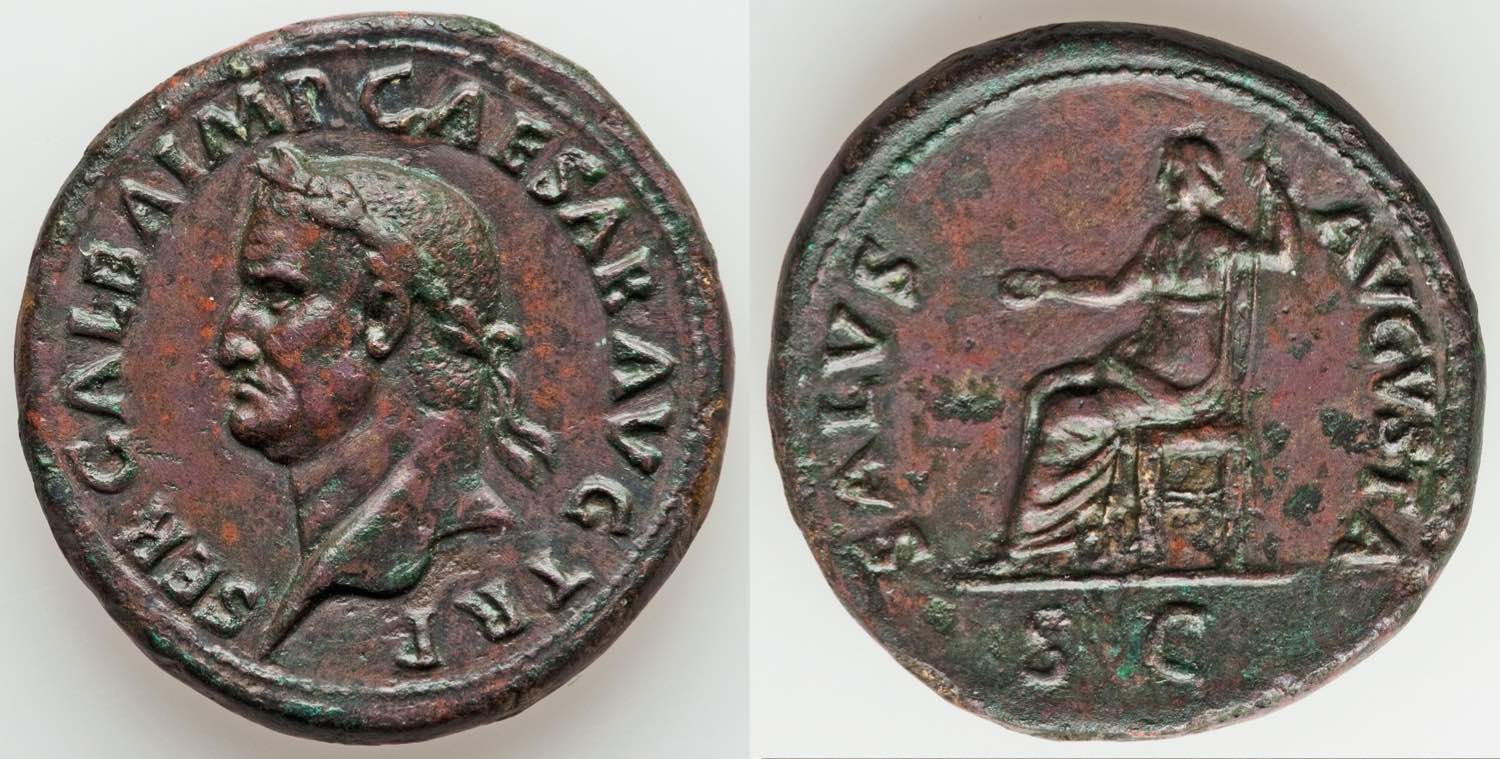
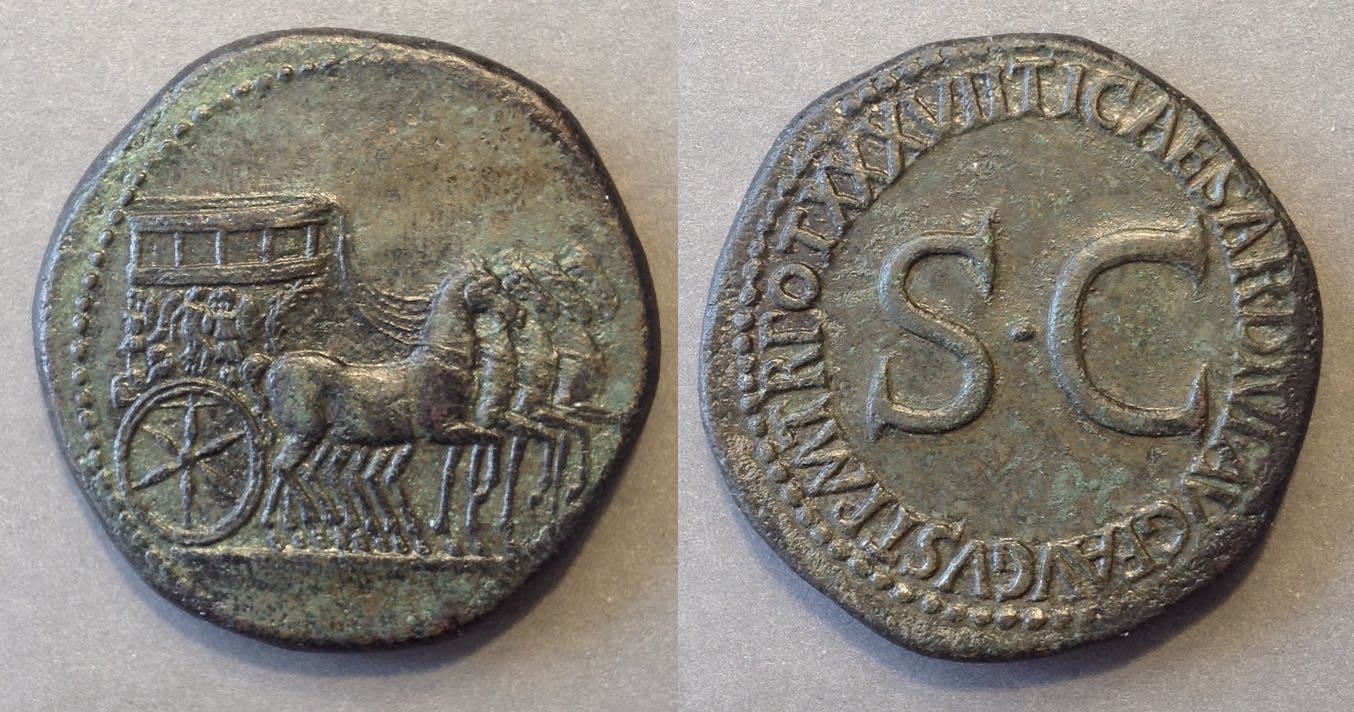
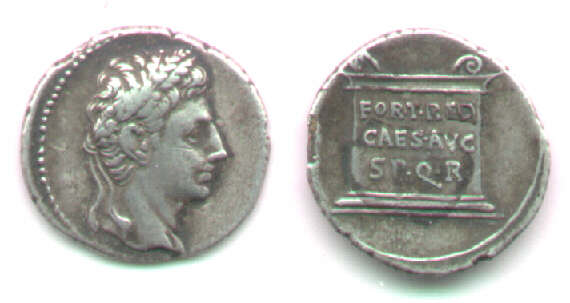
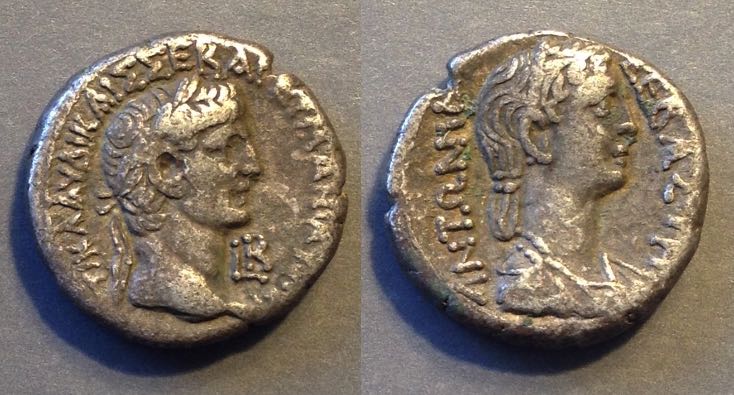
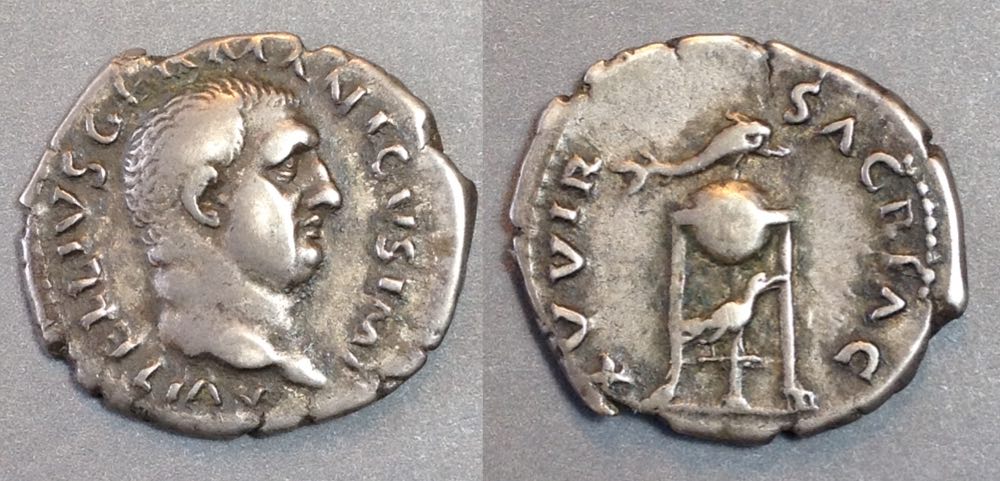
First Century: Augustus/comet • , Augustus fourree • , Tiberius sestertius # , Claudius/Antonia • , Galba sestertius @ , Vitellius denarius •
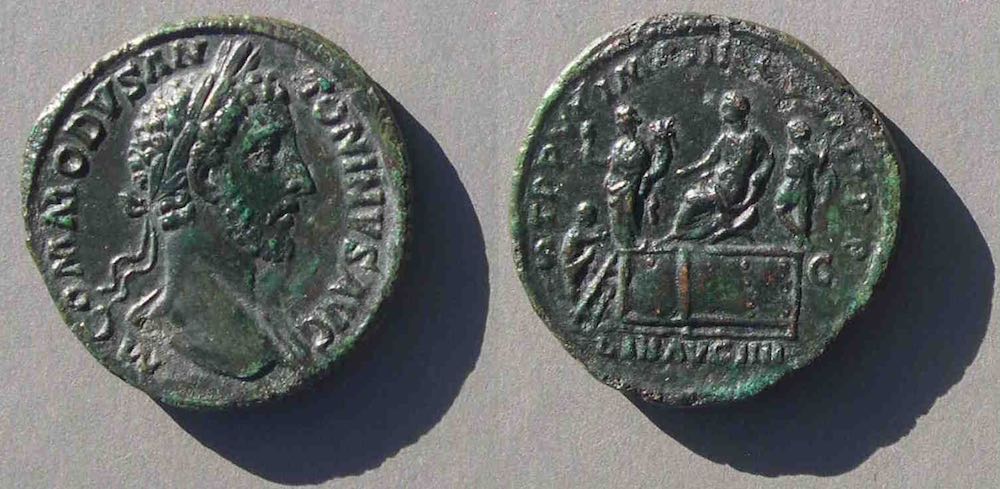
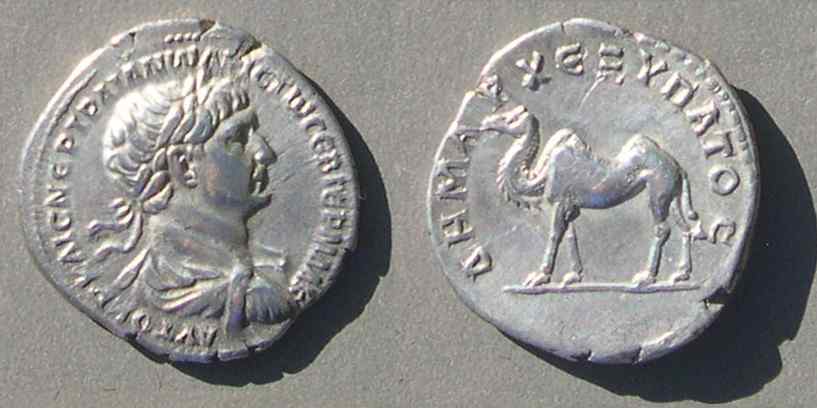
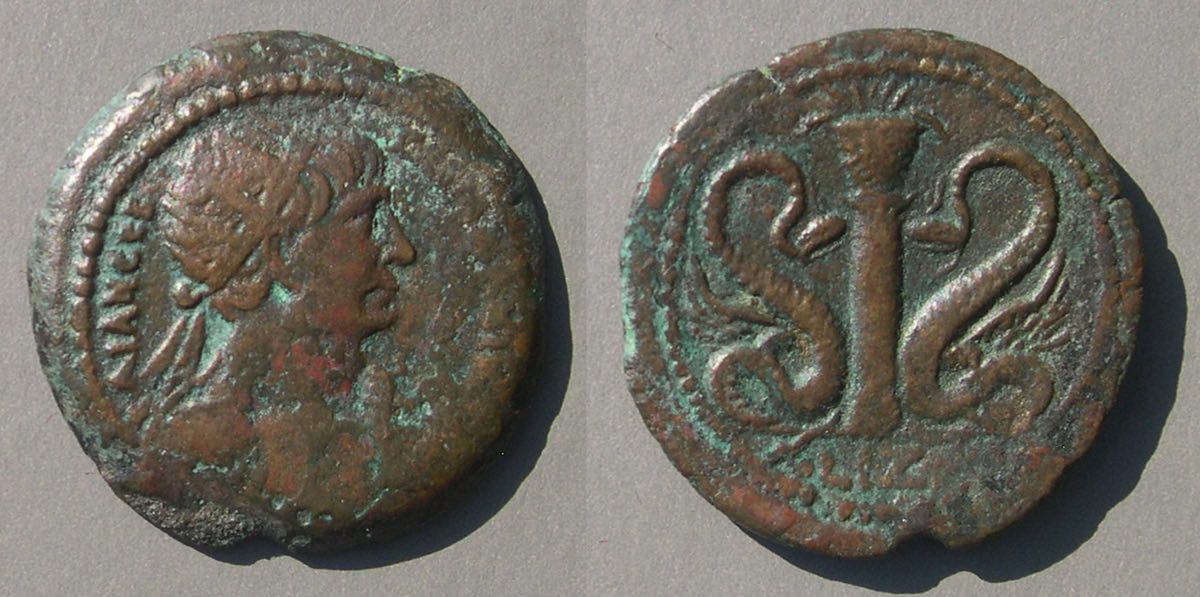
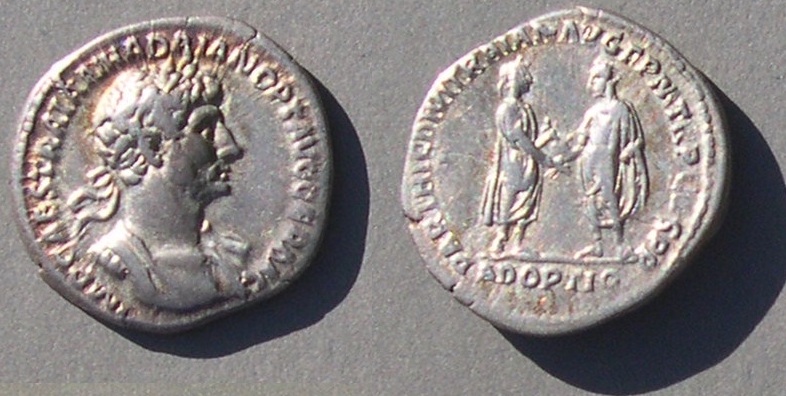
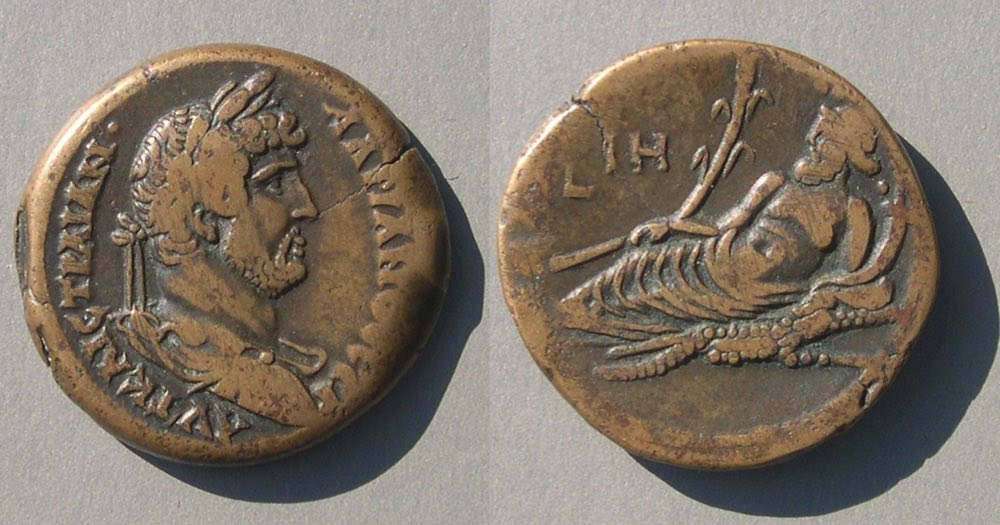
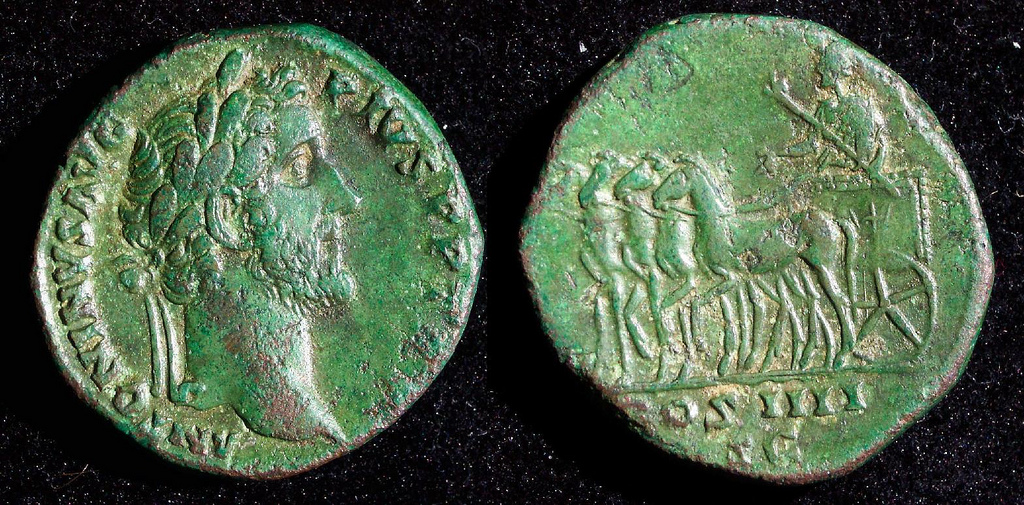
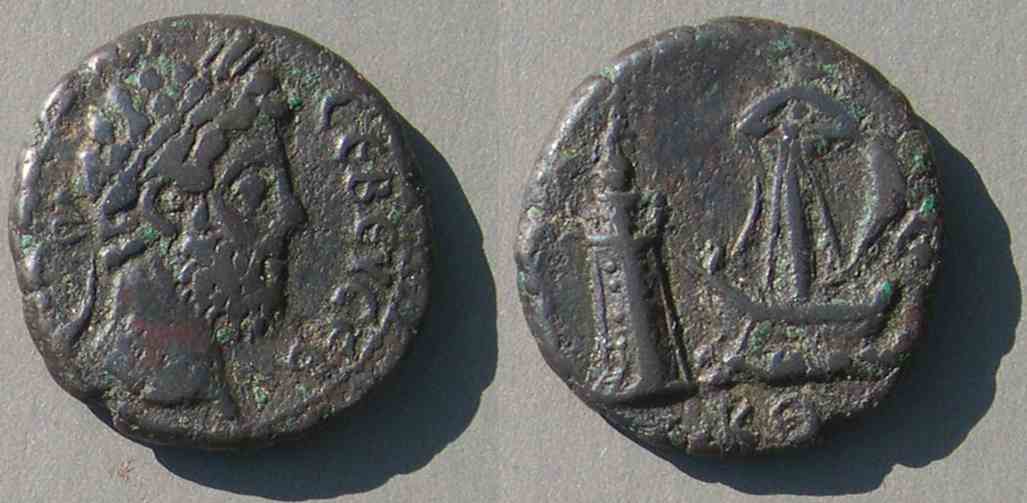
Second Century: Trajan/DANVVIVS, Trajan sestertius PROVINCIA DACIA *, Trajan sestertius MESOPOTAMIA *, Trajan camel *, Trajan elephants • , Trajan column and snakes • , Hadrian ADOPTIO • , Hadian/Nilus * , Antoninus Pius green sestertius • , Commodus sestertius @, Commodus AE37 of Aegeae in Cilicia *, Commodus lighthouse of Alexandria • .
Third Century (193ff): Septimius Severus at Antioch in Pisidia/Mēn • , Clodius Albinus *, Macrinus and Diademenian of Marcianopolis • , Elagabal Chariot ELAGAB • , Severus Alexander sestertius PROFECTIO * , Gordian I * , Gordian II * , Trajan Decius double sestertius • , Tetricus I • , Aurelian golden toned ORIENS AVG • , Otacillia Severa sestertius with Hippo *, Probus VOTIS X ET XX FEL • , Tacitus XI denomination • , Tacitus IA denomination • , Magnia Urbica •
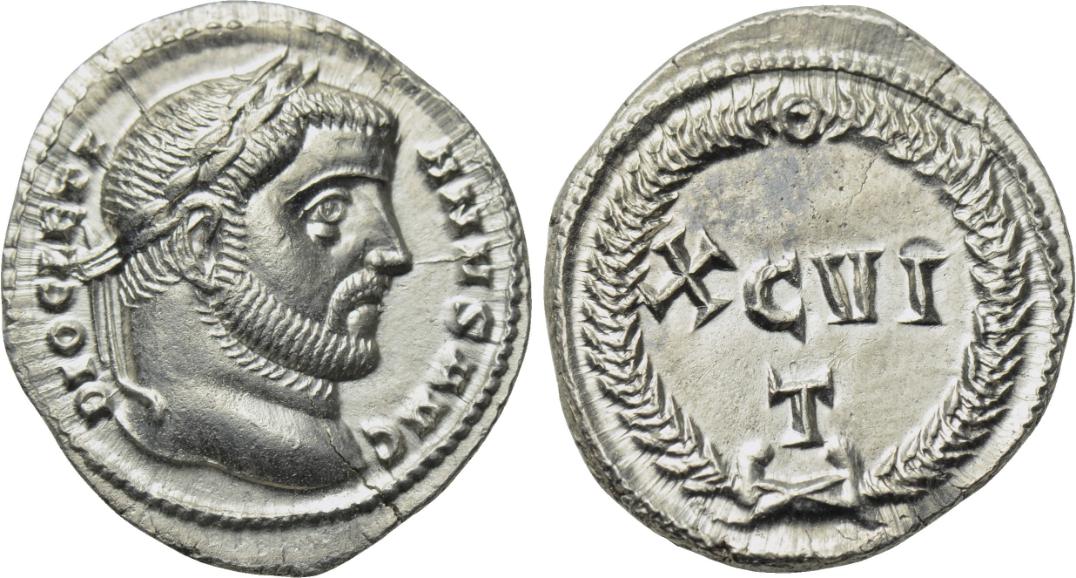
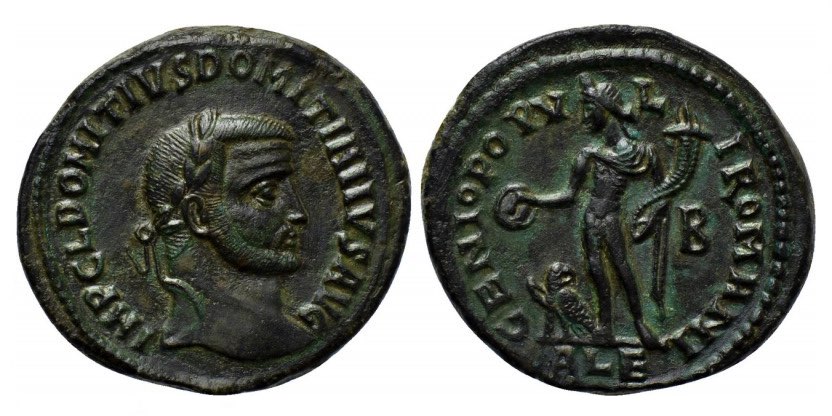
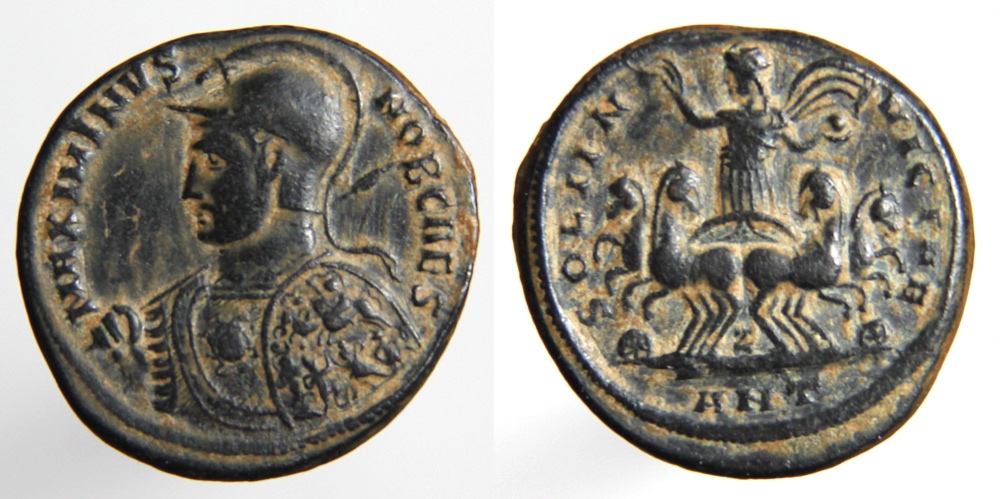
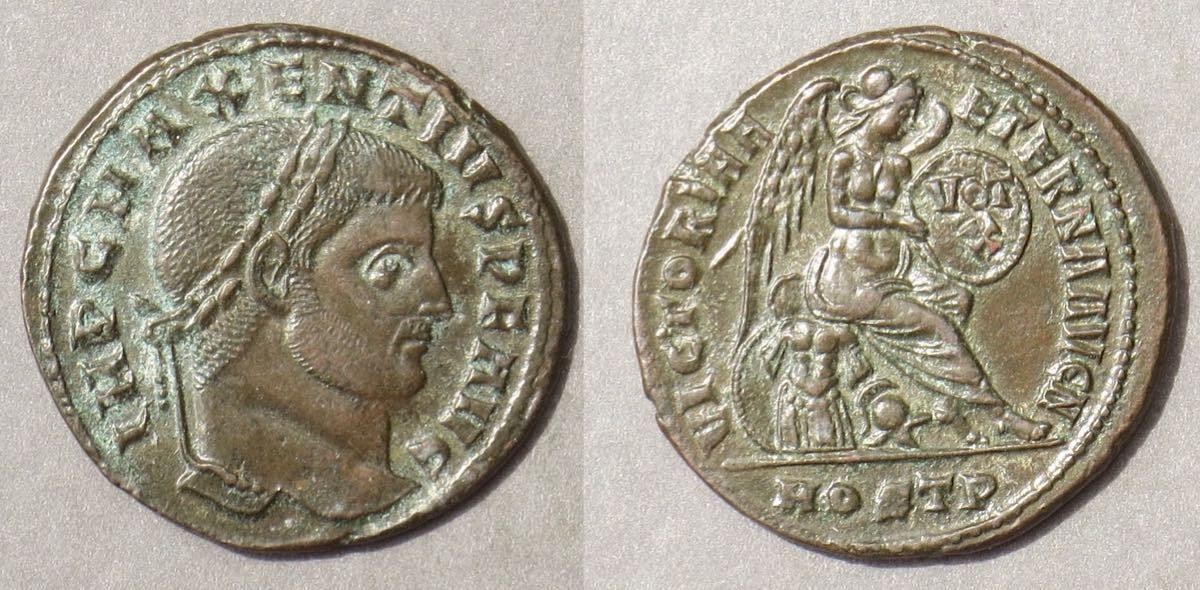
Tetrarchal: Diocletian helmeted bust left • , Diocletian argenteus XCVI @ , Maximian helmeted bust left from London * , Maximian portrait from London * , Maximian argenteus ALE * , Domitius Domitianus # , Severus II PERPETVITAS AVGG # , Maximinus II SOLI INVICTAE facing chariot # , Maxentius VOT X #
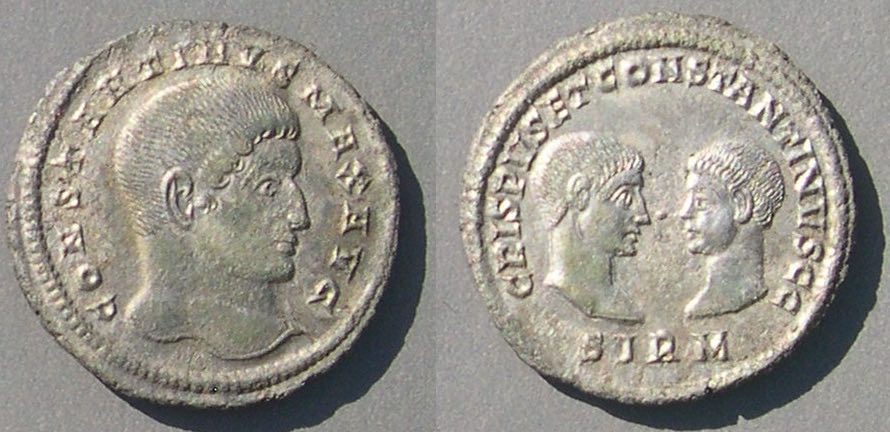
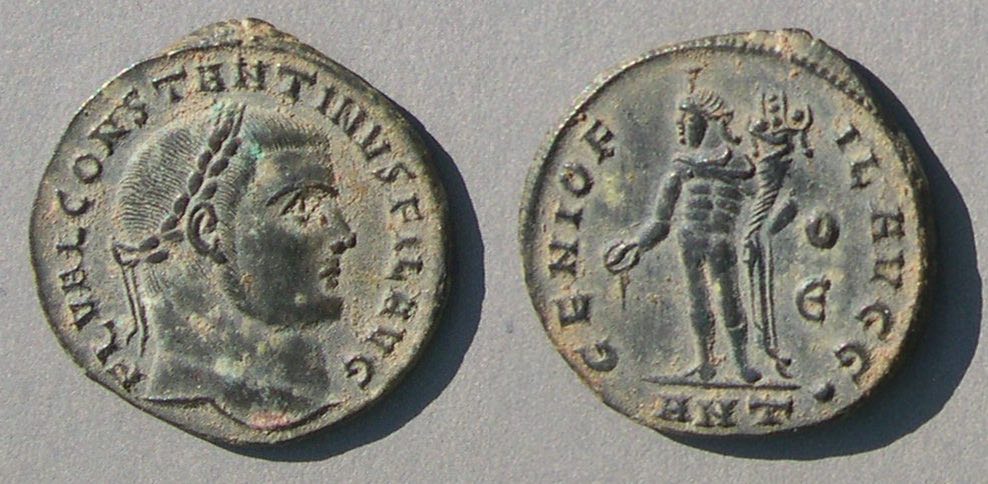
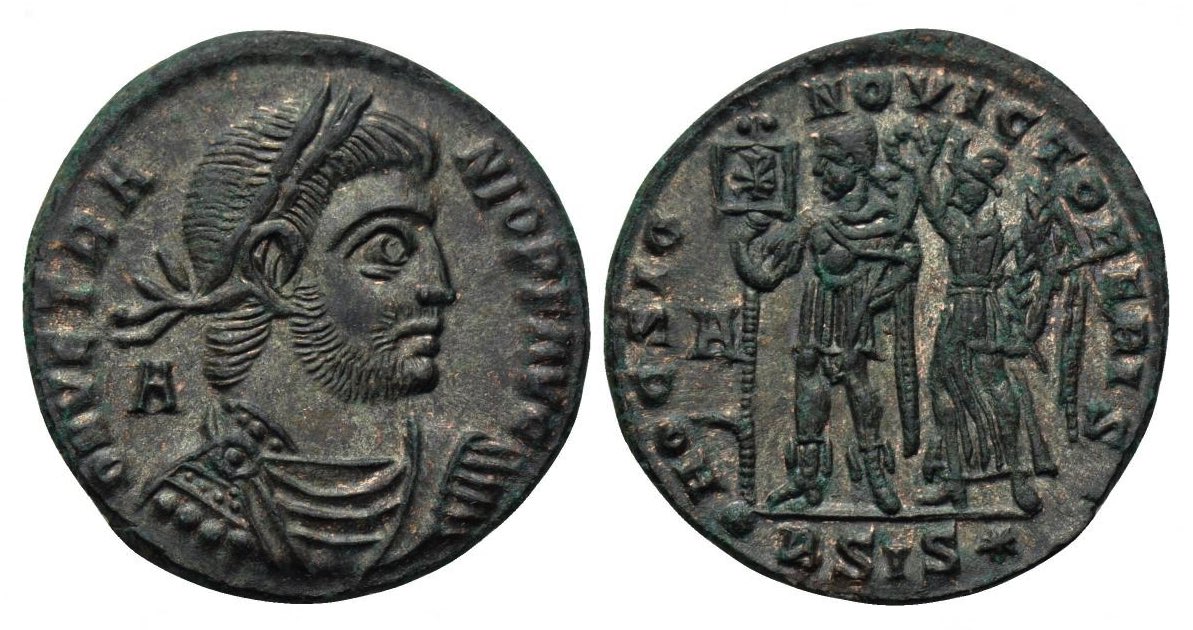
Constantinian: Constantine AR with Crispus and Constantine II @, Constantine GENIO FIL AVG # , Constantine SPES PVBLICA @ , Crispus with chi-rho shield @ , Constantine with chi-rho between standards • , VRBS ROMA • , CONSTANTINOPOLIS • , Vetranio/HOC SIGNO VICTOR ERIS # , Magnentius chi-rho • , Constantius II rider spearing two foes * , Constantius II soldier-spearing-fallen-horseman • .
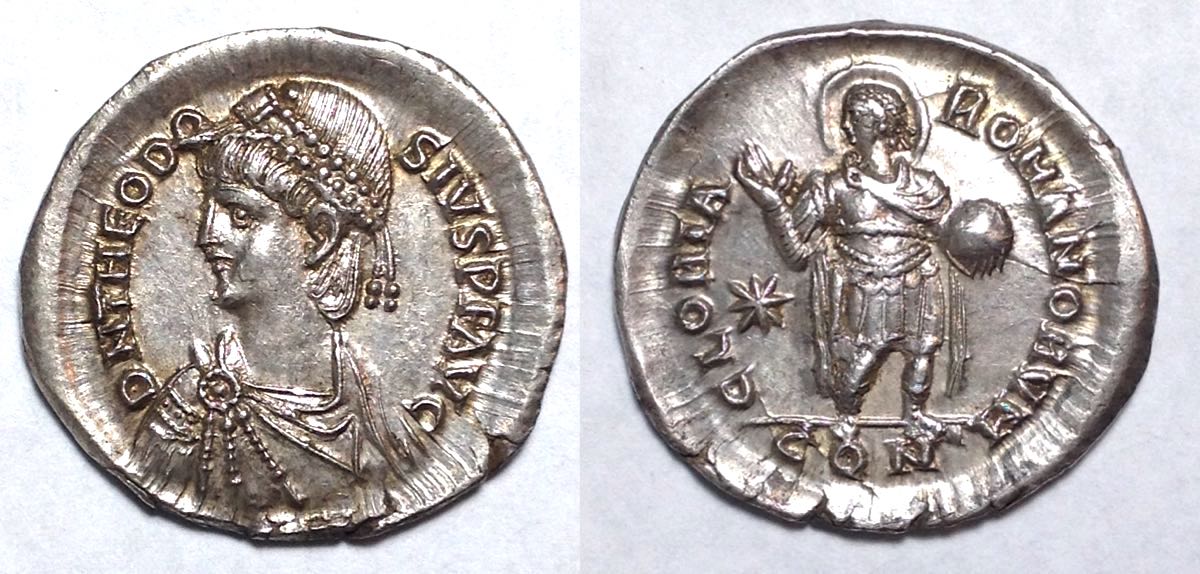
Later Roman: Theodosius II miliaresion # , Valentinian III AE2 • , Verina AE2 * .
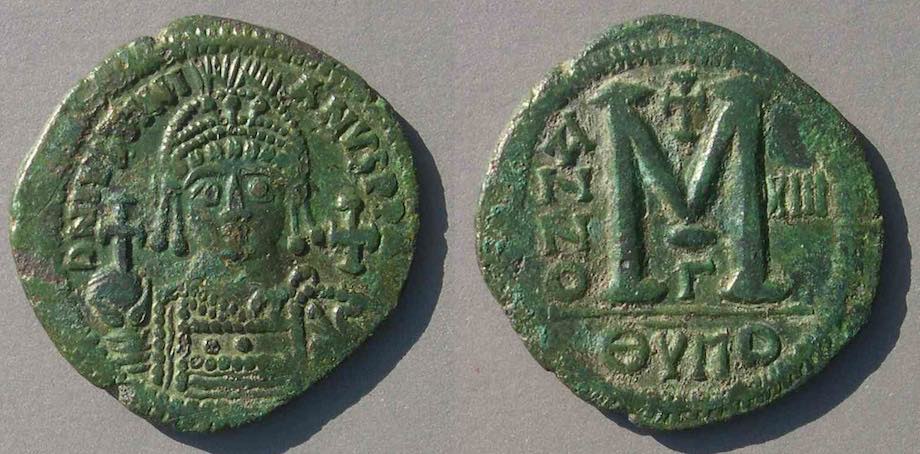
Byzantine: Justin I unique with cross and star • , Justinian year 12 at Nikomedia * , Justinian year 13 at Antioch • , Tiberius II XXX • , Cherson K • , Cherson Δ • , anonymous follis brockage #
Arabic: Turkoman Constantine type *
Top 10
Athens owl, Phoenicia Sidon double shekel, Alexander the Great, Janus as, Galba sestertius, Diocletian argenteus XCVI, Domitius Domitianus, Constantine AR with Crispus and Constantine II, Crispus with chi-rho shield, Constantine SPES PVBLICA, Theodosius II miliaresion.
Top ten not ranked, rather in the usual order seen in catalogs (i.e. Greek, then other eastern cultures, then Roman).
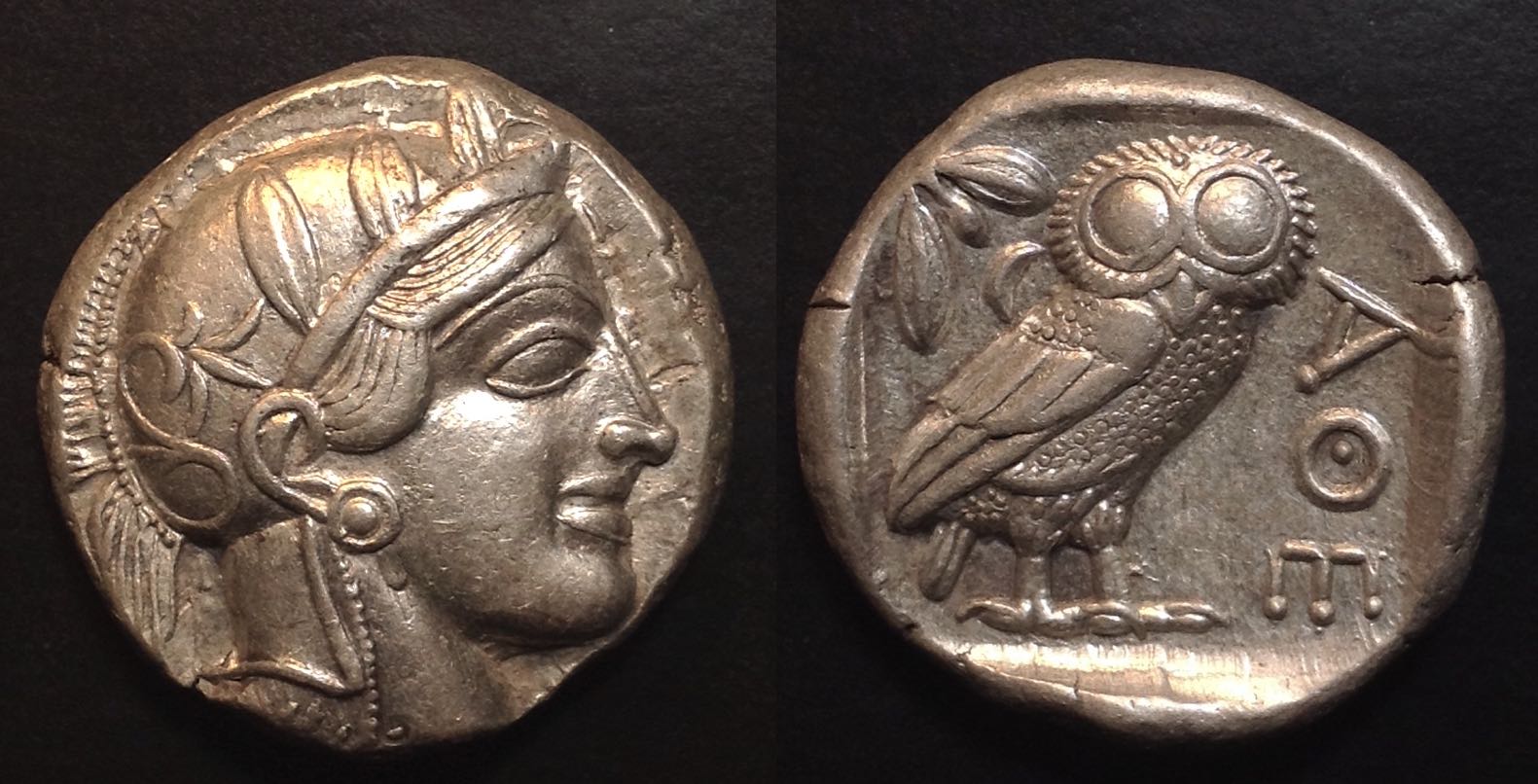
Athens owl.
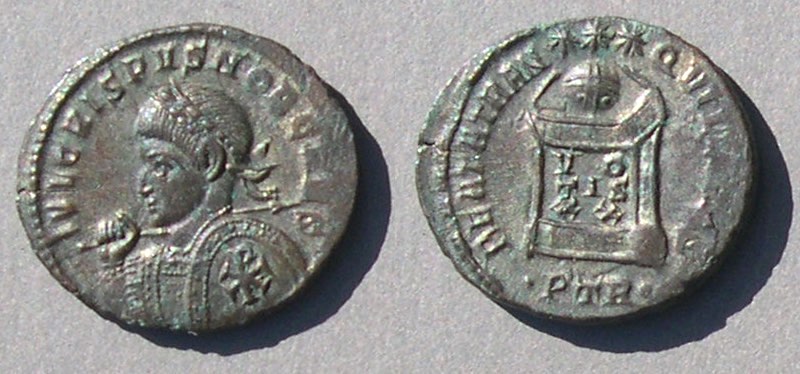
Crispus
The first type with a chi-rho on the shield.
Extremely rare.
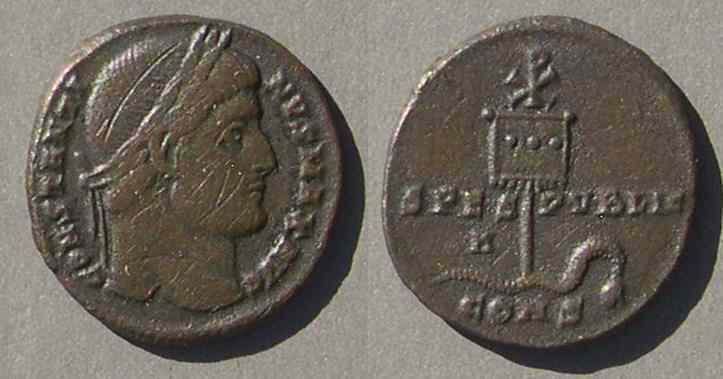
Constantine
SPES PVBLIC
A
Coins 11-25
Coins 11-25 in the usual order seen in catalogs (i.e. Greek, then other eastern cultures, then Roman), not ranked.
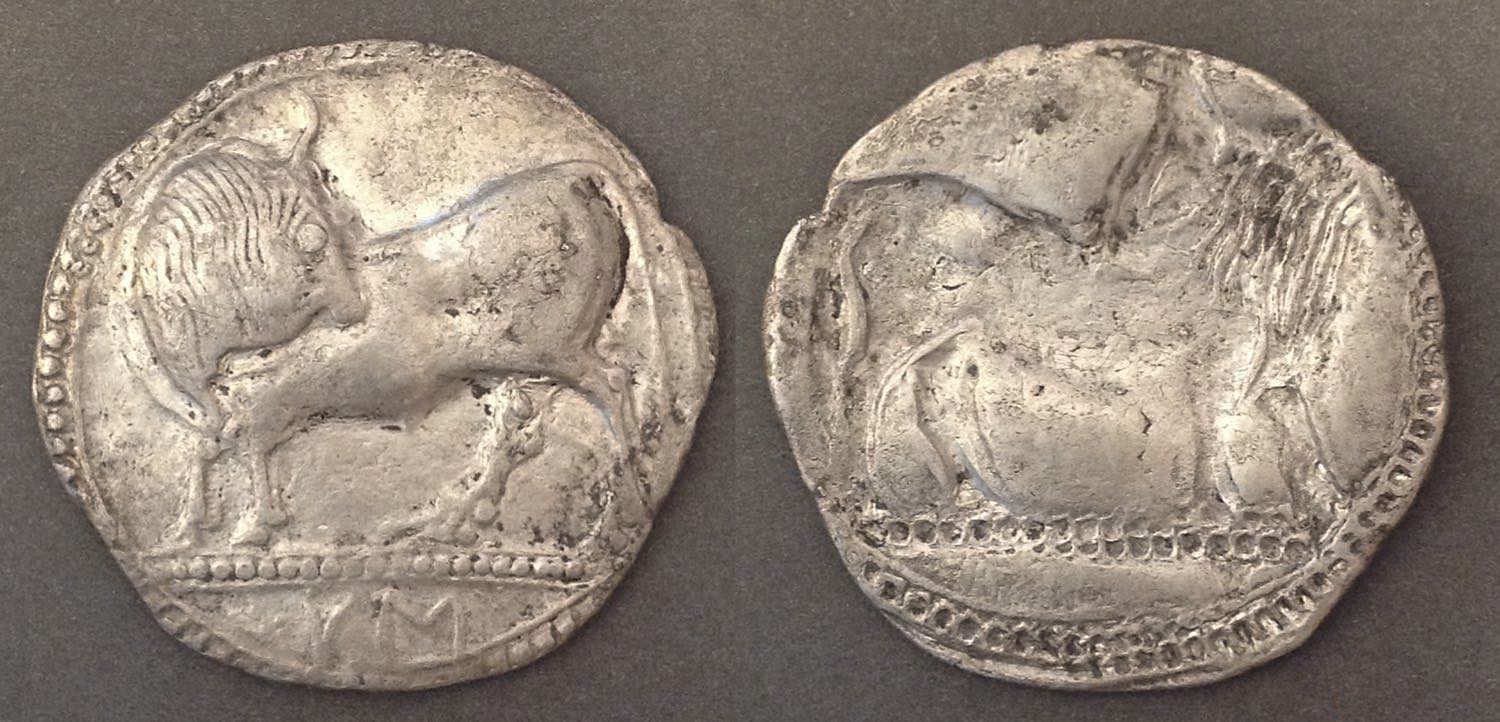 Sybaris
The first type used by a city in Italy.
Bull left, head back/incuse of the same type
Lysimachos of Thrace
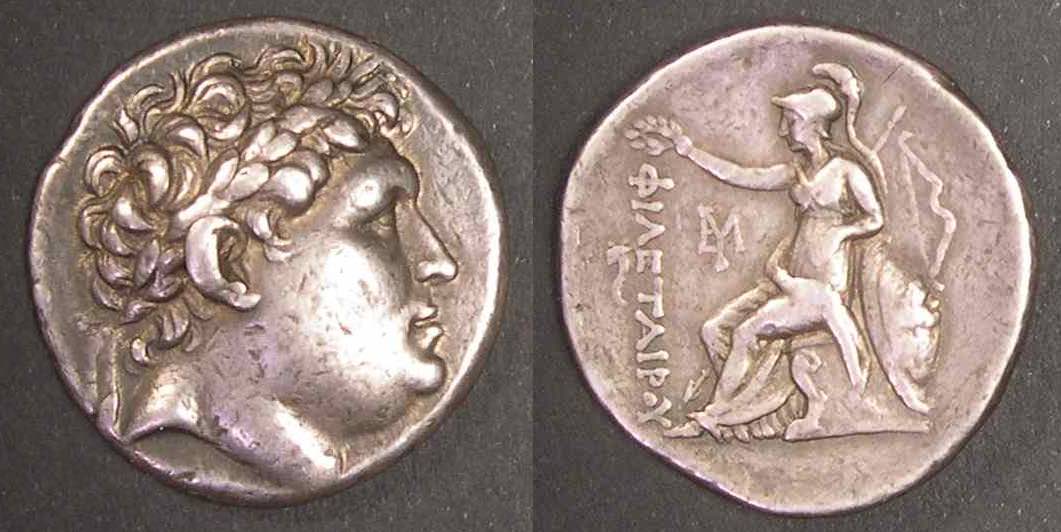
Attalus I of Pergamon with a portrait of Philatarios
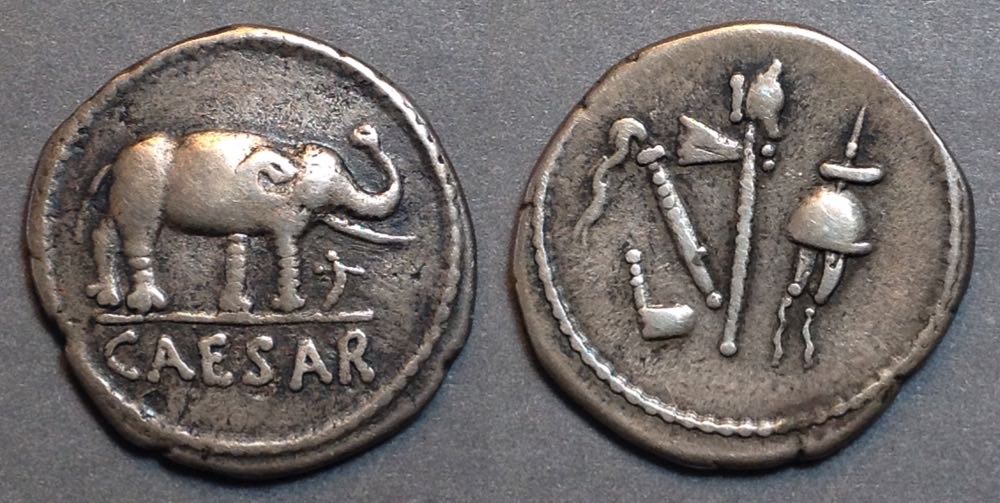
Julius Caesar
Elephant
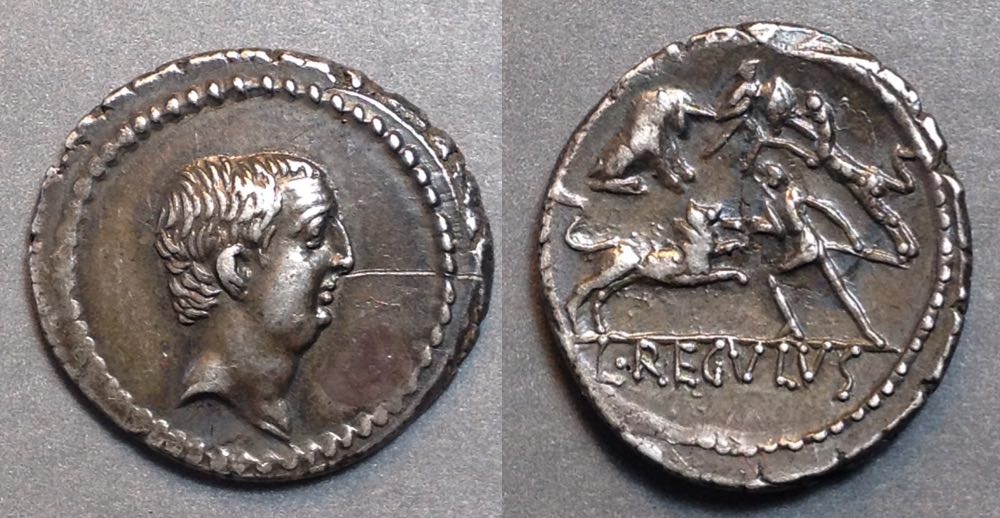
Roman Republican
The only Roman Republican type clearly depiciting games
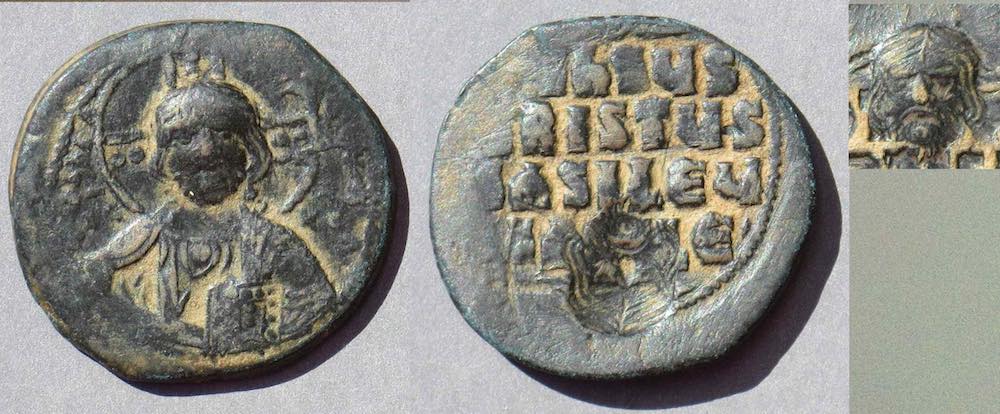
Amazing brockage restrike
The finest and most interesting brockage restrike I have ever seen, with the bust of Christ in such high relief that the brokage incuse image of it was not erased by the restrike.
Coins 26-100 (not ranked, rather in the usual catalog order) *
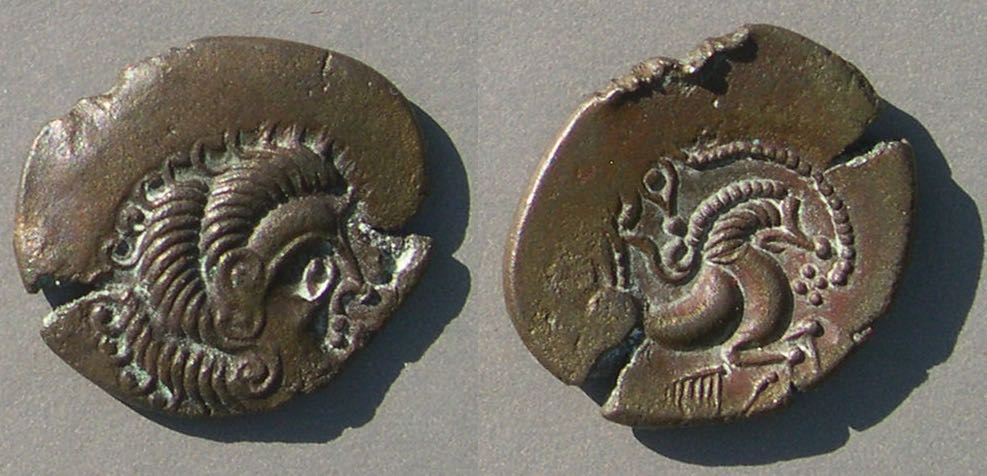
Celtic. Corosolite Tribe
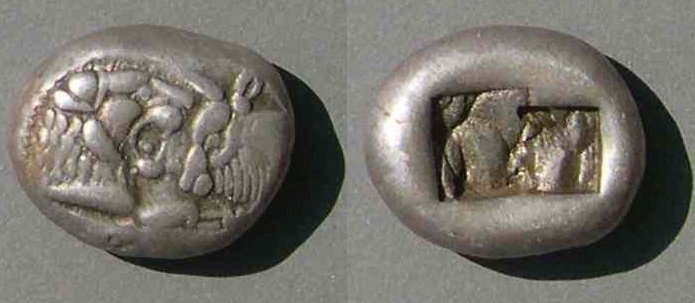
Lydian Kingdom
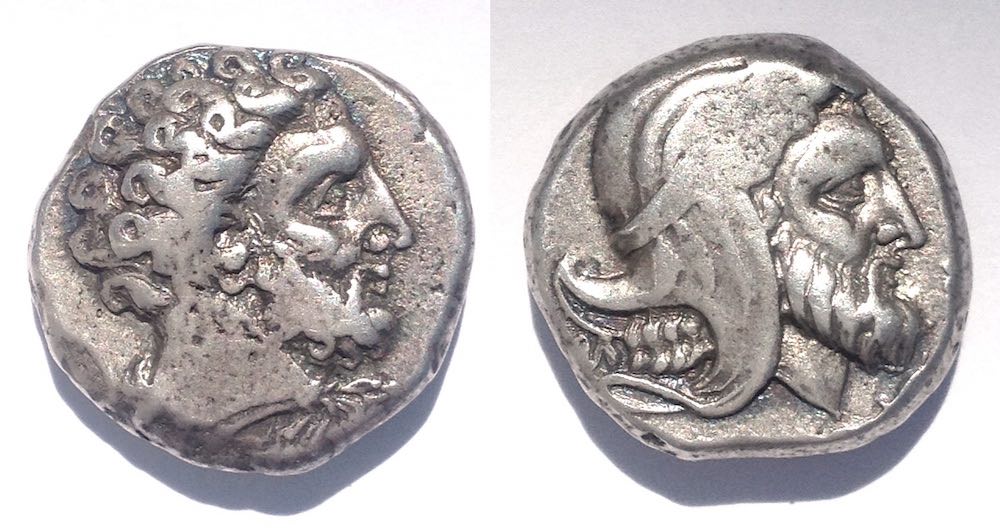 Mallos, Cilicia
Early portrait coin.
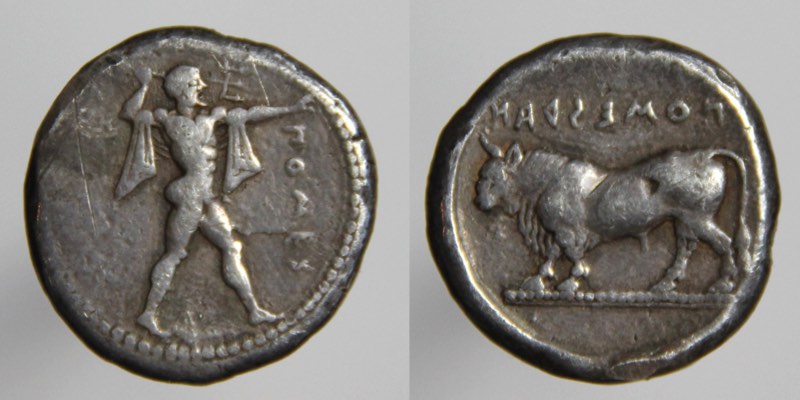
Poseidonia in Lucania
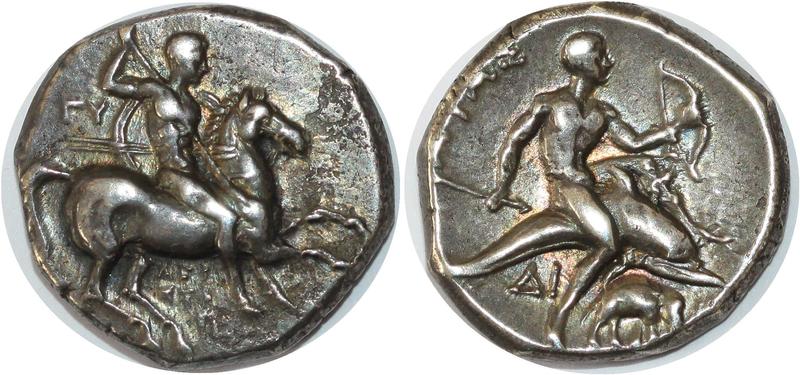
Taras
"Boy on a dolphin"
Elephant of Pyrrhus (of "Pyrrhic victory" fame)
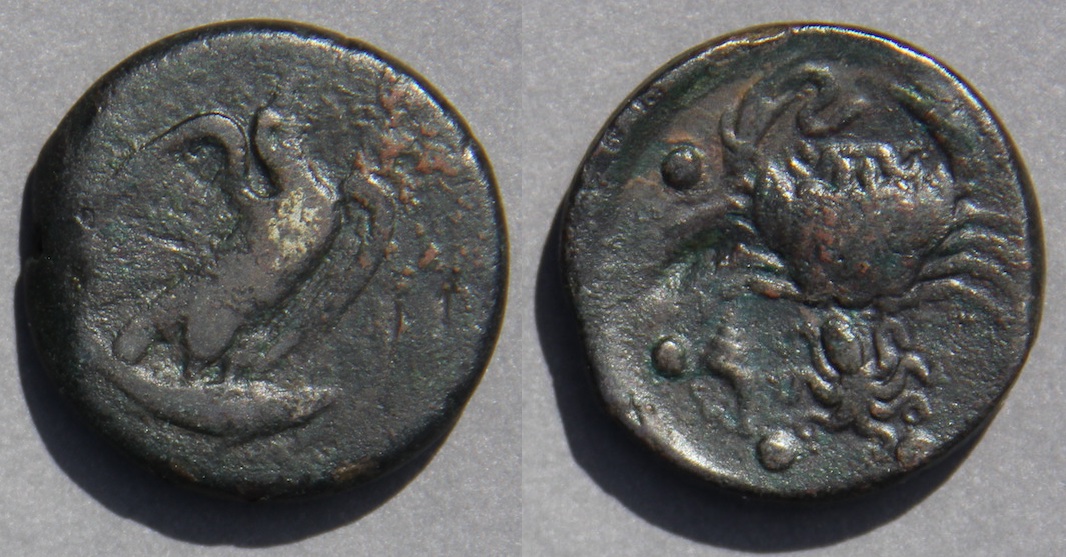
Akragas, Sicily
Five seafoods on one coin!
Crab, eel, octopus, conch, and fish.
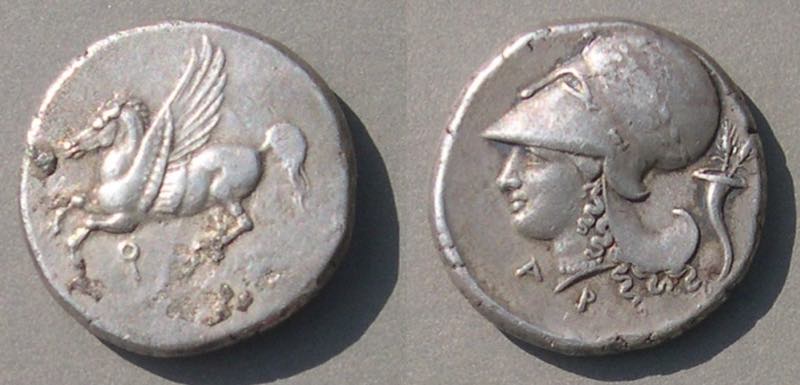
Corinth
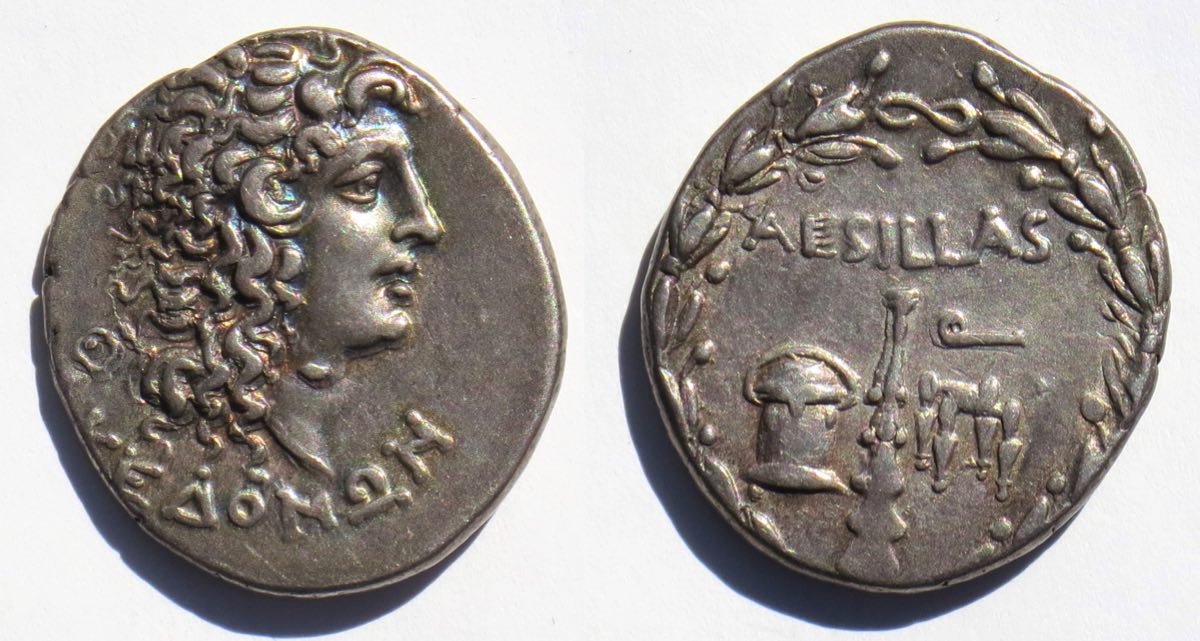
Macedonica under the Romans
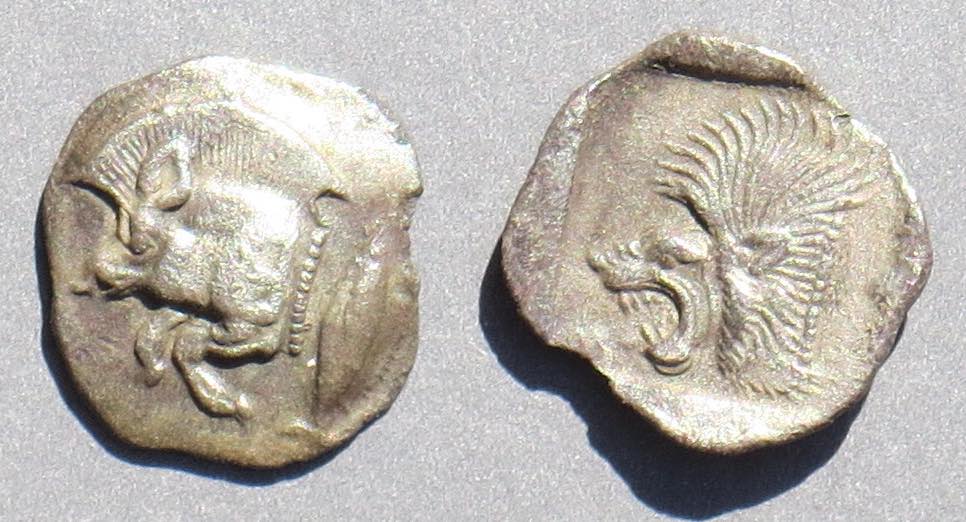 Mysia, Cycicus
Obol.
A very common type with a splendid rendering of the lion.
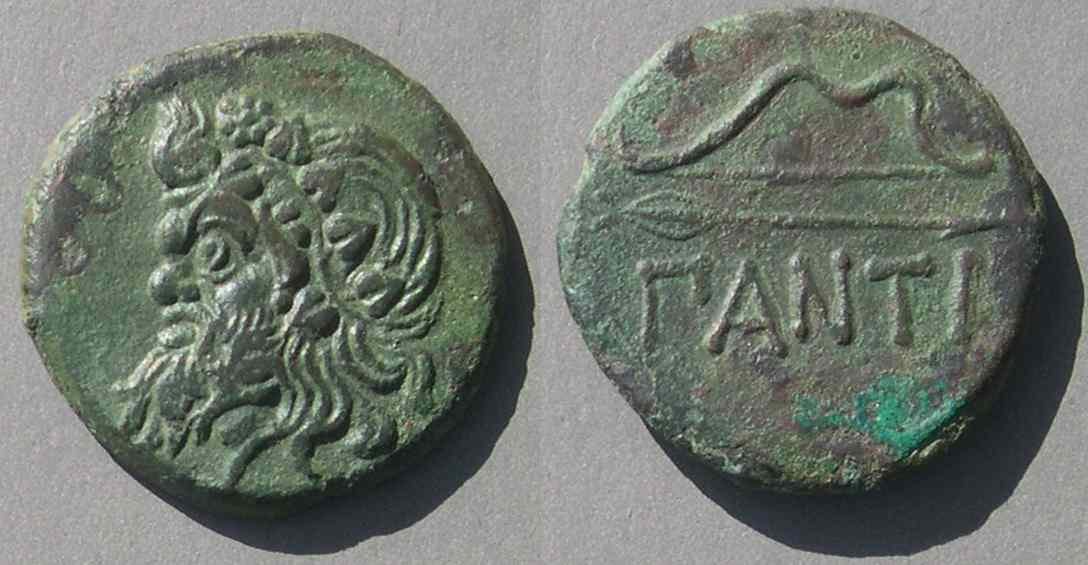
Pantikapaion
c. 340-325 BC
28 mm (2-4 mm larger than most of this type). 12.73 grams.
Head of bearded Pan left
Bow over arrow right over ΠANTI
Lovely green patina and not tooled and smoothed (many from the north Black Sea region are).
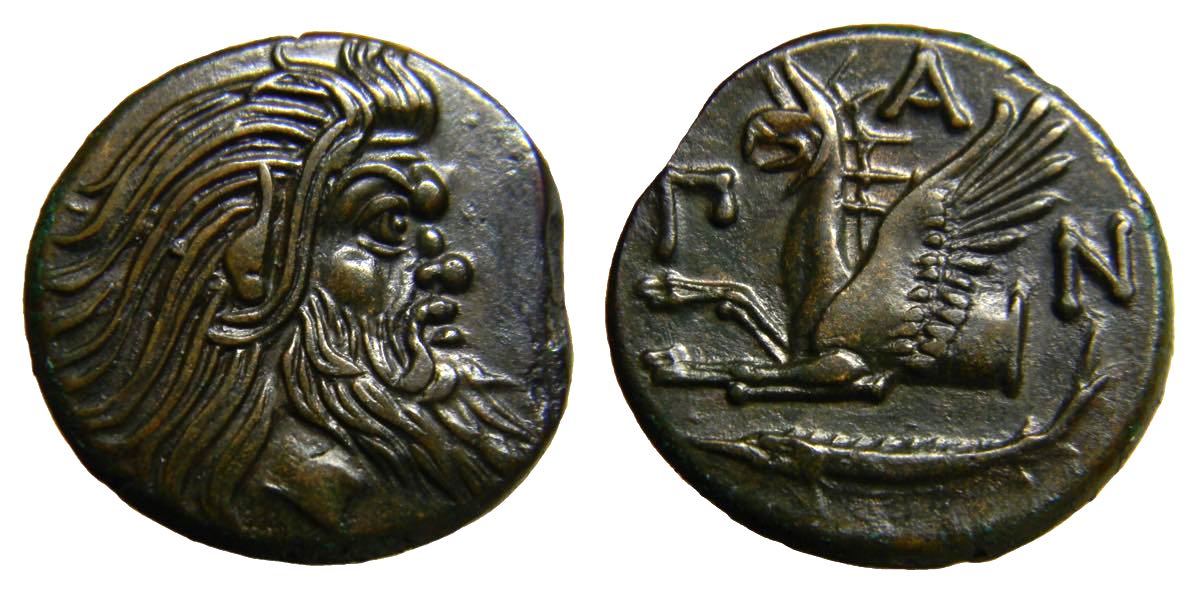
Panticipaeon
North Black Sea region
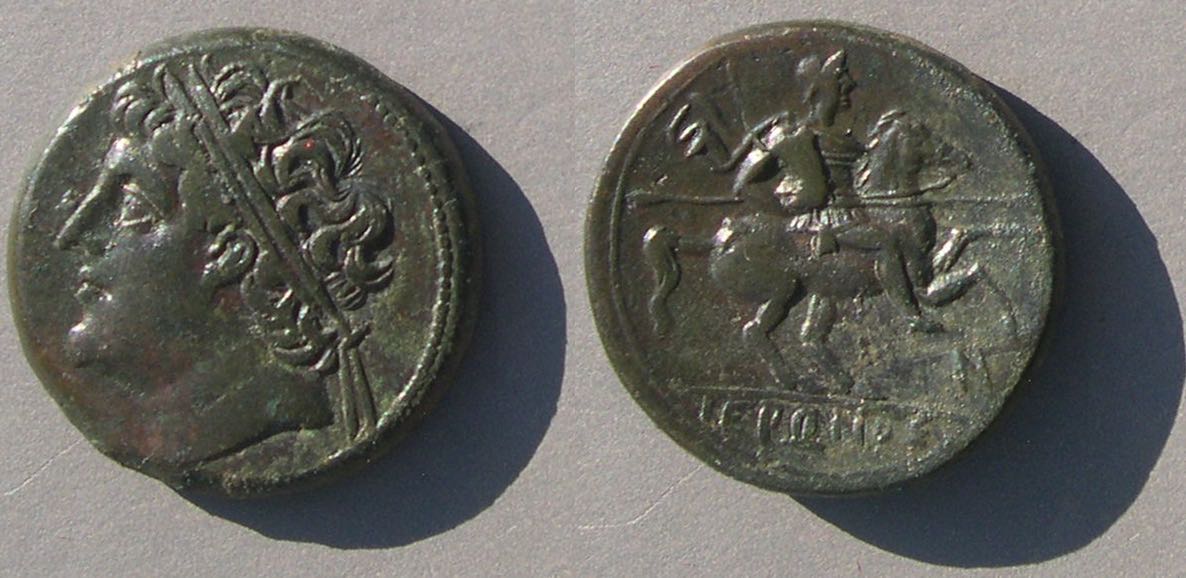
Syracuse
Hieron II
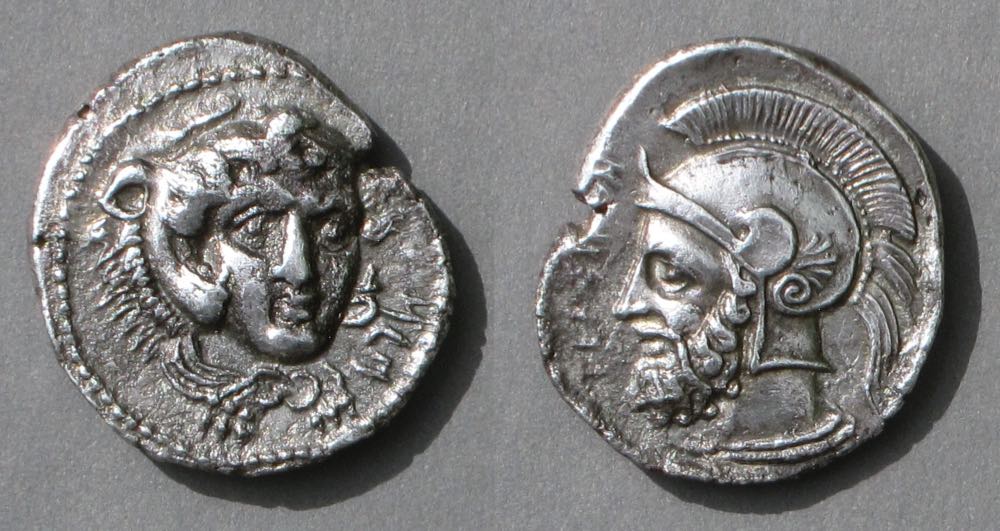
Tarsos, Cilicia
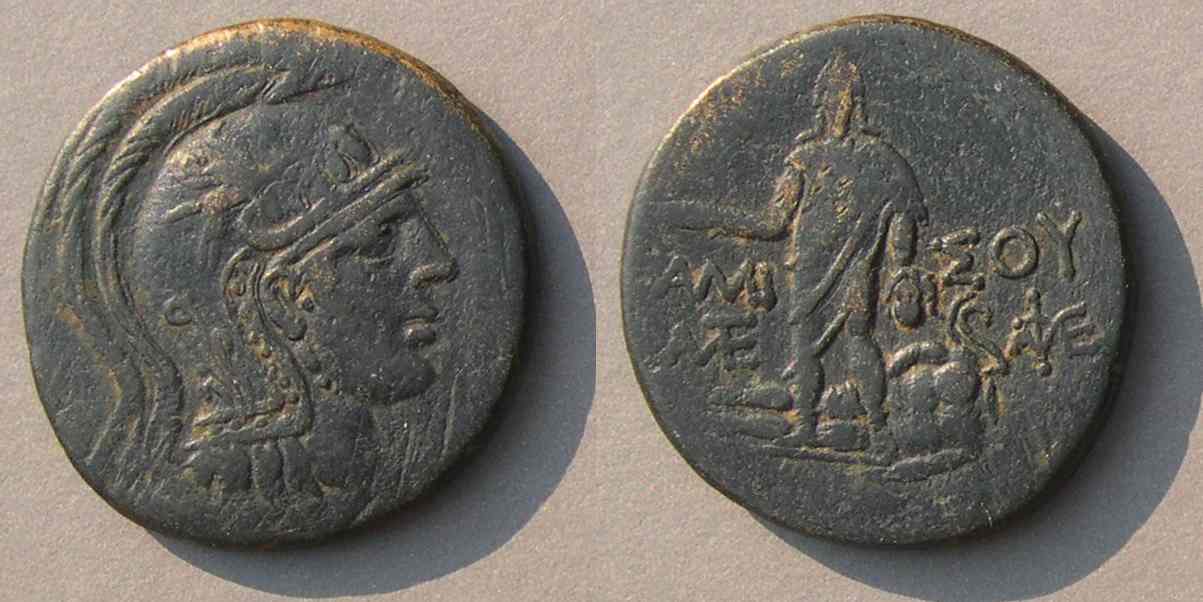 Amisus in Pontnus
Perseus with head of Medusa over a very muscular headless body
Oriental Greek
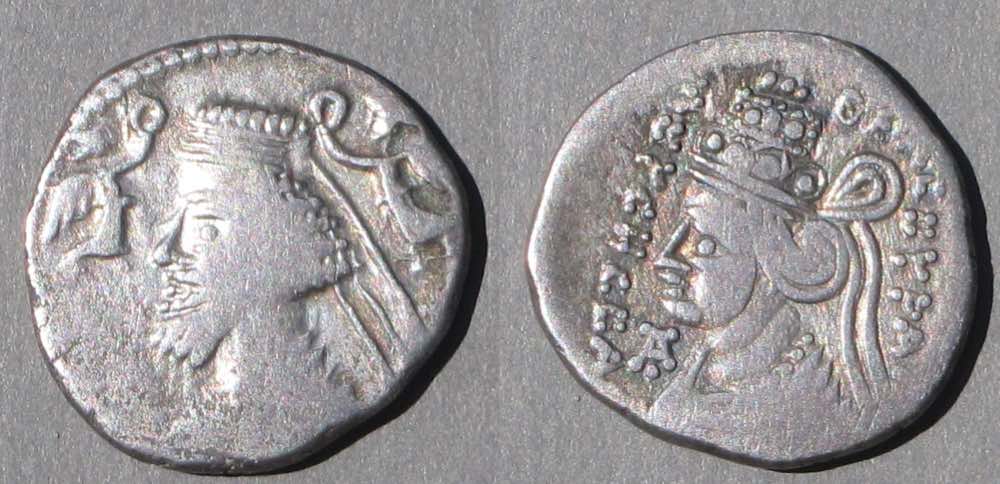 Parthia
Phraatakes and Queen Musa
(Queen Musa has a great story)
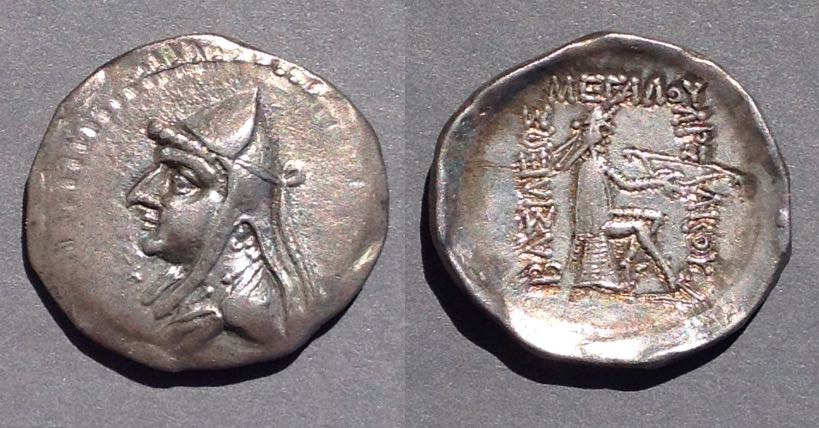
Parthian King
Mithradates I
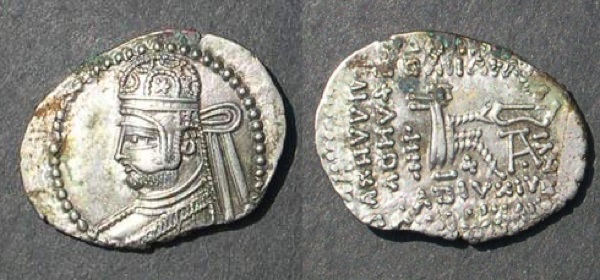
Parthia
Parthamaspates
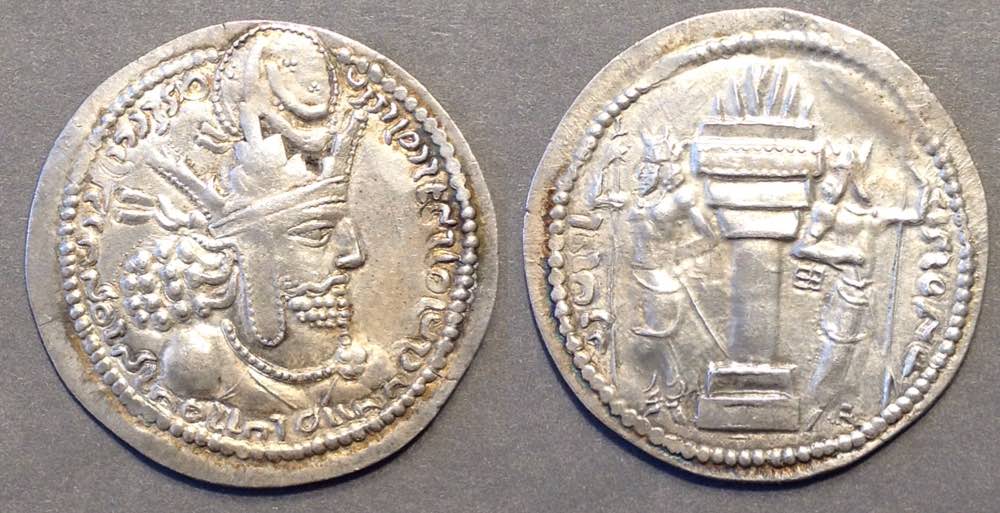
Sasanian King Shapur I
He captured Valerian
Sasanian King
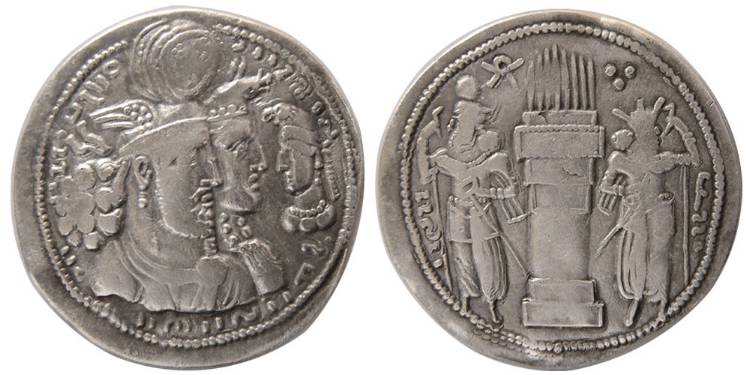
Bahram II
The only Sasanian king with multiple rulers on the obverse.
 Sasanian King
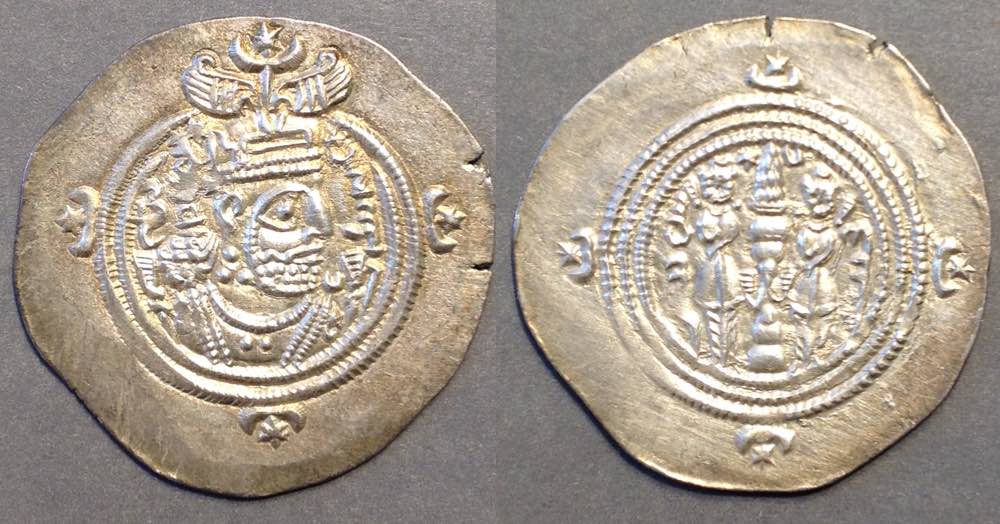
Khusru II
Foe of Heraclius and of the Arabs
Very common in high grade.
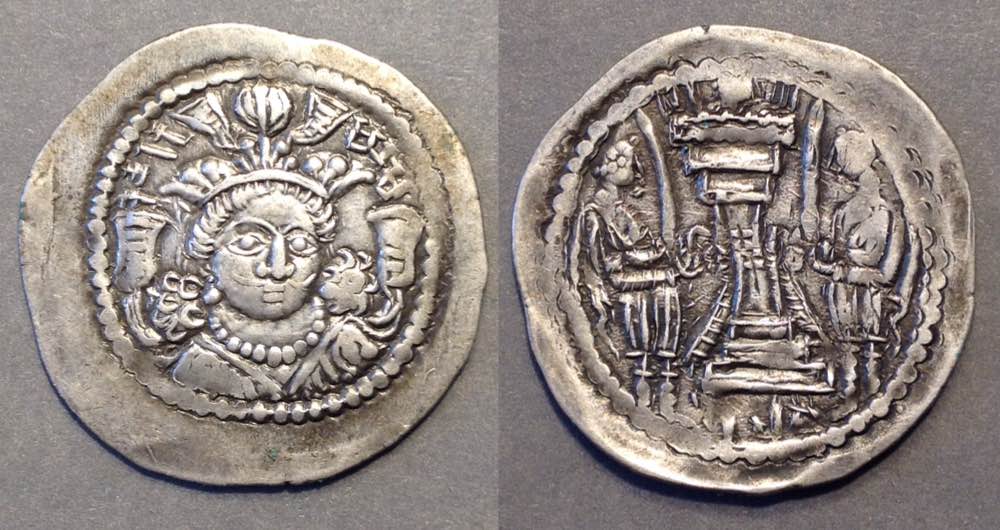
Iranian Huns
Roman Republican
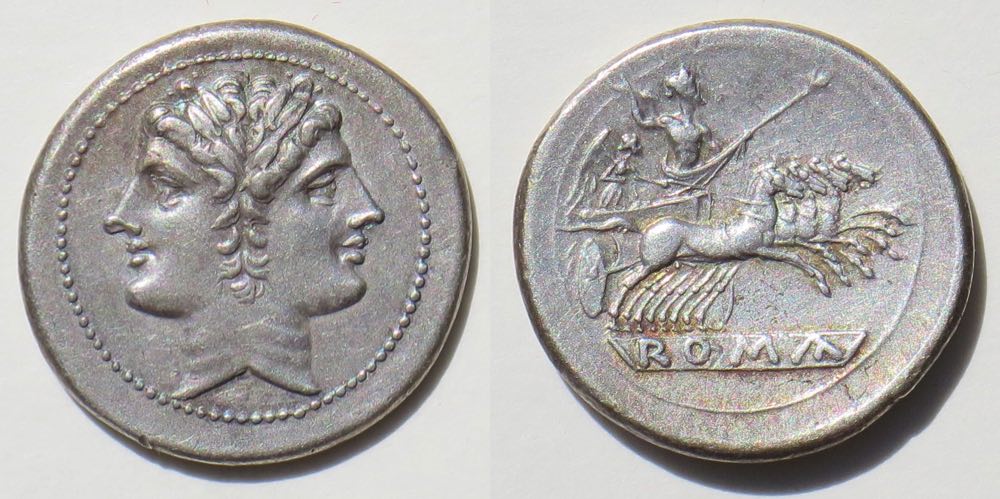
Janus
Quadrigatus
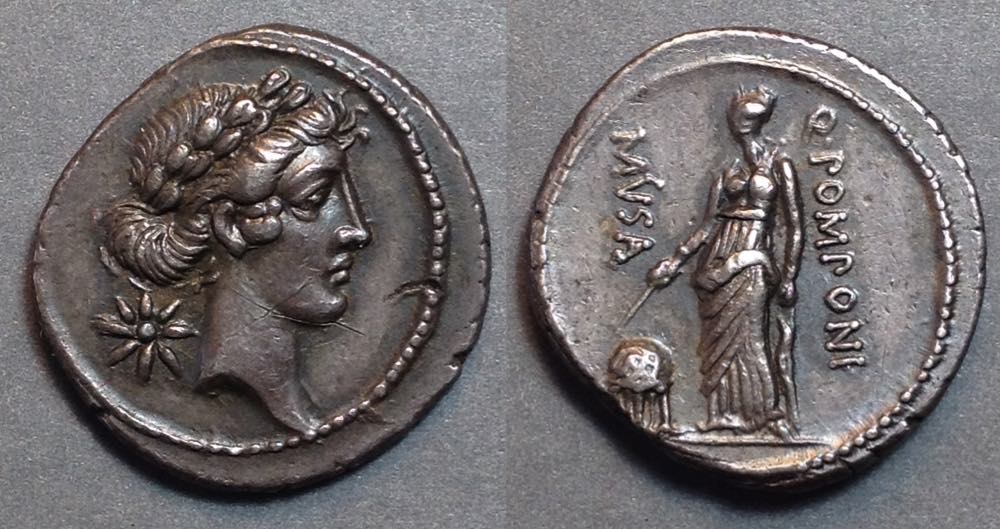 Roman Republican
Q. Pomponius Musa
Muse of Astronomy
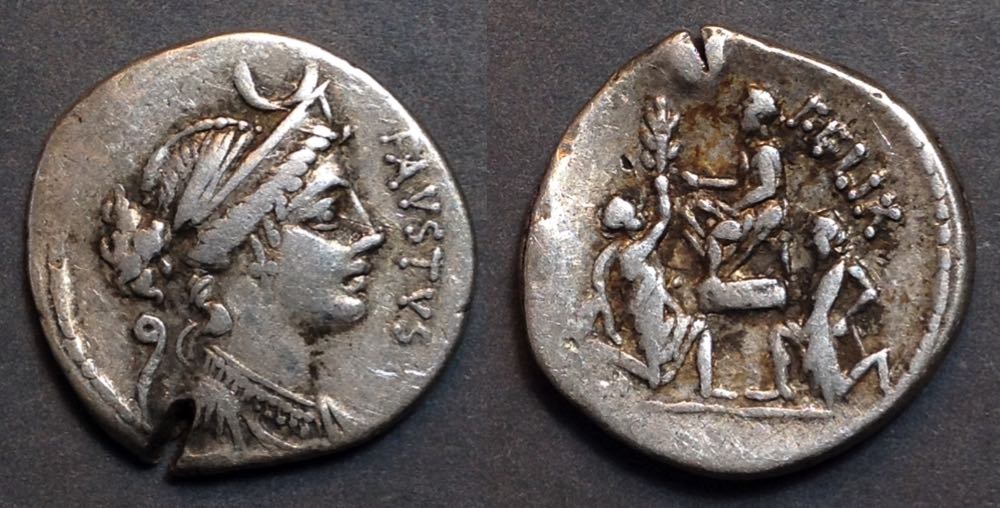
For Sulla
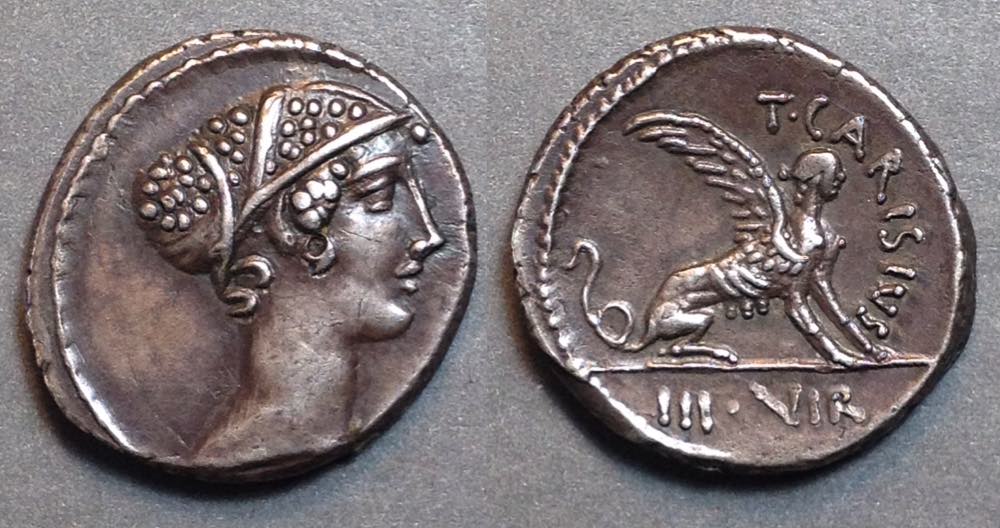
Roman Republican
Sphinx right
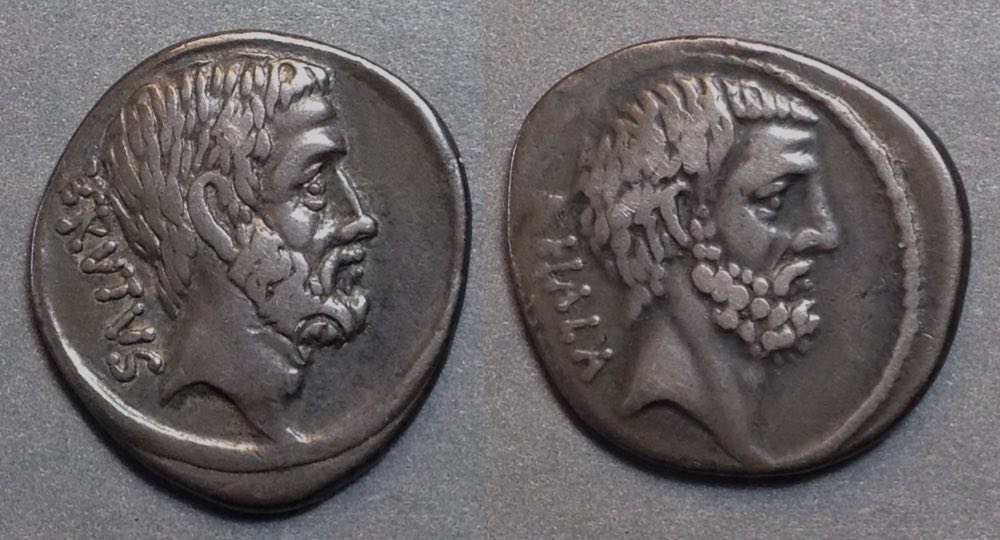
Brutus
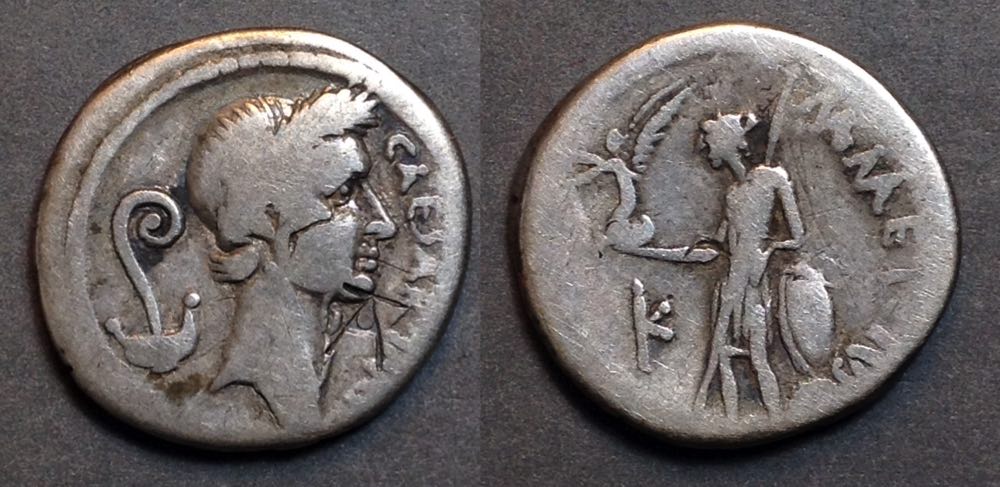
Julius Caesar
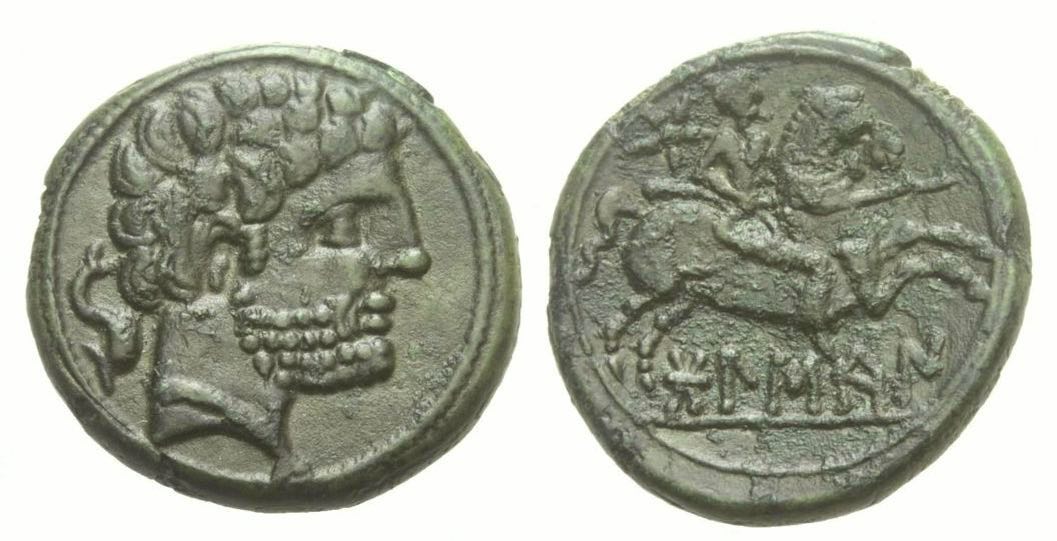
Spain, Bolskan
AE
Roman Imperial
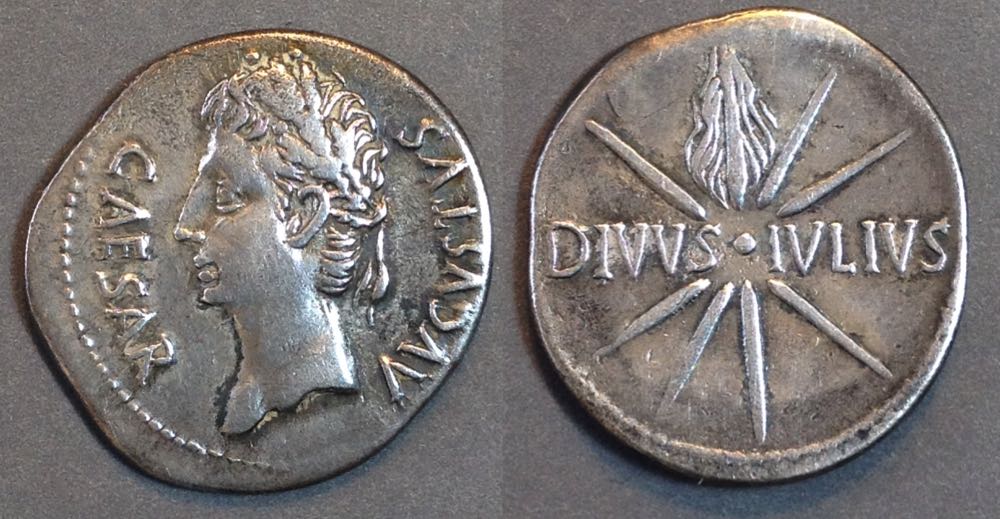
Augustus
Comet commemorating Julius Caesar
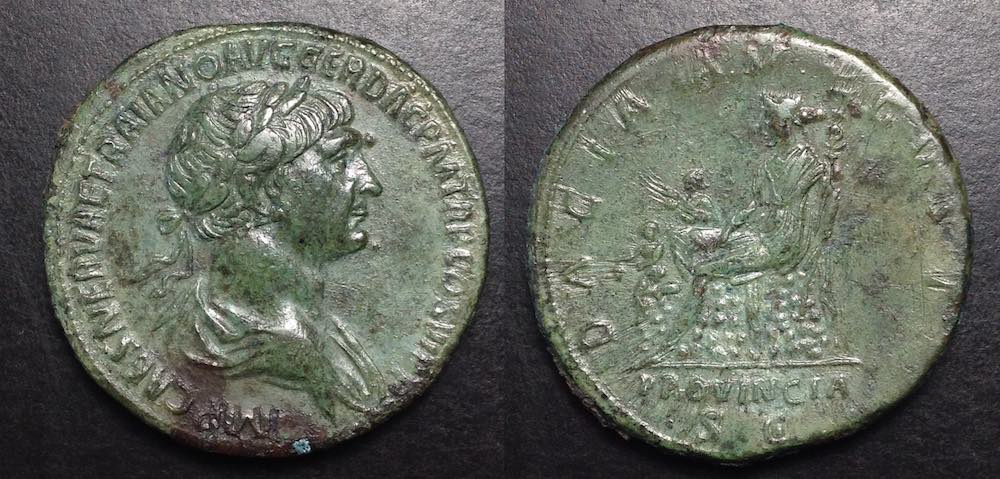 Trajan, 98-117
Sestertius
DACIA AVGVSTI
PROVINCIA
Trajan created the province Dacia.
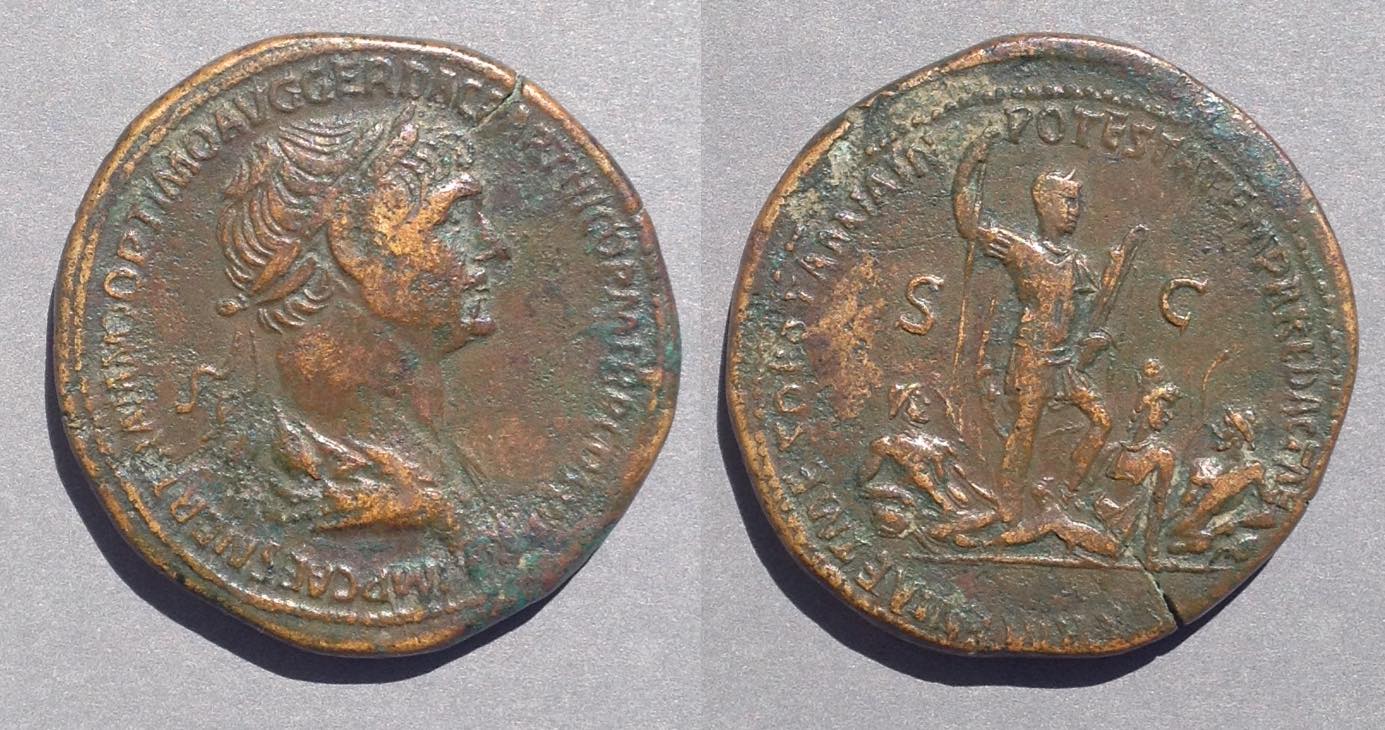
Trajan, 98-117
Sestertius
Mesopotamia
and the Tigris and Euphrates rivers
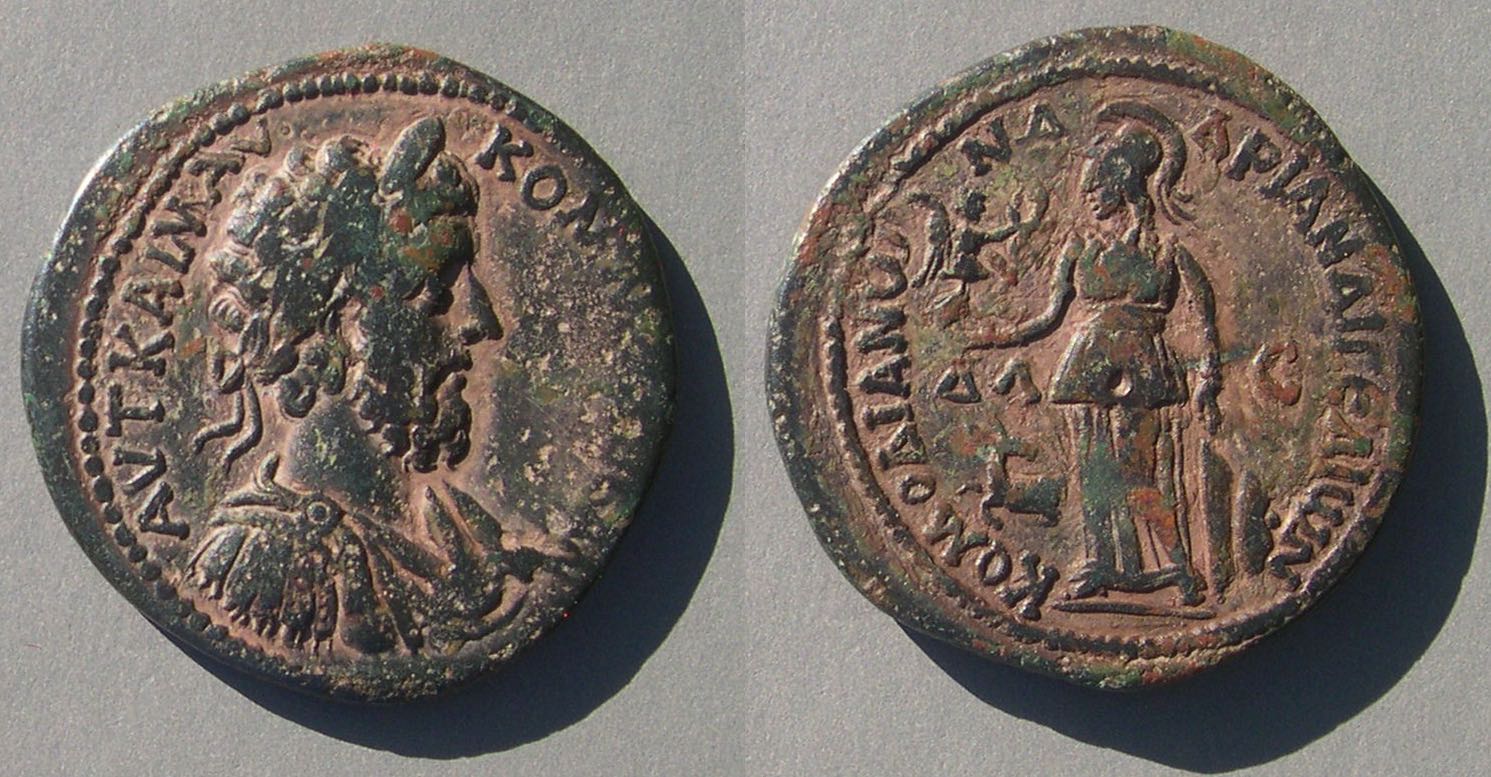 Commodus
AE37
Very large Roman provincial coin ("medallion")
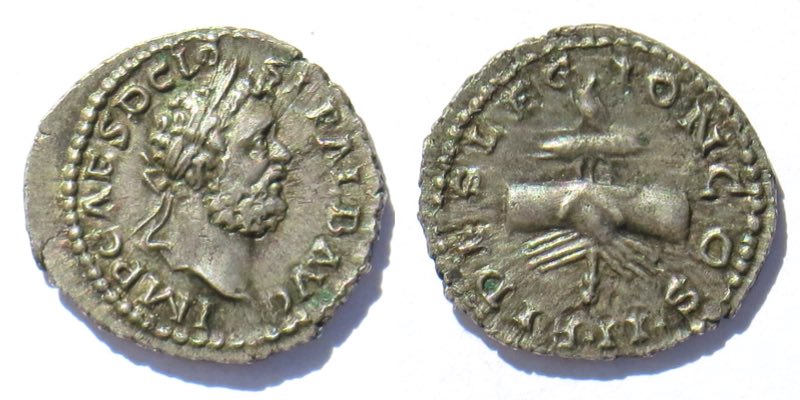
Clodius Albinus as Augustus
Denarius. Remarkably well struck and centered.
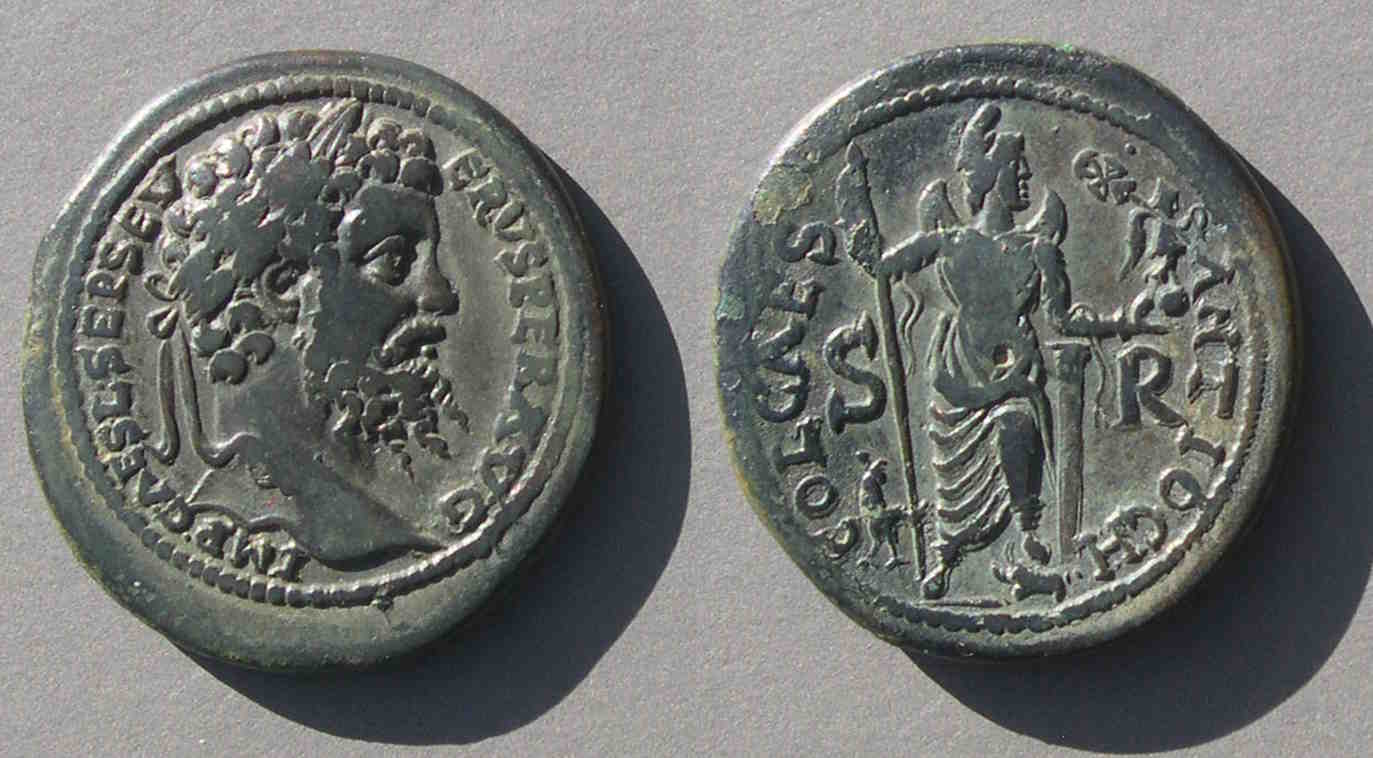
Septimius Severus
Lovely provincial sestertius-sized coin from Antioch in Pisidia
The god Men holding Victory with trophy.
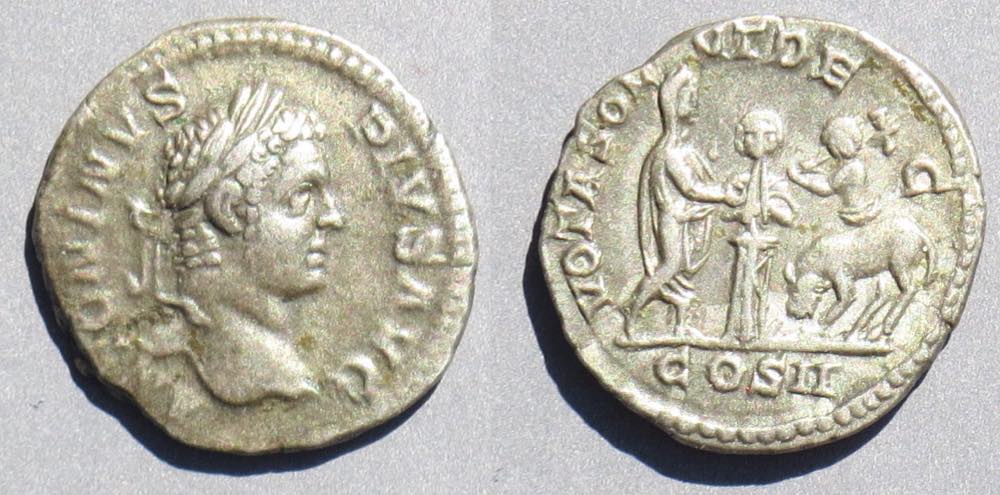 Caracalla
VOTA SOLVTA DEC COS II
The only imperial VOTA type to show the sacrifice.
The most interesting VOTA type.
Rare.
 Caracalla
VICT PARTHICA
Very rare Parthian reference.
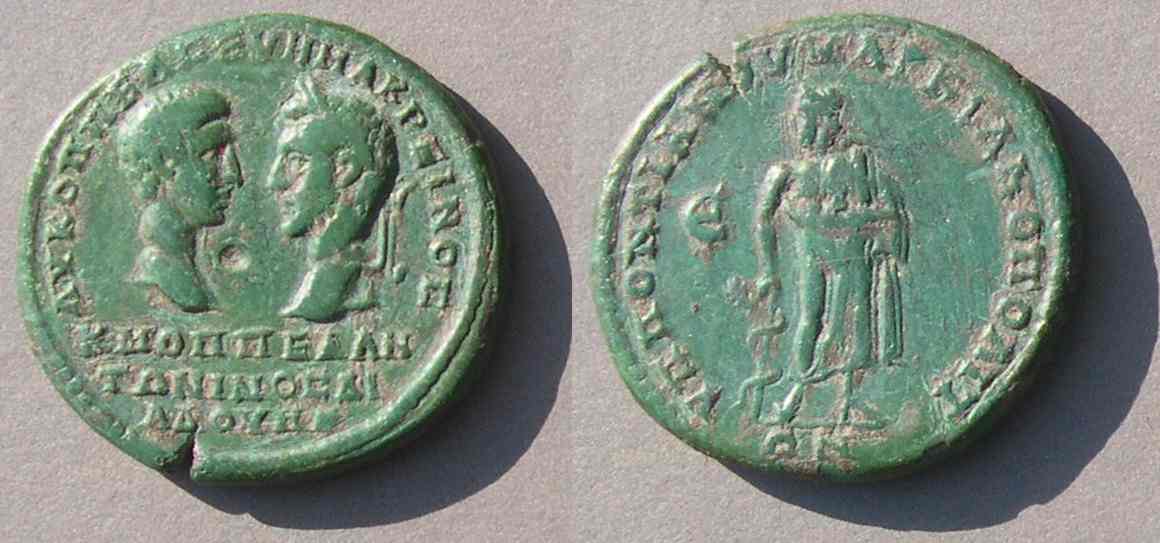
Macrinus and Diadumenian, 217-218
Marcianopolis
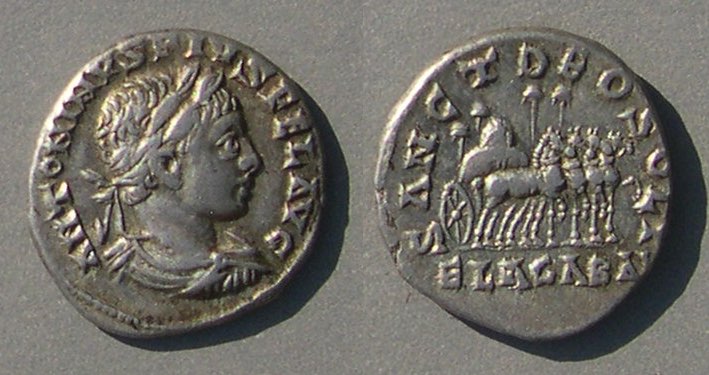
Elagabalus, 218-222
Chariot carrying the stone of Elagabal
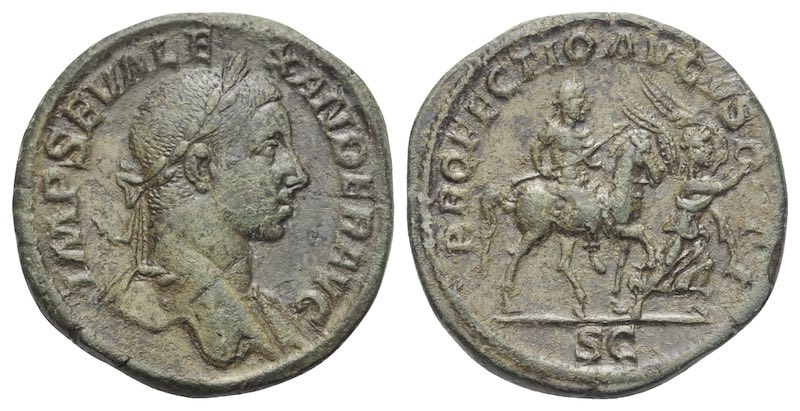
Severus Alexander. 222-235
Sestertius.
PROFECTIO AVGVSTI
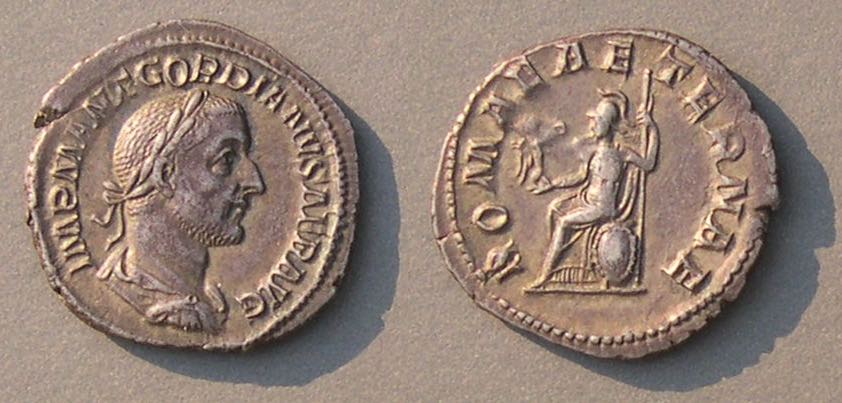
Gordian I, 238
Rare denarius.
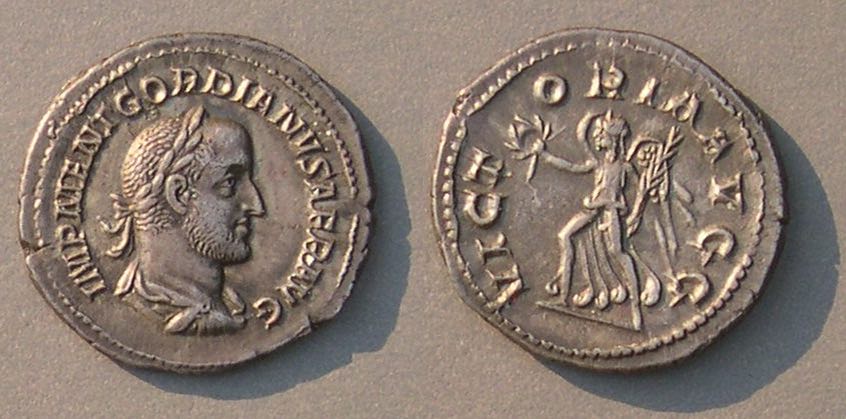
Gordian II, 238
Rare denarius.
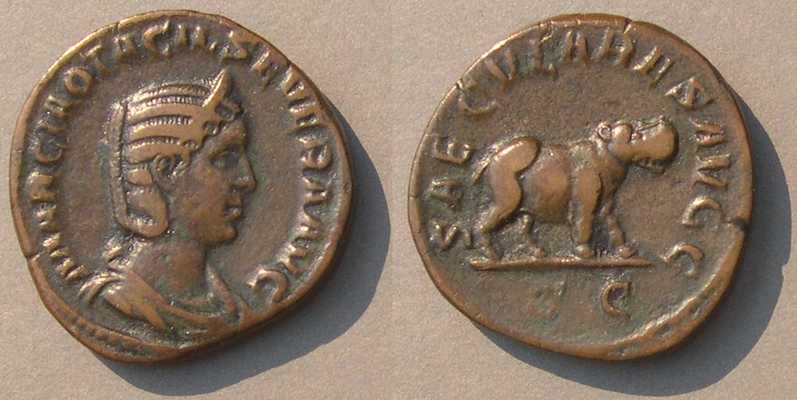
Otacillia Severa, wife of Philip I
Hippopotamus in celebration of the games for the 1000th anniversay of Rome
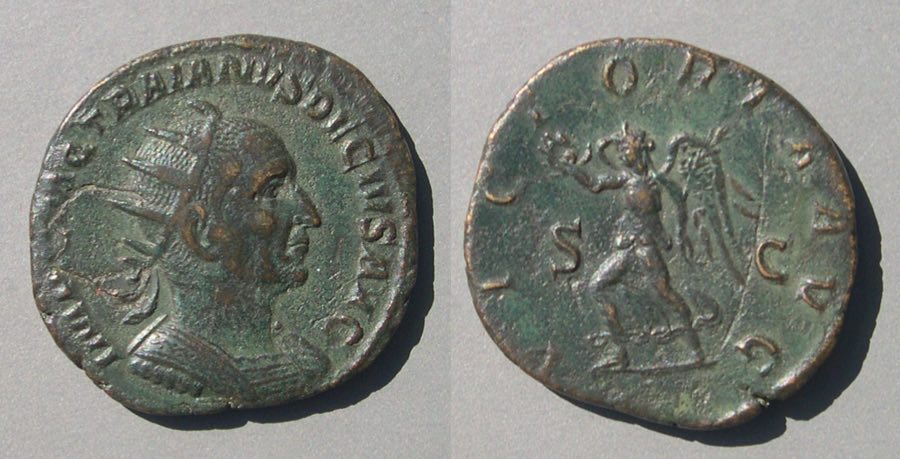
Trajan Decius, 249-251
Double sestertius
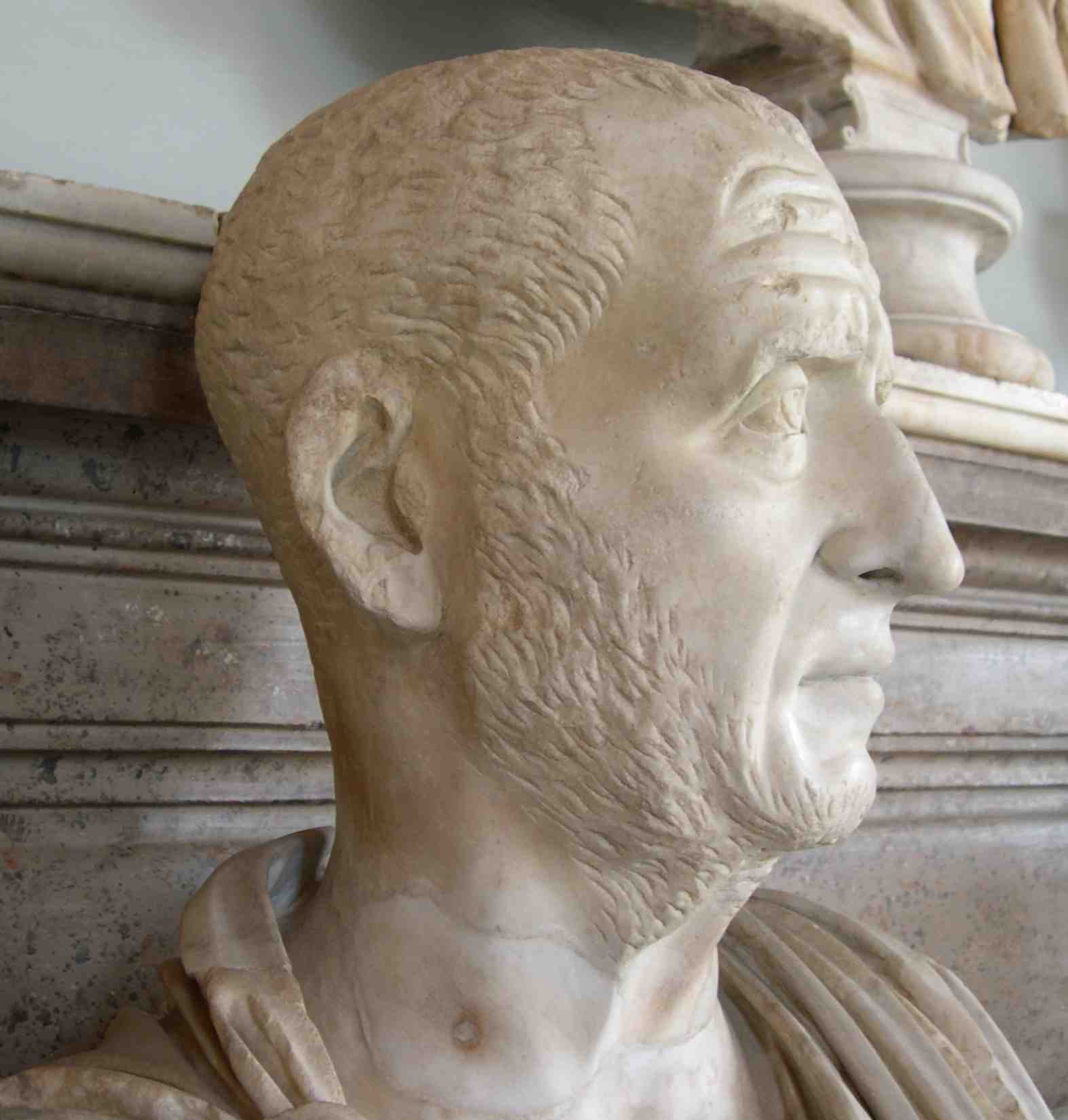 For comparison, the bust of Trajan Decius in the Capitoline Museum in Rome
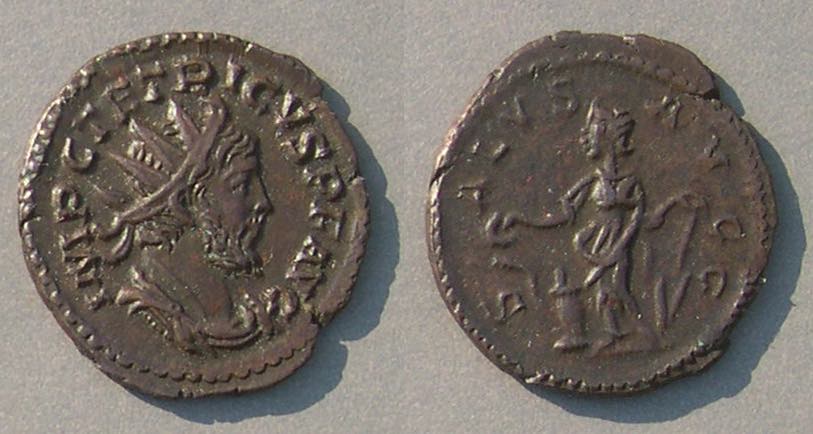
Tetricus I, 271-274
Gallo-Roman emperor
Remarkably nice portrait and high grade.
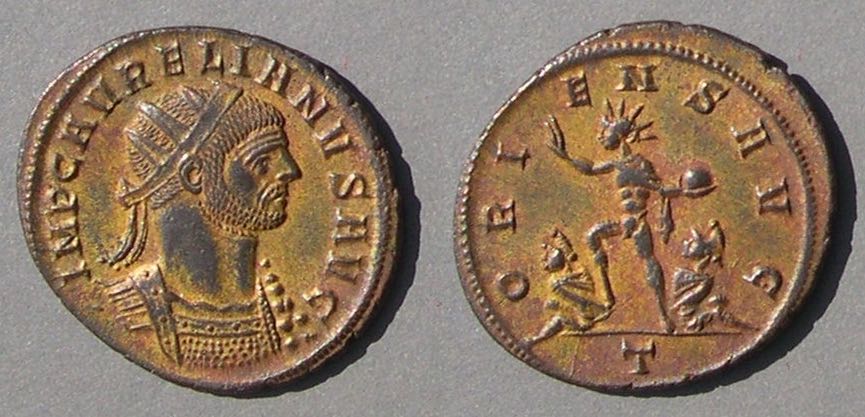
Aurelian
Magnificent golden toning
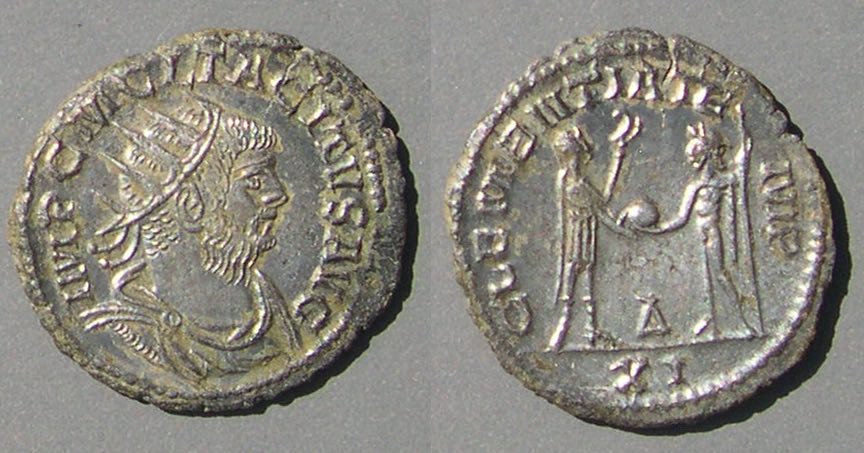
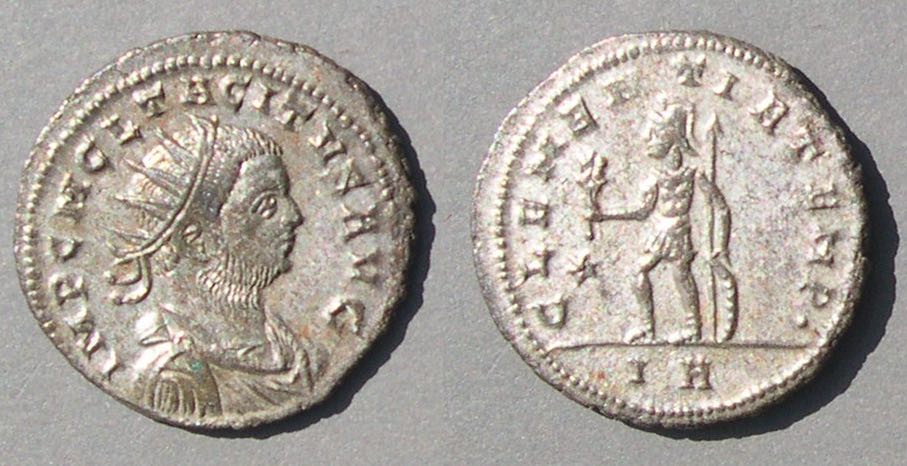
Tactius
"XI" for the rare denomination
Tacitus
"IA" for the very rare denomination.
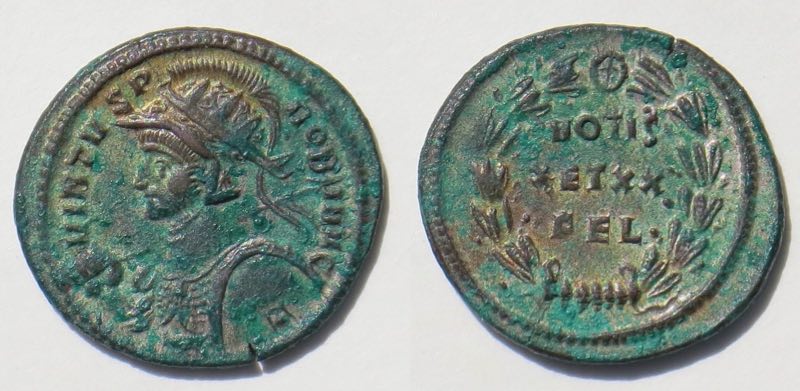
Probus
VOTIS
X ET XX
FEL
Rare
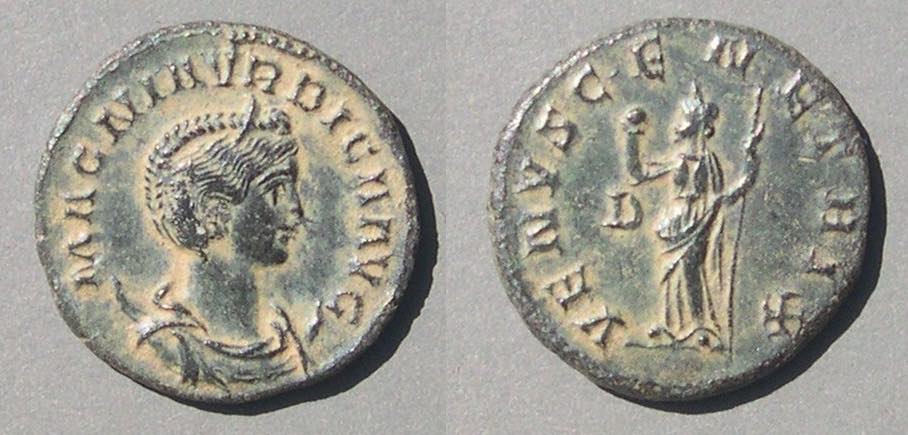
Magnia Urbica
Formerly very rare, now rare.
High grade.
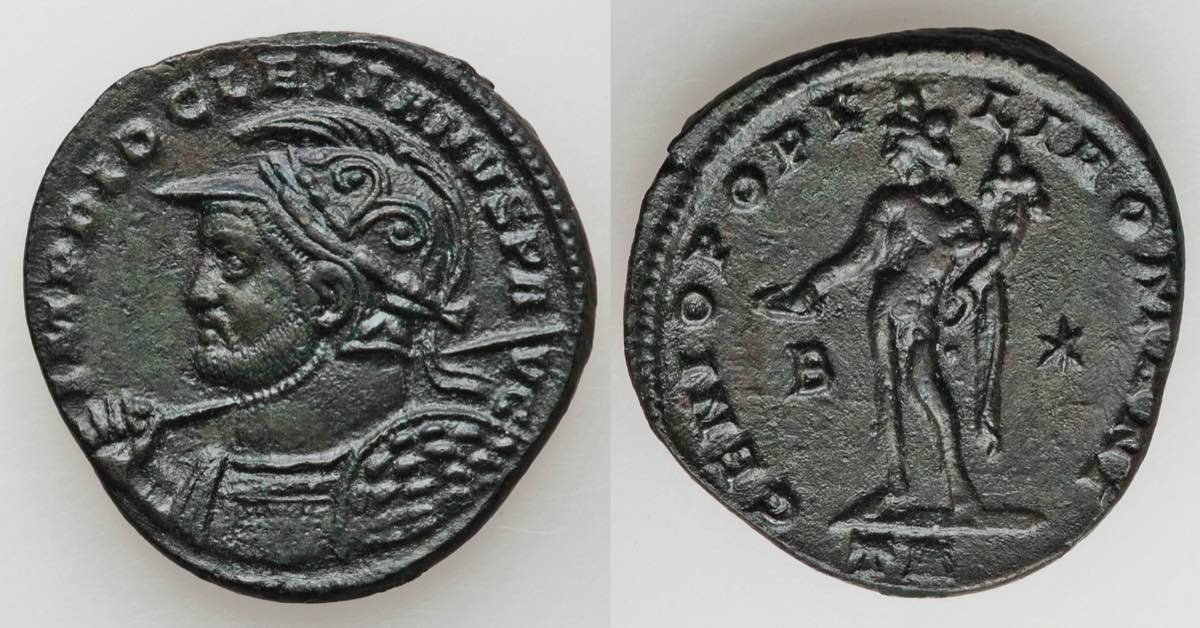
Diocletian
Helmeted bust left.
Bold minor unlisted variety.
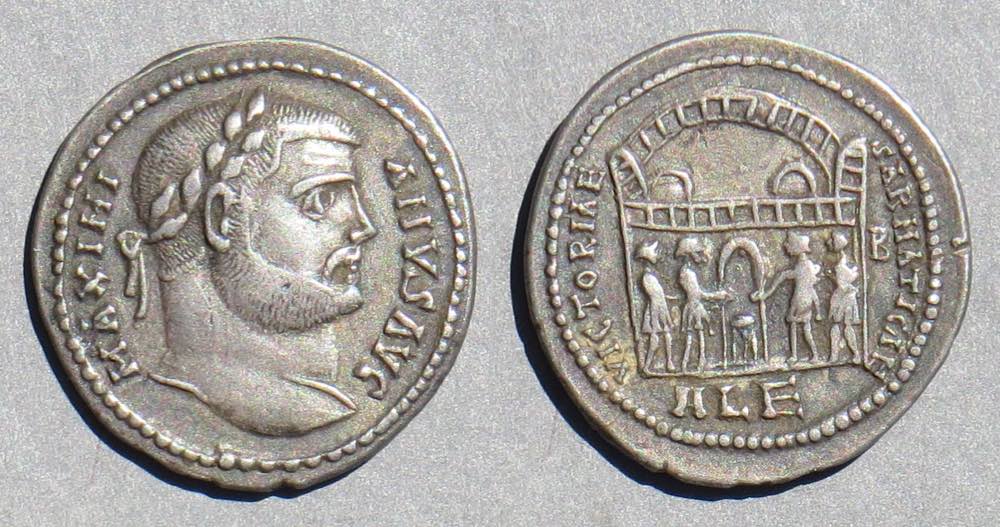
Maximian
19 mm. 3.40 grams.
MAXIMIANVS AVG
four emperors sacrificing over tripod in from of the gate of a camp with towers,
VICTORIAE SARMATICAE and
ALE for Alexandria in exergue, B in field right.
RIC unlisted but in RIC VI on page 661 the corresponding type is listed for Diocletian as Alexandria 8 ("c. 295") and "R4" (this coin would be 8b). The other types of argentei from this first issue at Alexandria are all R5 and the second issue has some "R4" with the VIRTVS MILITVM legend.
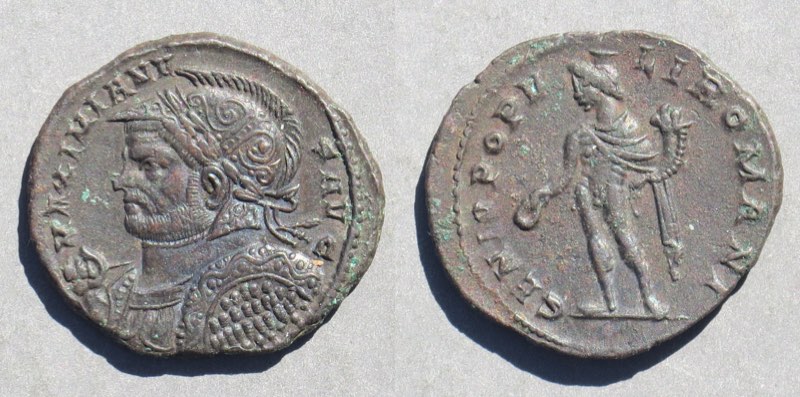
Maximian in splendid helmet left
Unlisted obverse legend
This coin has been reported to the BM.
London mint.
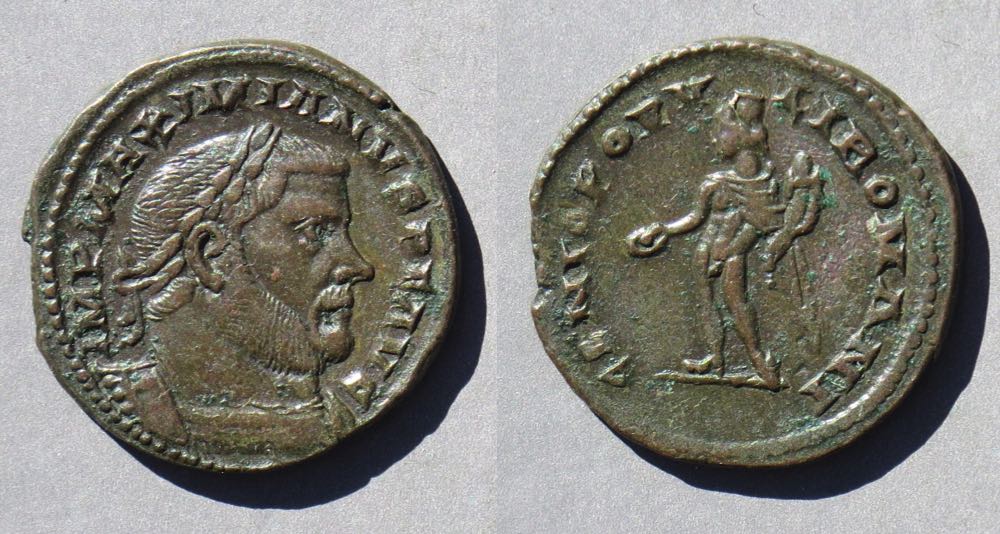
Maximian
London mint
Wonderful portrait!
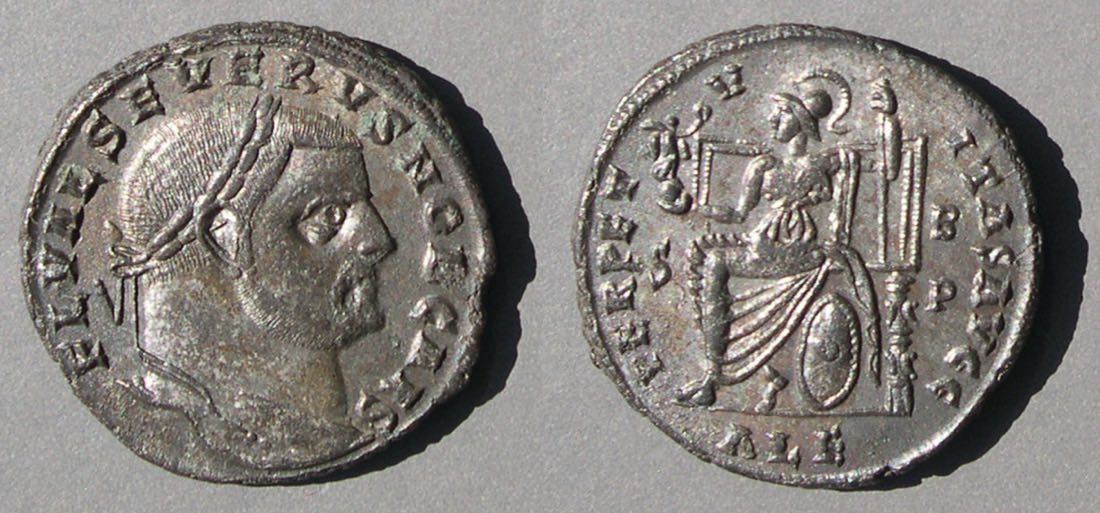
Serverus II
PERPETVITAS AVGG
Scarce type in super condition.
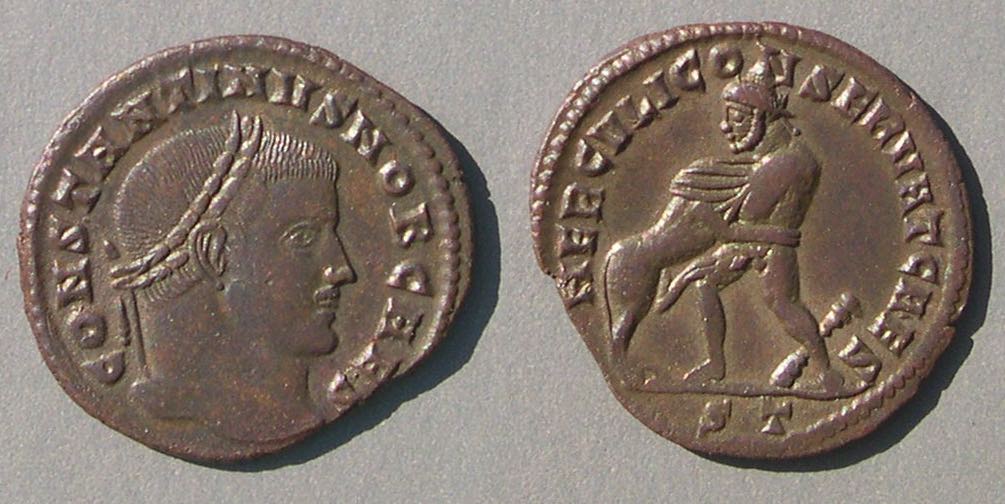
Constantine as Caesar
HERCVLI CONSERVAT CAES
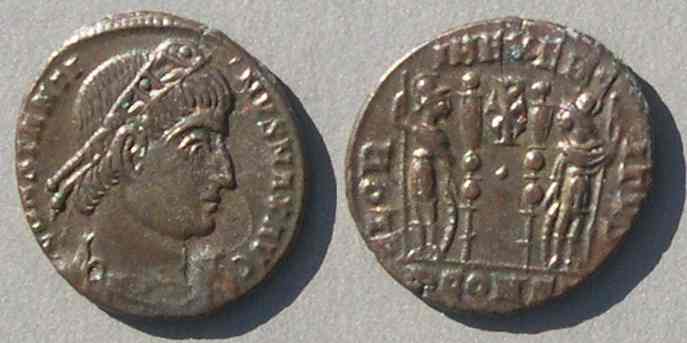
Constantine
chi-rho between the standards
Very rare.
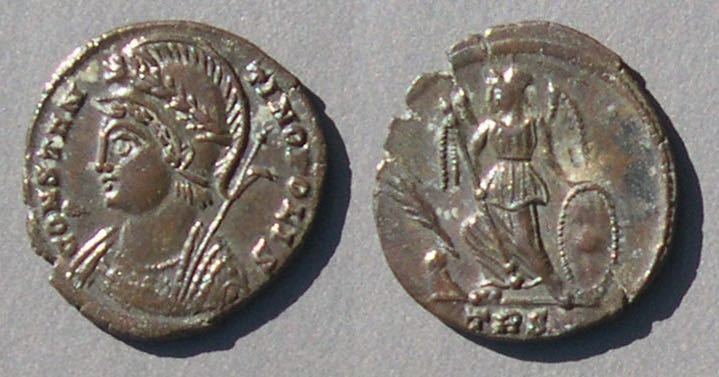
CONSTANTINOPOLIS
Very common
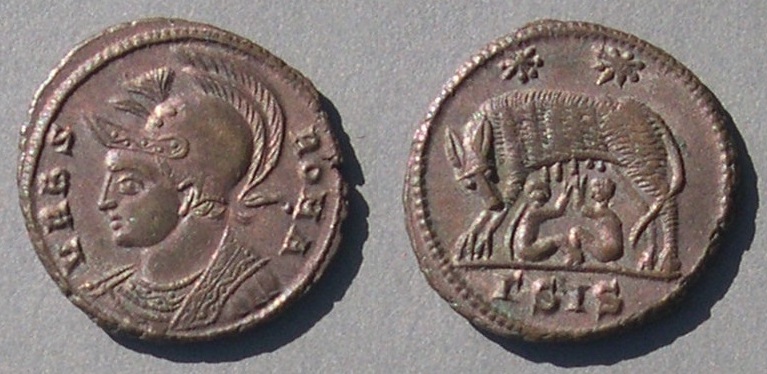
VRBS ROMA
Very common, but superb
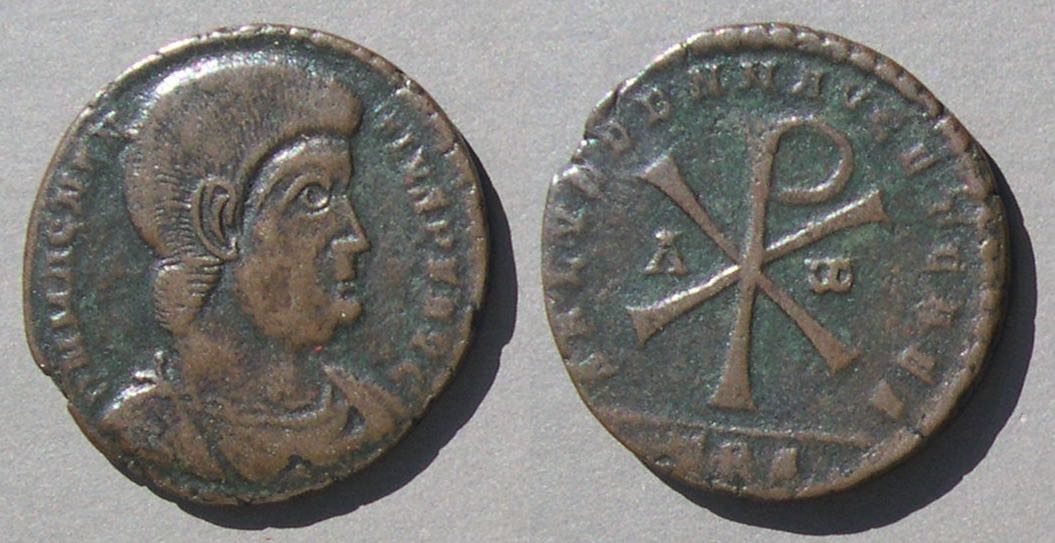
Magnentius
Chi-rho
An early Christian type.
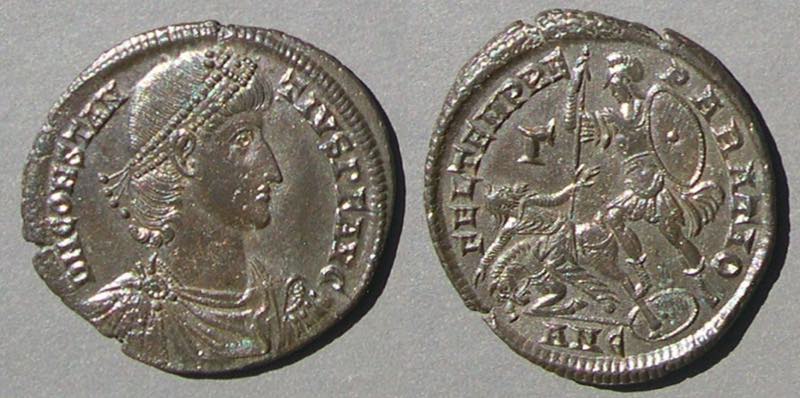
Constantius II
One of the most common Roman imperial types in outstanding condition
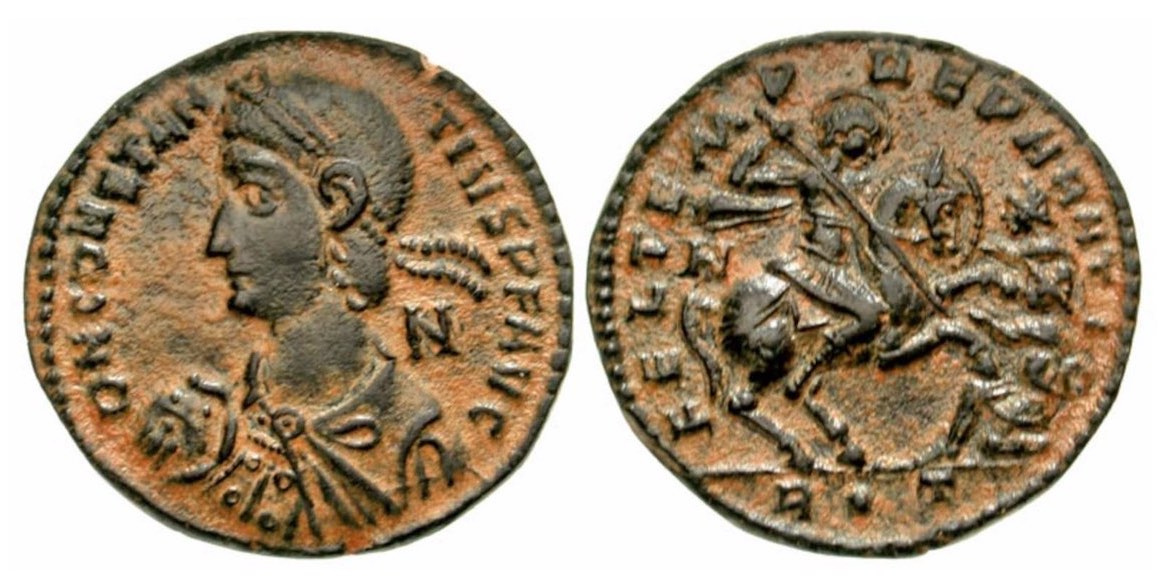
Constantius II
The rarest FEL TEMP REPARATIO type.
I have not seen a finer example.
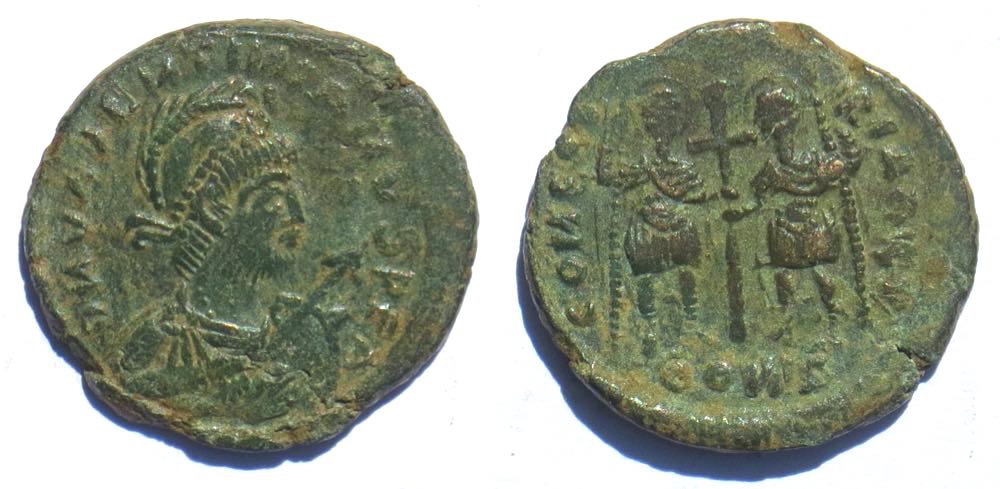
Valentinian III
AE2 minted for the region of Cherson.
Usually in terrible condition.
Formerly extremely rare. Now rare and very rare in this condition.
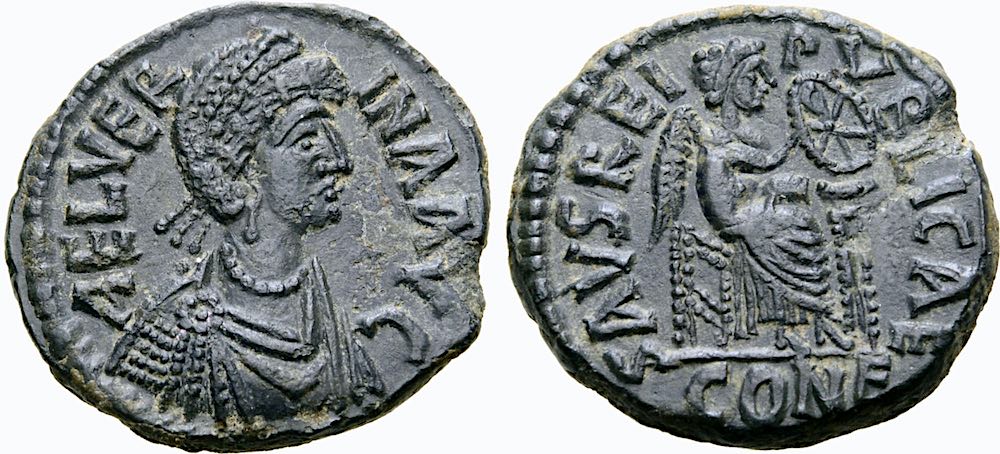
Verina, wife of Leo I, 450-457
Cherson mint.
Perhaps the finest known AE2 of Verina.
SAVS REIPVBLICAE (SALVS misspelled)
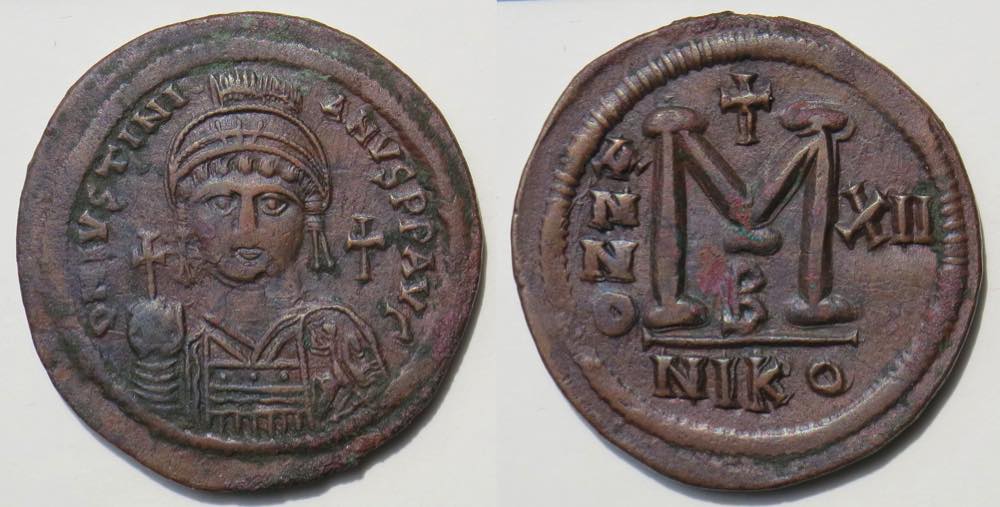
Byzantine
Justinian I, 527-565
First year of reformed coinage
Very large diameter.
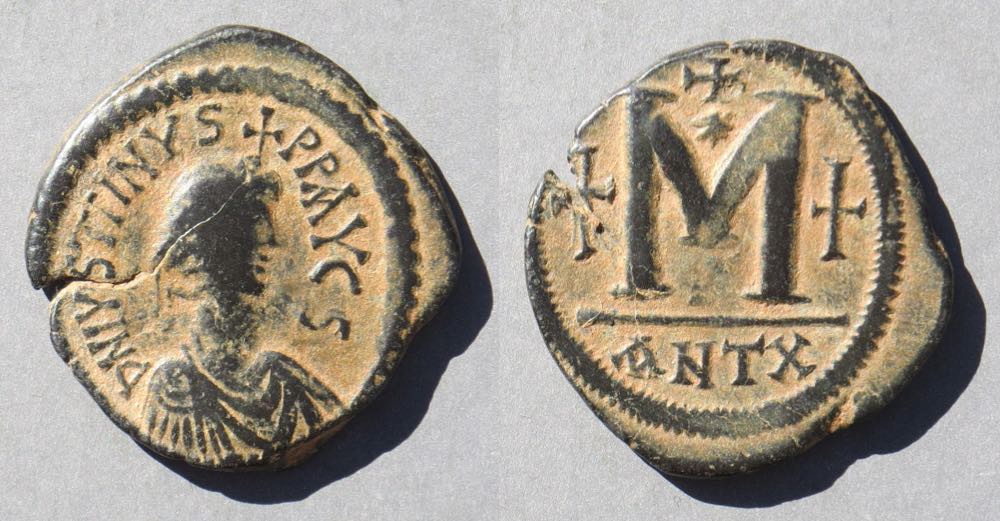
Justin I, 518-527
With a cross above the head
Unique
The only Byzantine coin (not "coin type", but "coin"!) known to me with two symbols above the M, both a cross and a star!
Justinian
Year 13 at Antioch rnamed Theopolis
A one-year type of mintmark.
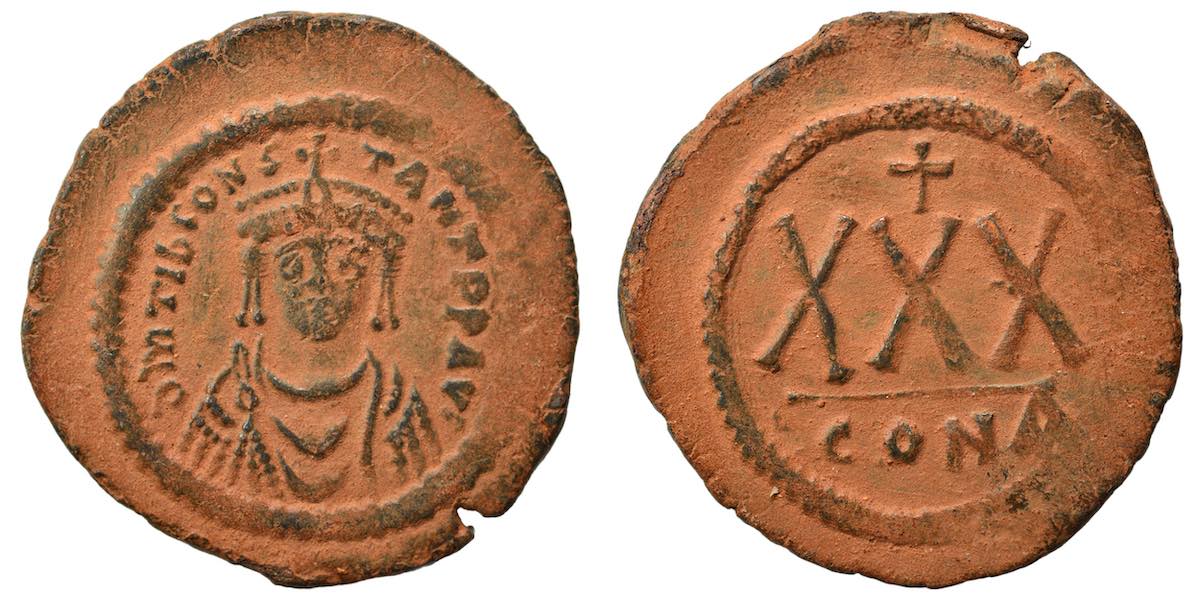
Tiberius II
30-nummia
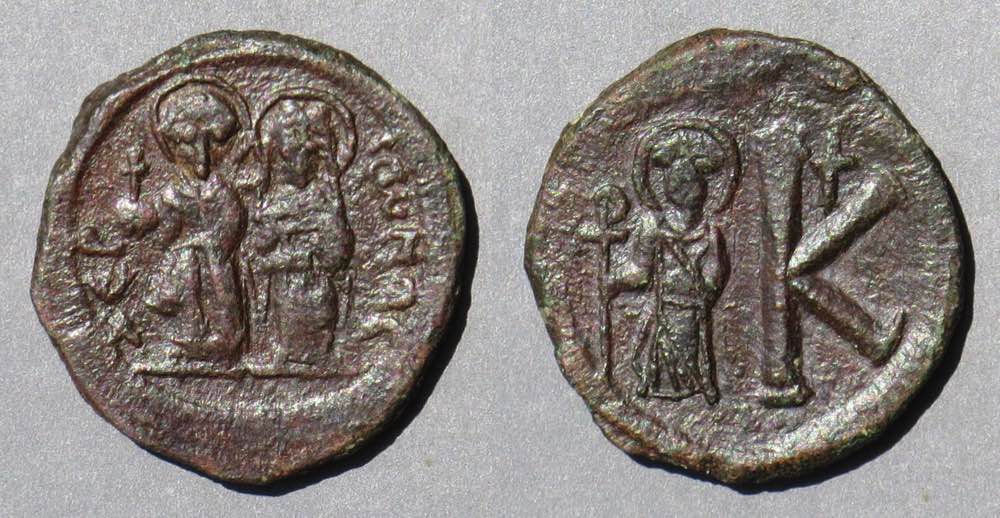
Cherson Mint
Anonymous
Possibly time of Maurice.
Very rare and in outstanding condition.
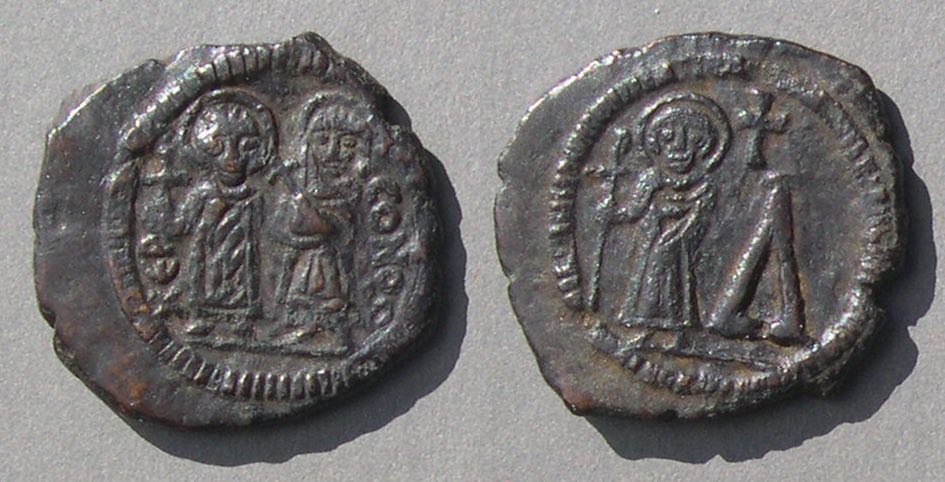
Cherson Mint
Anonymous
Possibly time of Maurice.
Very rare and in outstanding condition.
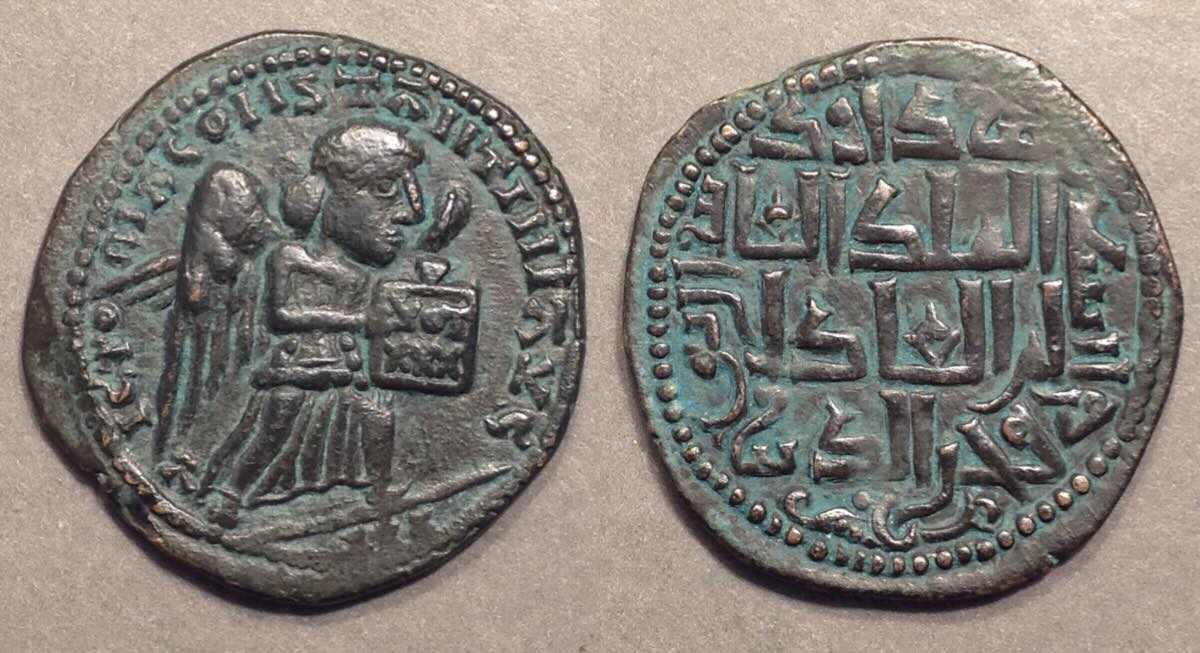 "Turkoman figural bronze"
S&S 3
"Turkoman figural bronze"
S&S 3
31-30 mm. 12.26 grams.
Artuqids of Hisn Kayfa.
Fakhr al-Din Qara Arslan
AH 543-570. AD 1148-1174.
Winged Victory right/3-line legend with legends on the sides.
Obverse: winged victory advancing to right wearing long gown and holding a tablet or shield, surrounded by Latin inscription,
Inscription: V-ICTO-RIA CONSTANTINI AVG [In correct Latin!], shield bears the inscription VOT XXX
In exergue: ΣIΣ (SIS is a Roman mintmark of Siscia)
Reverse: Central inscription surrounded by a second inscription all in a circle of dots
Central inscription: al-Malik al-‘Alim al-‘Adil (the wise and just king) Fakhr al-Din (pride of the faith)
Surrounding inscription: (right) Qara Arslan (top) b. Da’ud (left) b. Artuq (Qara Arslan, son of Da'ud, son of Artuq)
This is the most amazing Turkoman figural bronze type. The prototype for the obverse is the reverse of a very rare gold type of Constantine the Great (307-337), struck c. 335 at Siscia, RIC VI Siscia 244.