Late Roman coins, Valentinian (364-375) and later

(Page 1 is here, page 2 here, and page 3 here. Other pages have Tetrarchal, Constantinian, and late Roman (this page) coins.)


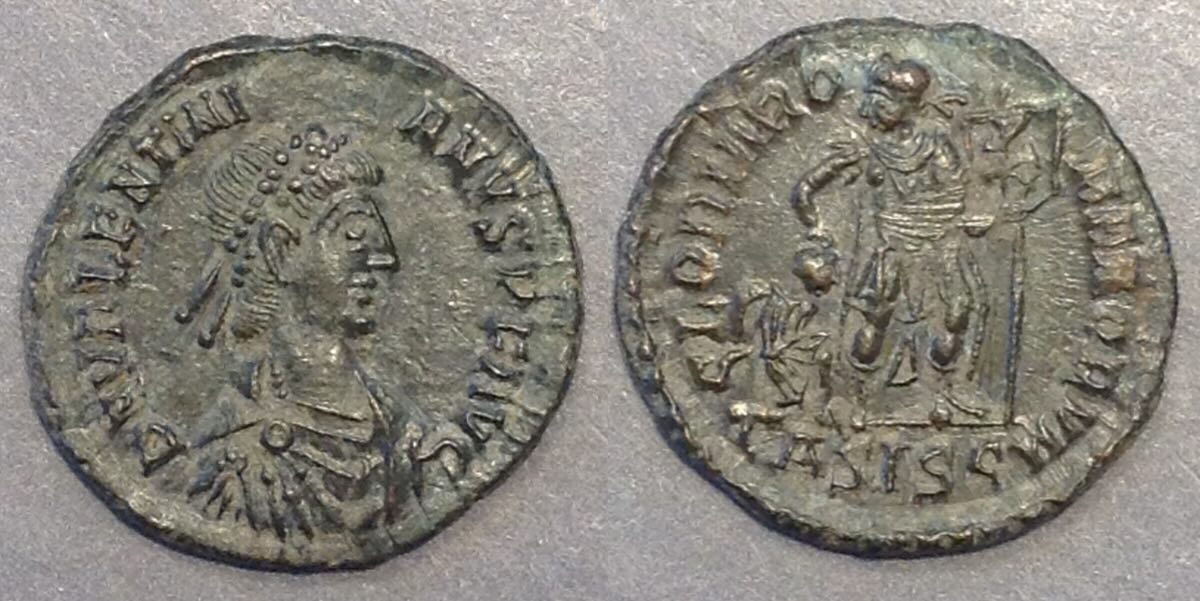
Valentinian.


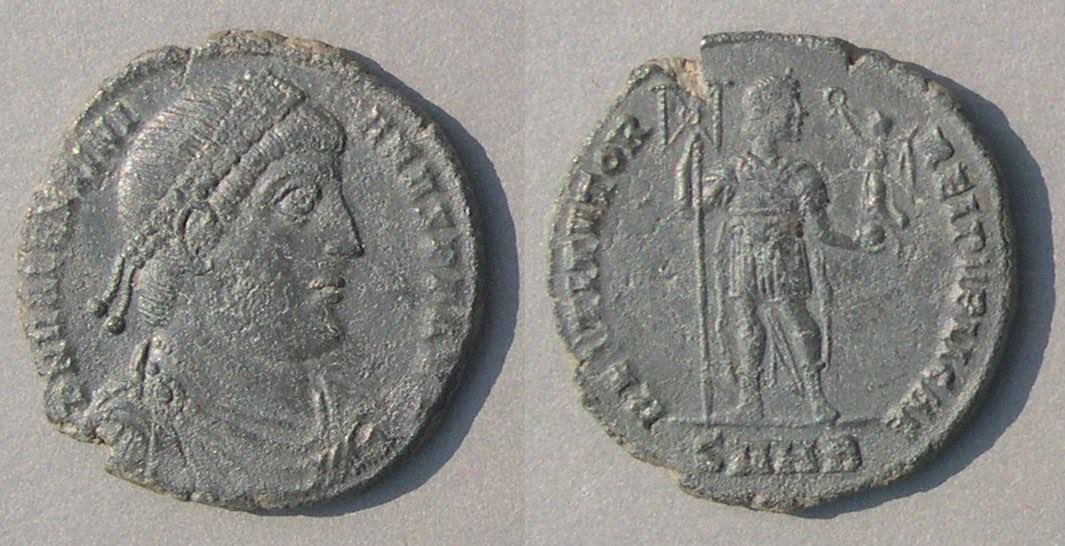
Valentinian
AE1
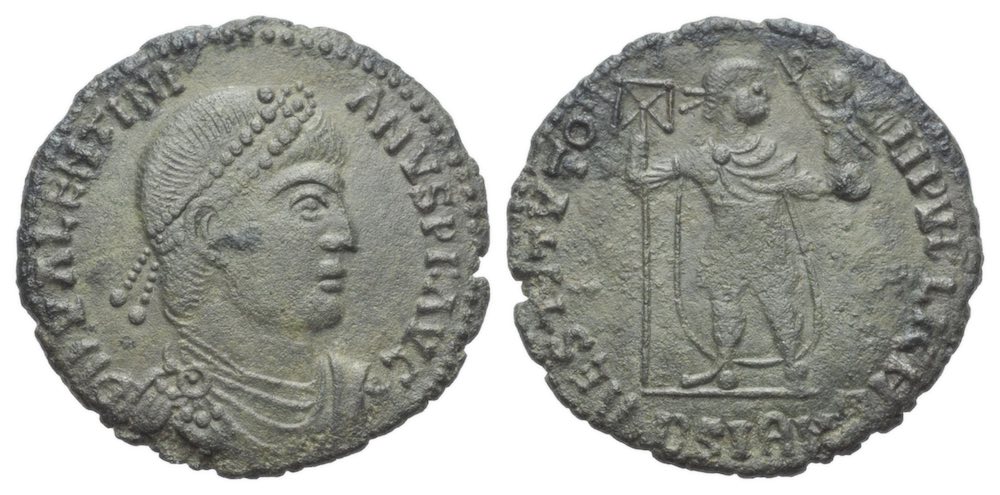


Valentinian
AE1 ancient imitation


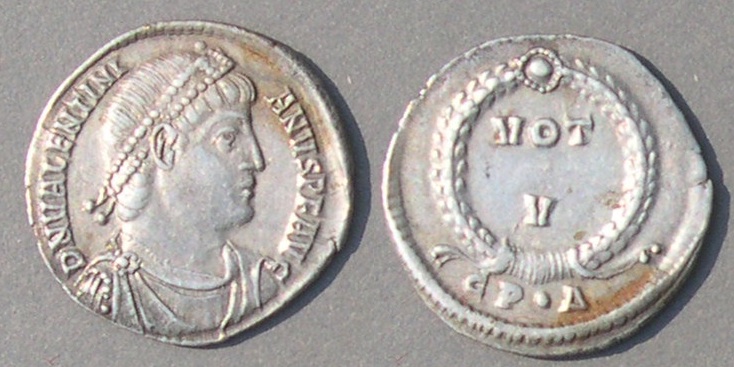
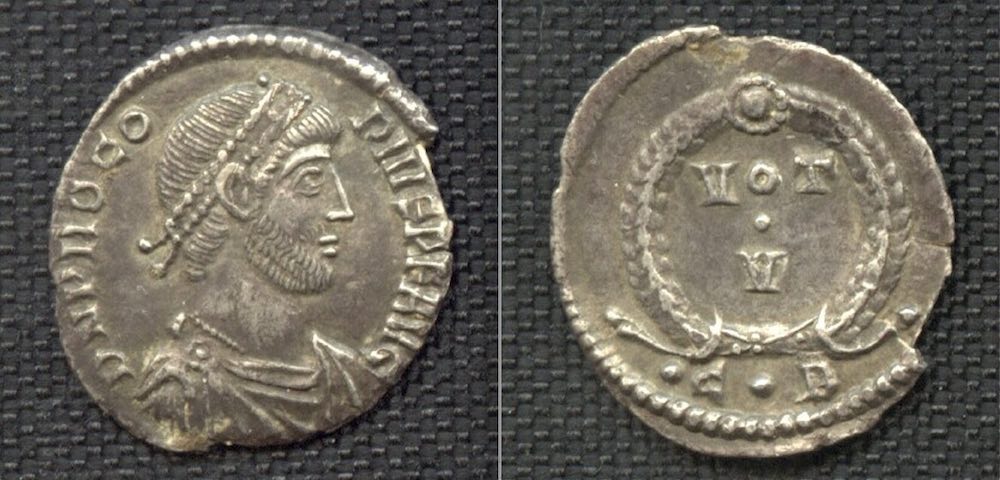
Valentinian
Siliqua


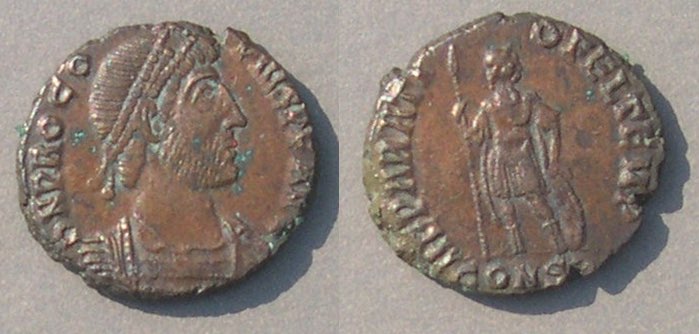
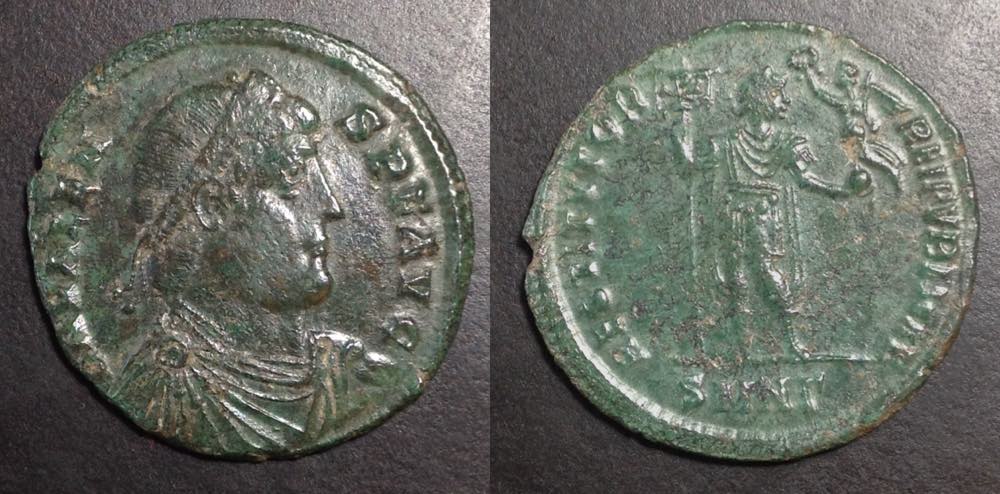
Procopius


Procopius
AE3. 


Procopius
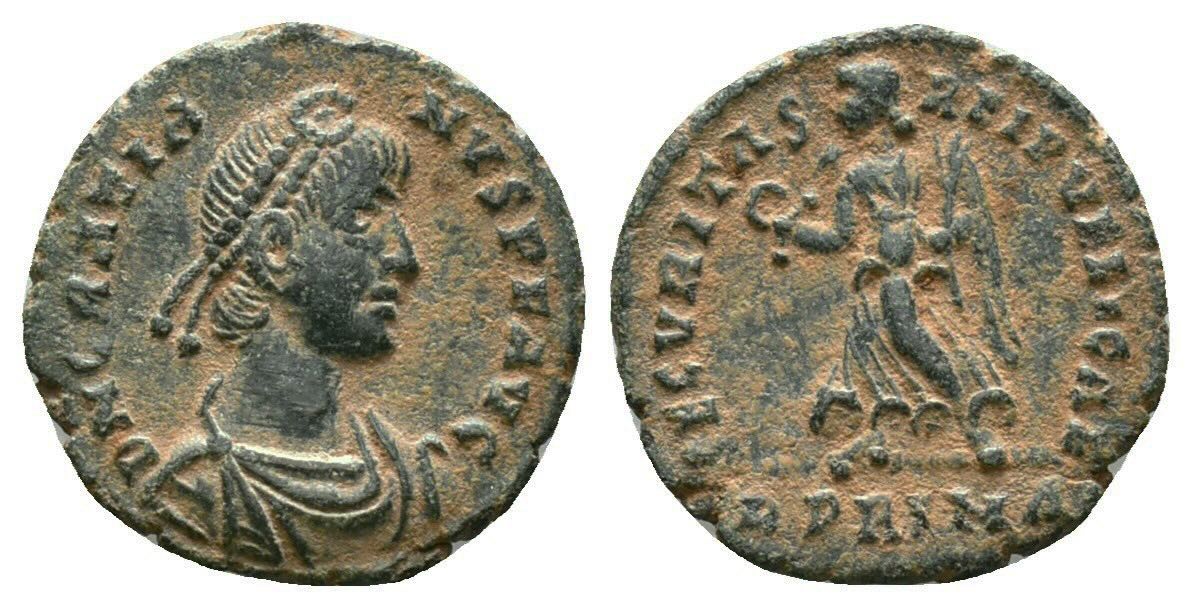
Bust right


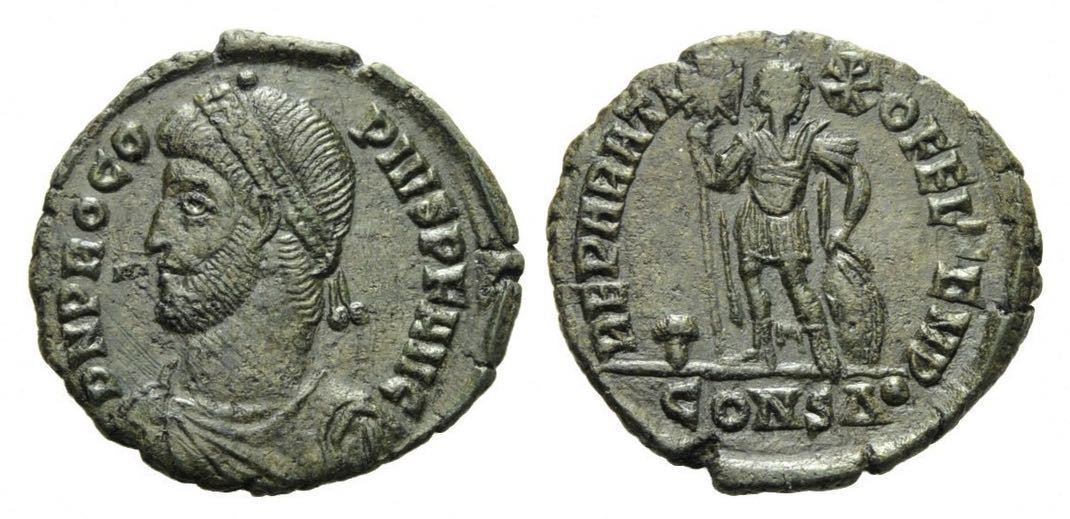
Procopius
SECVRITAS REIPVBLICE

Not in RIC
 
  
Procopius
Siliqua

ex Santa Barbara Museum of Art and ex Bunker Hunt Collection


Valens
miliaresion
Large AR 


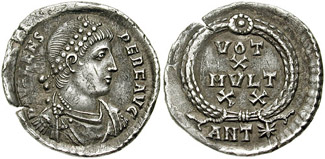
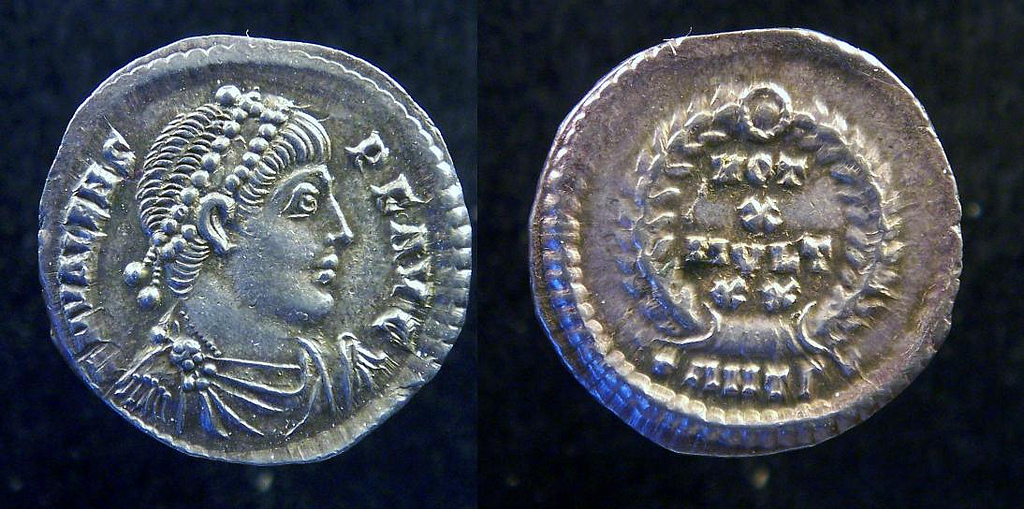
Valens
Siliqua


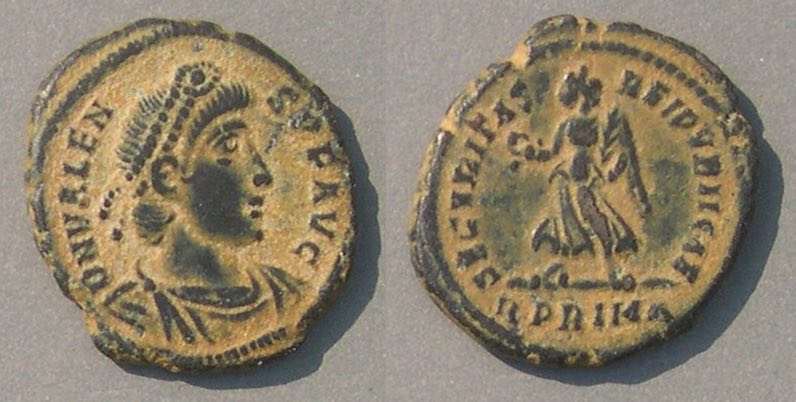
Valens
AE1


Rare.


Valens

Common AE3 type with oustanding light cover and interesting
R PRIMA mintmark. 


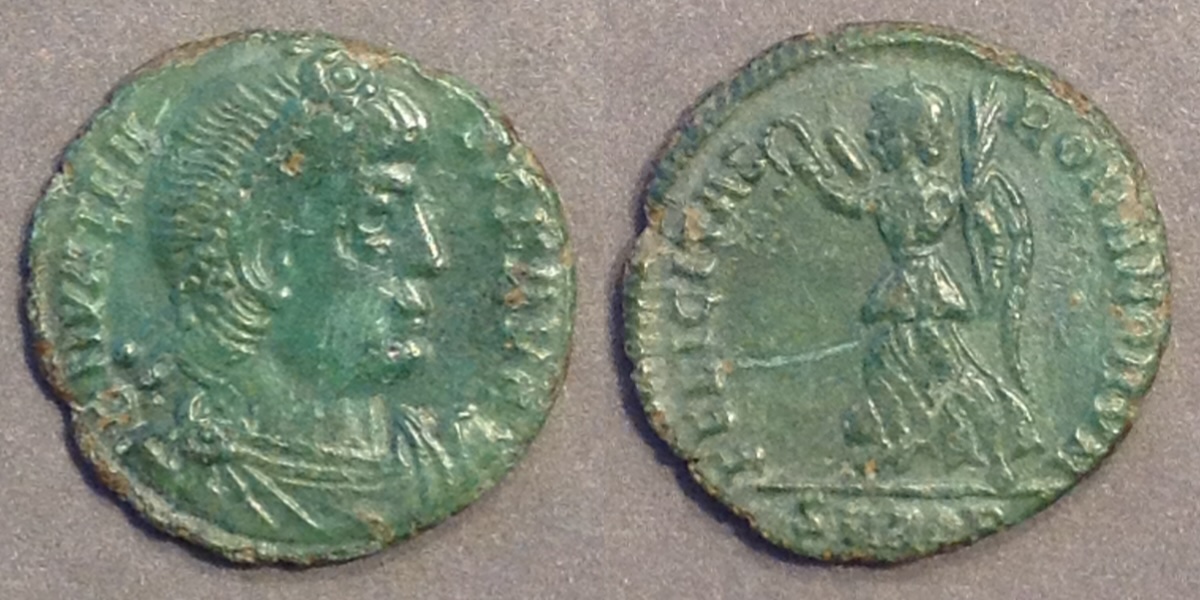
Valens

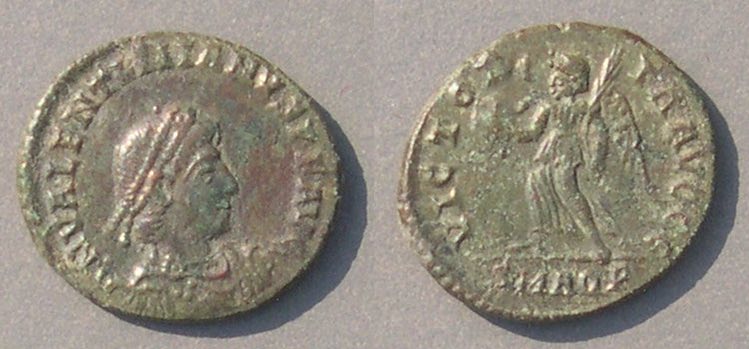
FELICITAS ROMANORVM
Very rare, only from Aquileia


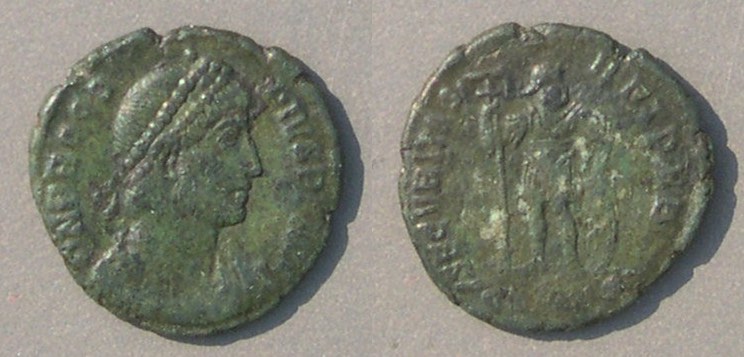
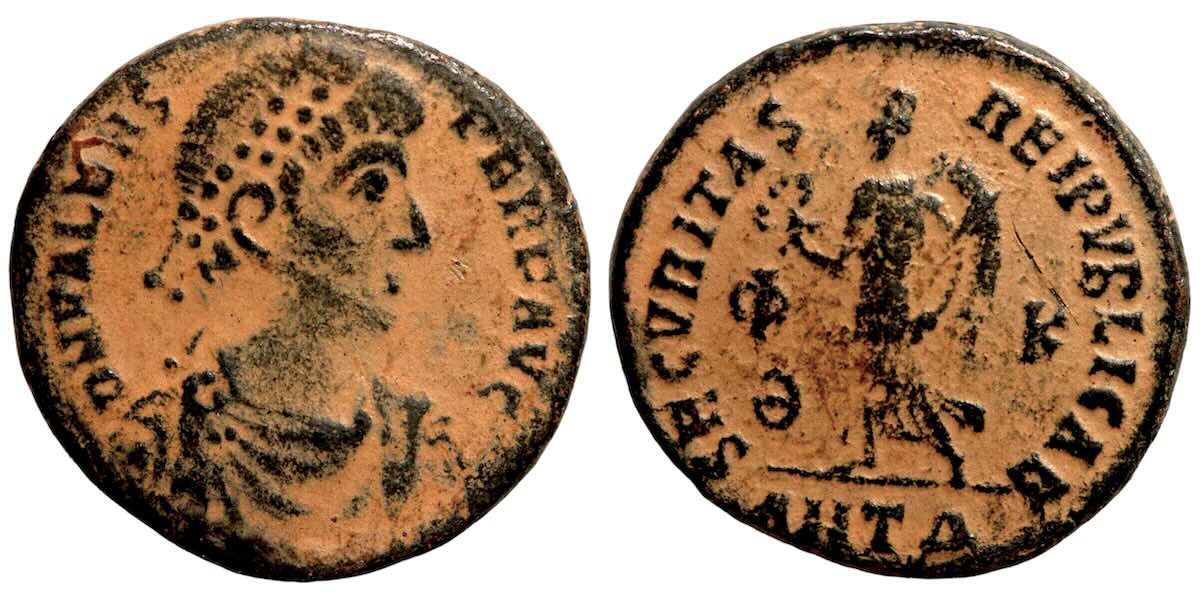
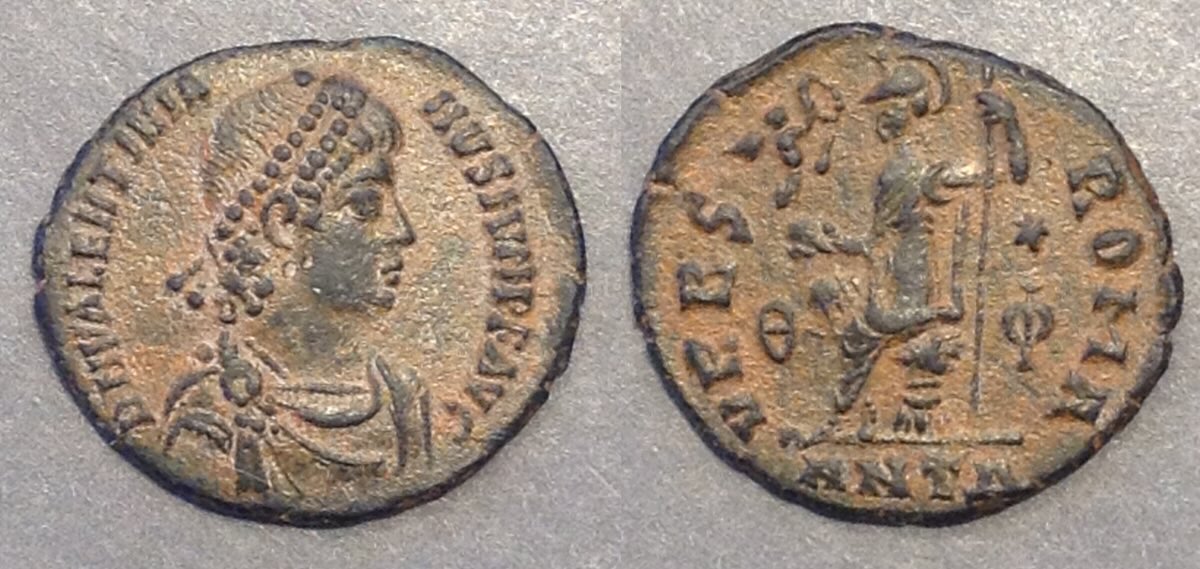
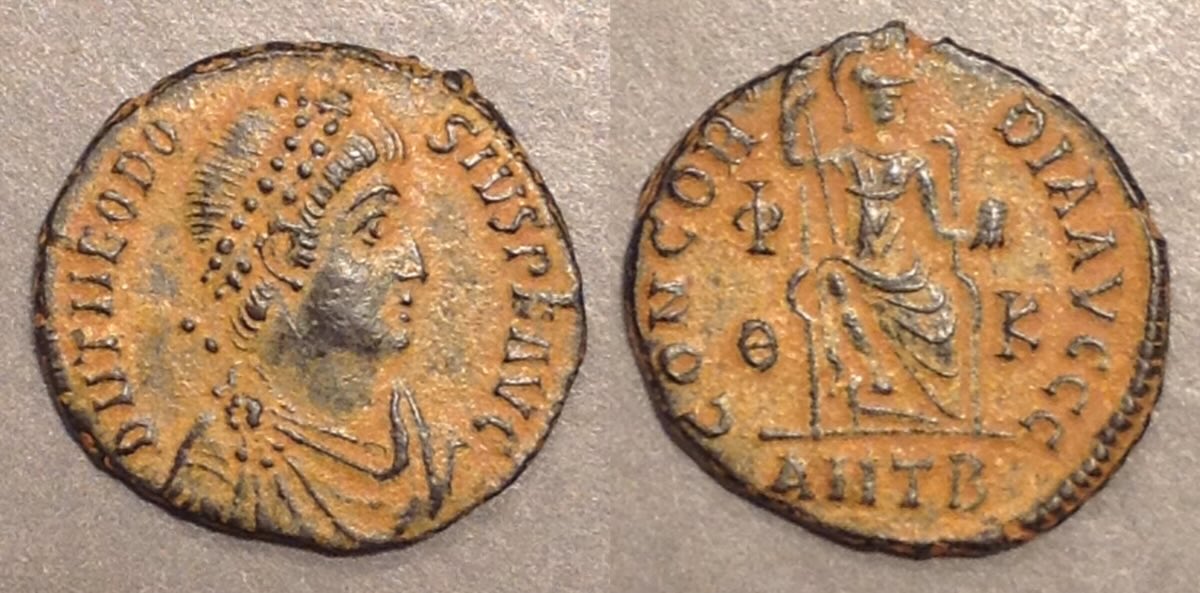
Valens "AE3".
17.7-17.1 mm. 2.50 grams.
DN VALENS PER F AVG
SECVRITAS REIPVBLICAE
ANTA  with
Φ  K
Θ
in the fields.
The reverse design is very common. The mint is very common. The letter combination in the field is common. The emperor is common. So, the coin is very common, right? 

Well, not so fast.
This obverse legend for Valens is in RIC only for gold and silver, never AE. That's one dimension of rarity--a not-in-RIC AE legend.  (It took a lot of looking in RIC to confirm that assertion.)
The reverse fieldmarks are in RIC only after the death of Valens. They begin with the next issue for which SECVRITAS REIPVBLICAE has been discontinued except for one "r5" example for Gratian. (RIC IX Antioch 49). This coin is from that issue (which is not listed as having any Valens coins) of slightly smaller size AE3 coins, which are mostly CONCORDIA AVGGG coins which were not issued for Valens. It has the smaller size it should have to belong to that issue. 
  If it took me almost an hour of looking to identify what I had, you can see why the seller didn't bother. 99 times out of 100 he would not have found anything special. I got lucky.
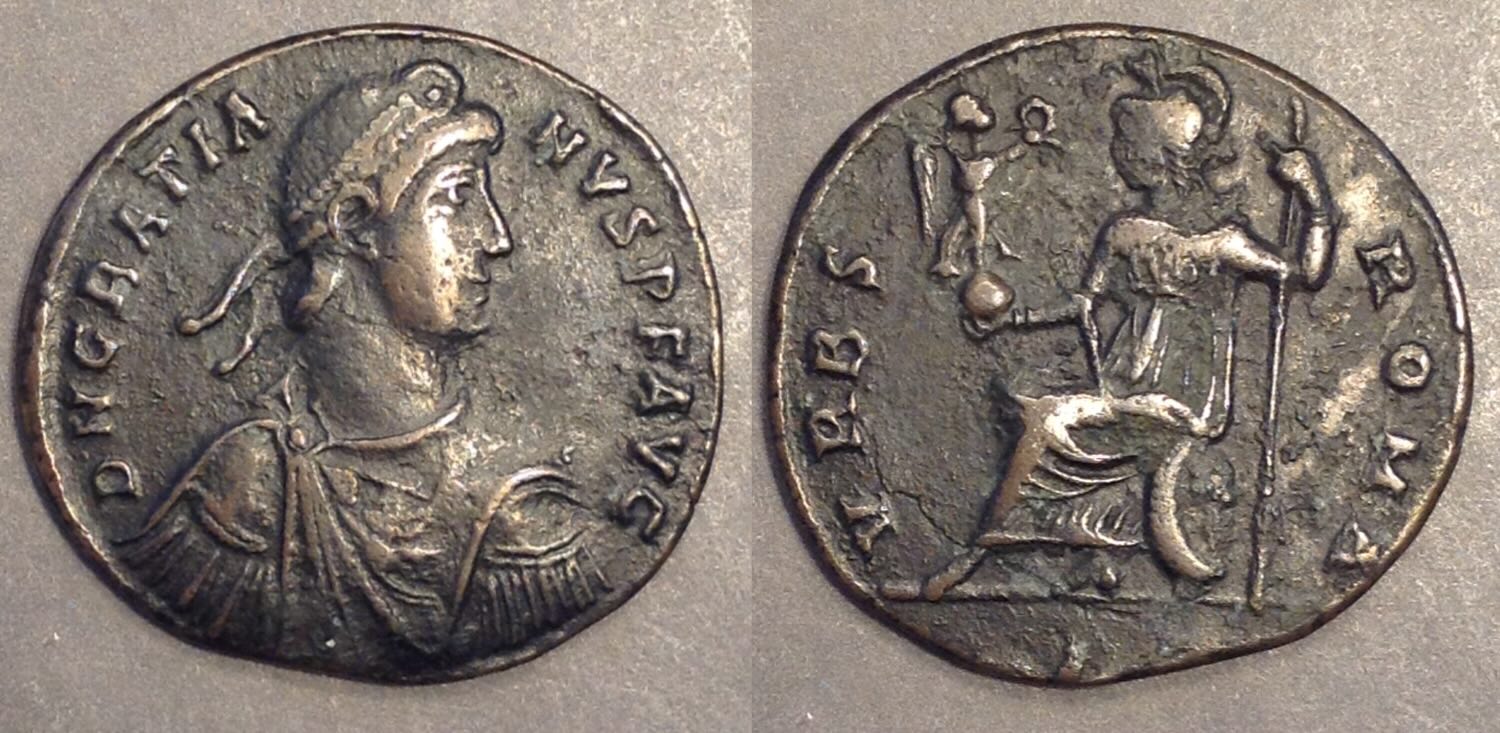


Gratian
Medallion

Very rare


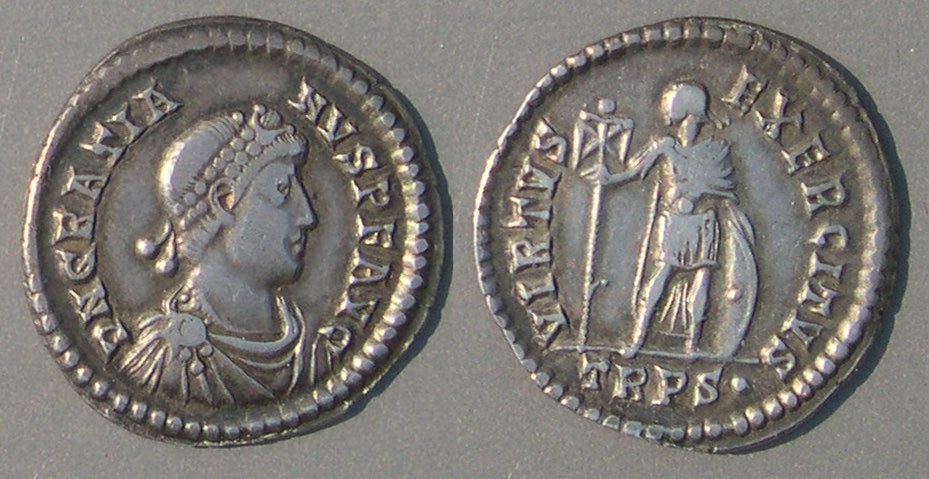
Gratian

miliaresion


Gratian

R PRIMA


Valentinian II.  Rarer types first.

Valentinian II
AE3
SMAQP


Not the common AE4.
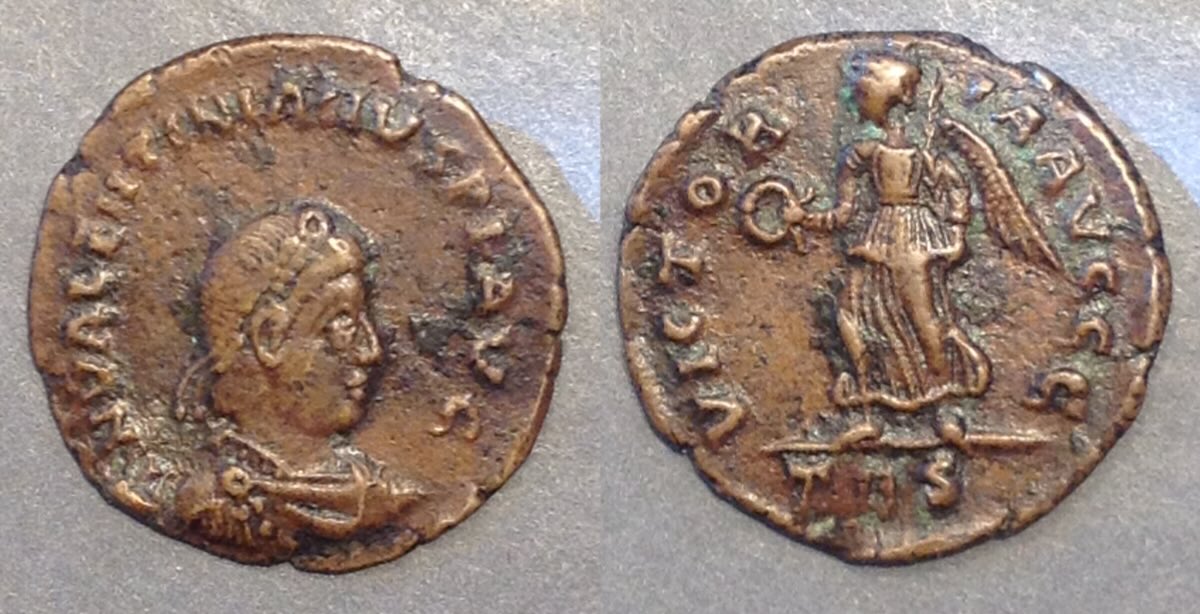


Valentinian II
AE3
TES


Not the common AE4.
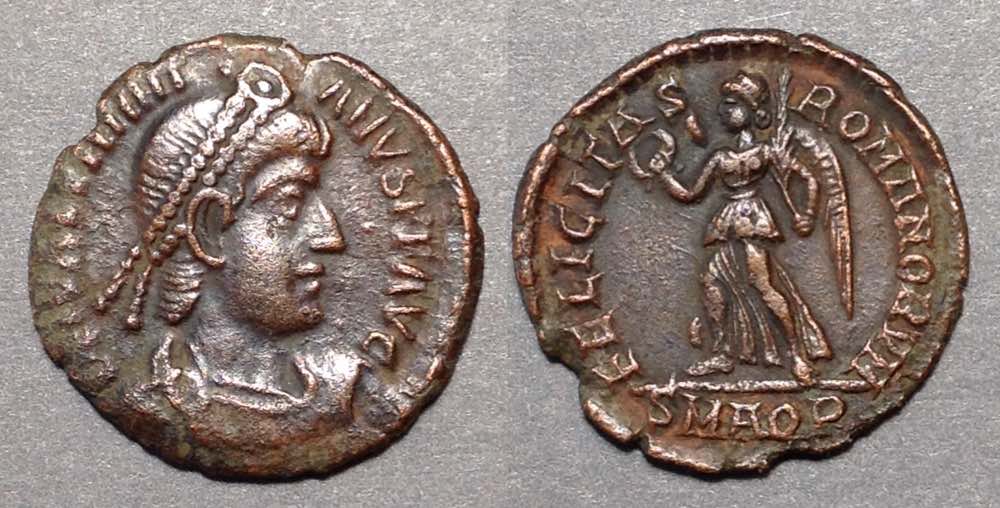


Valentinian II

FELICITAS ROMANORVM

Extremely rare reverse type.


Valentinian II
 

SPES REIPVBLICAE
RE 

RIC Rome 63a, "R4". Extremely rare.
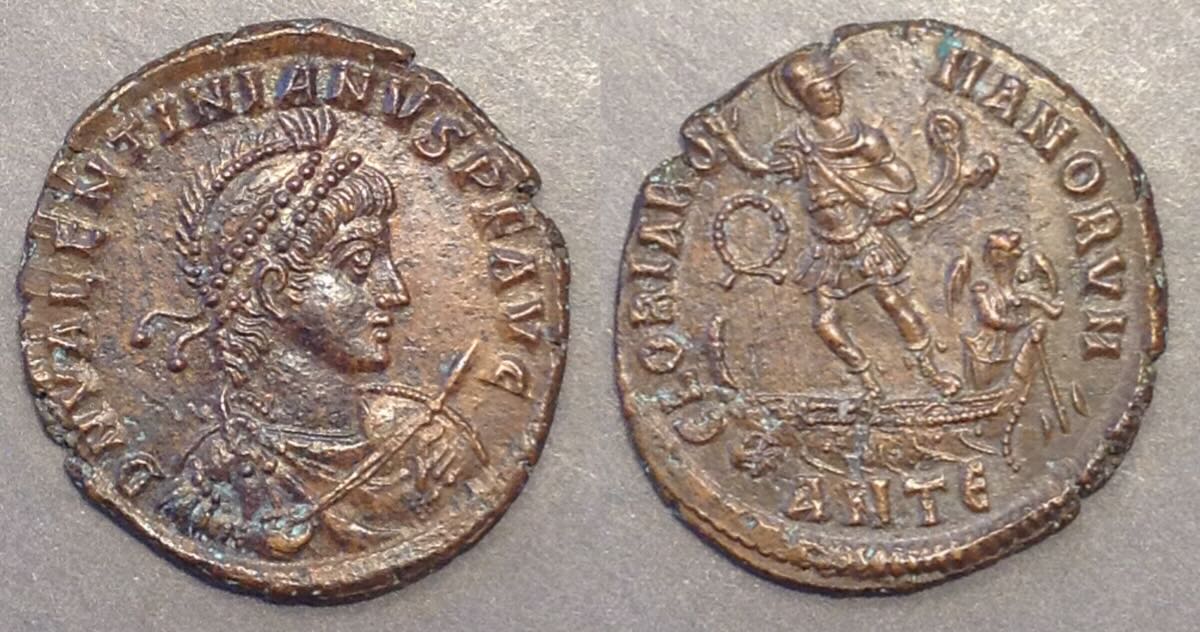


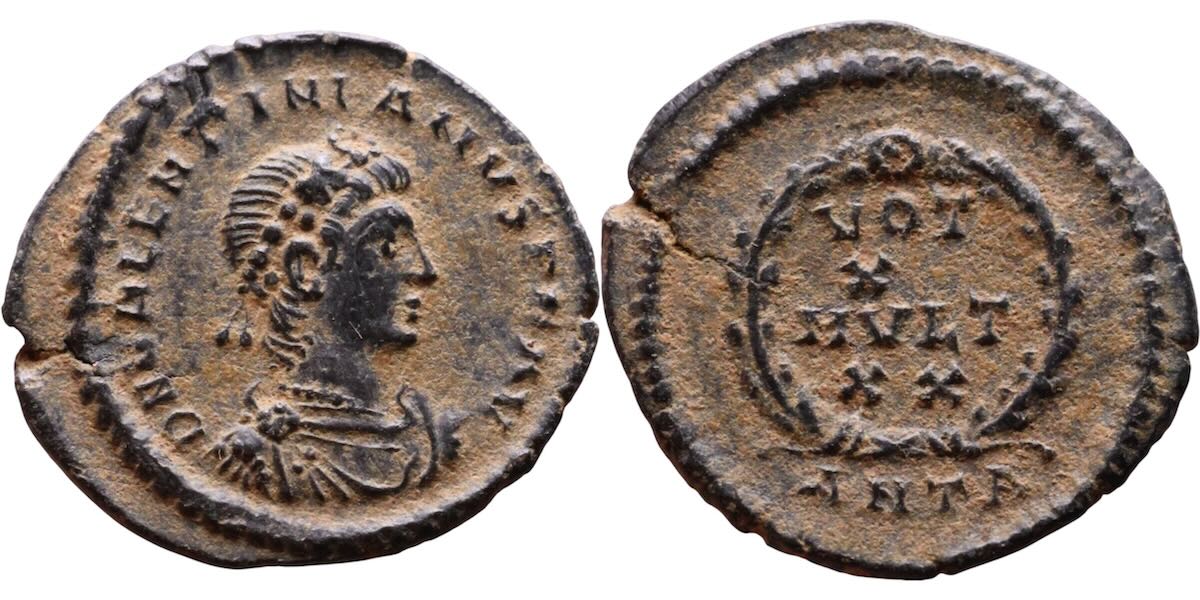
Valentinian II. Nice condition.


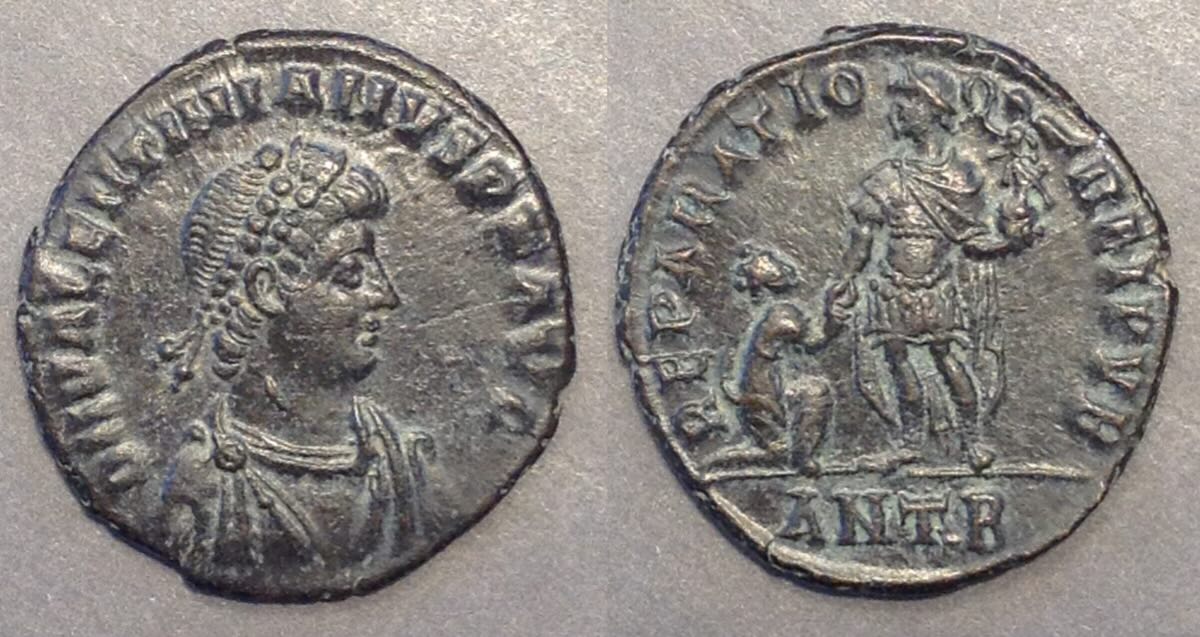
REPARATIO REIPVB

ANTB


Valentinian II

Identifed by the younger portrait.


VRBS ROMA


VOT/X/MVLT/XX
Larger than most of this type.


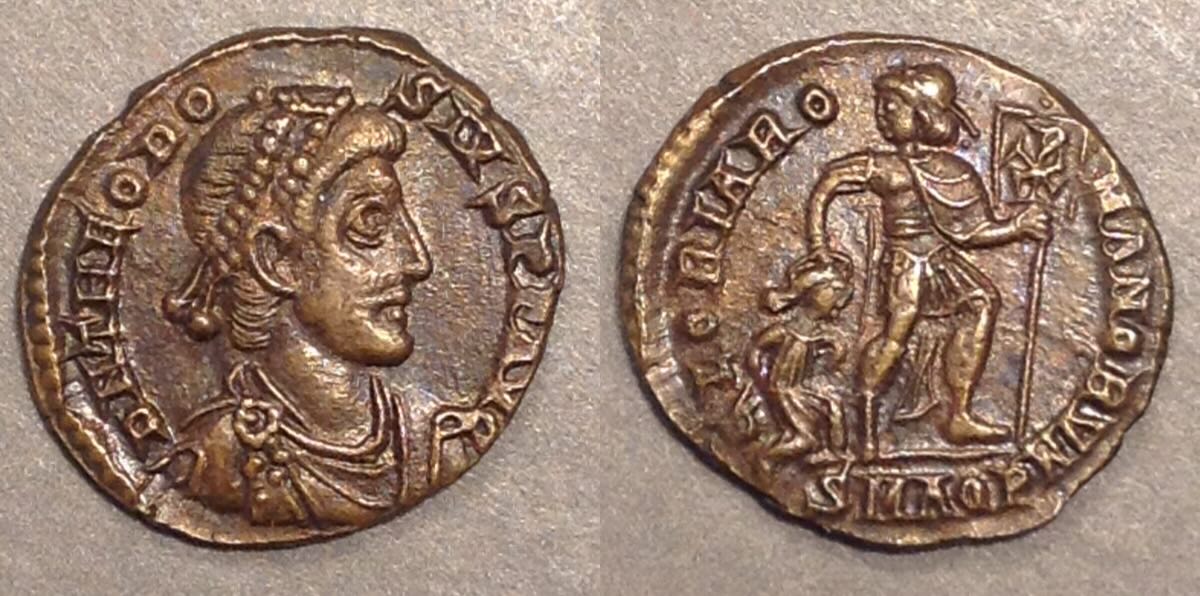
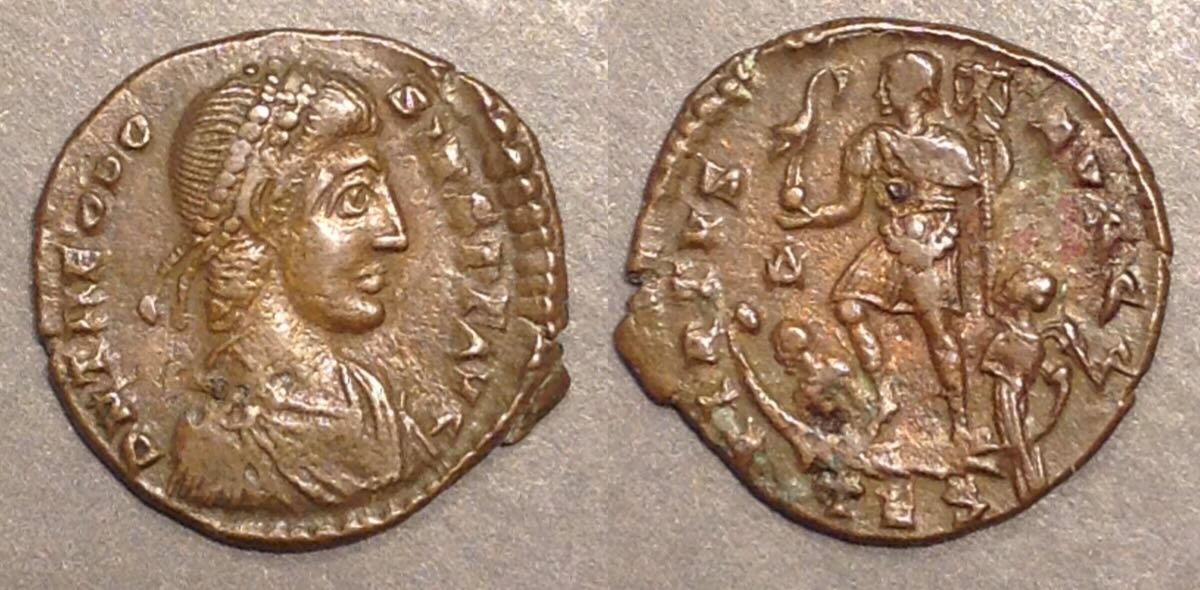
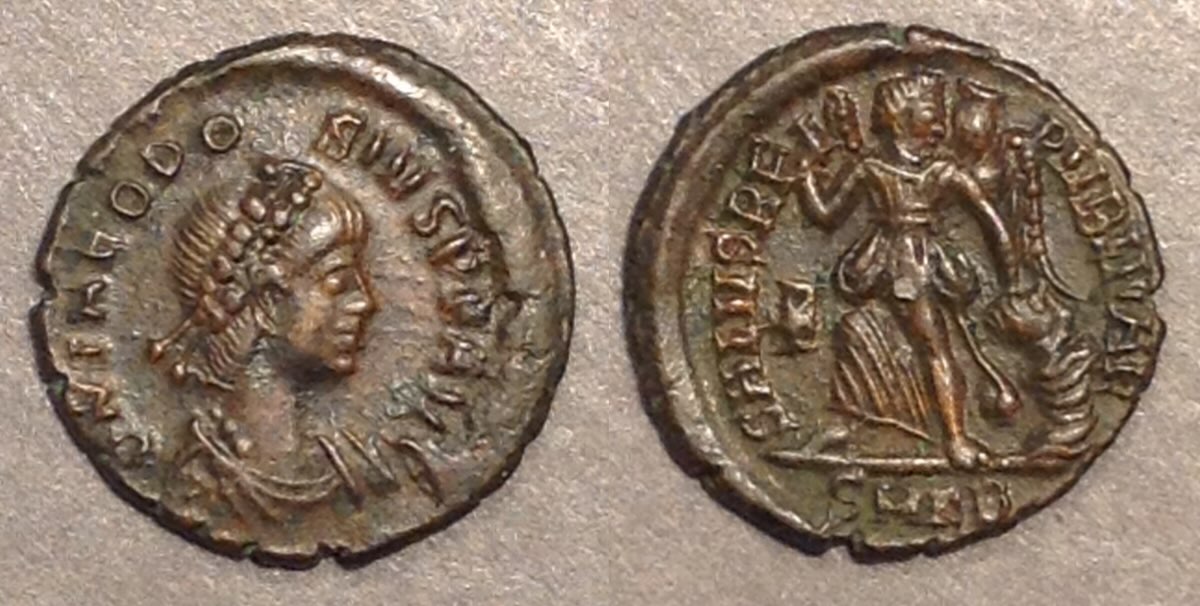
Theodosius. Rarities first.


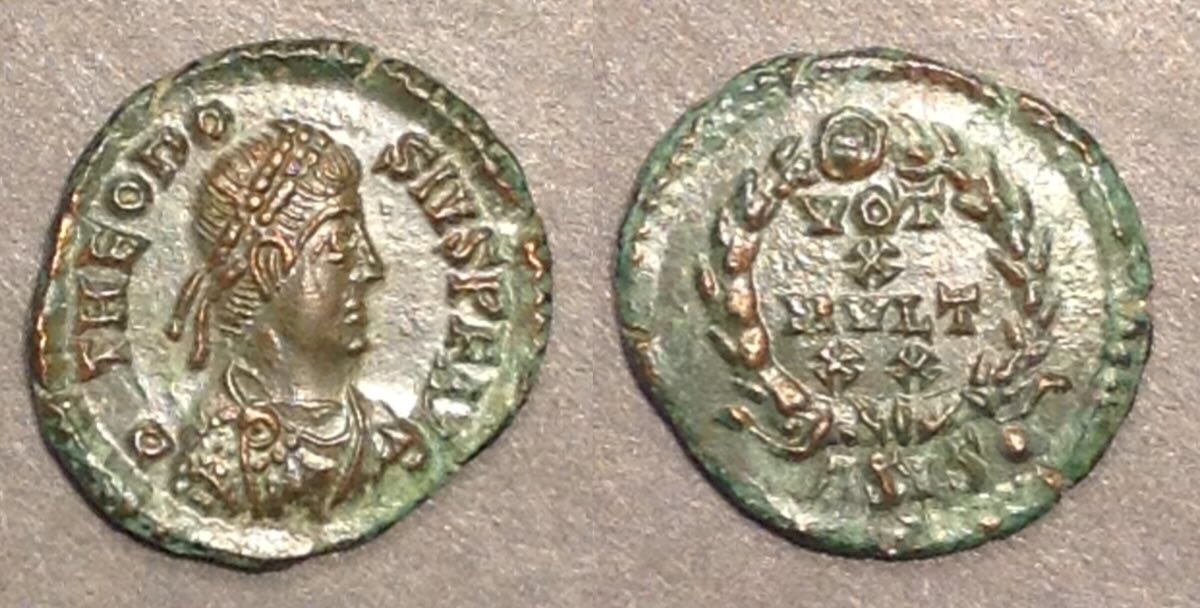
Theodosius
SPES REIPVBLICAE
RE 

RIC Rome 63a, "R4". Extremely rare and the finest I have seen. Much nicer than the RIC plate coin.
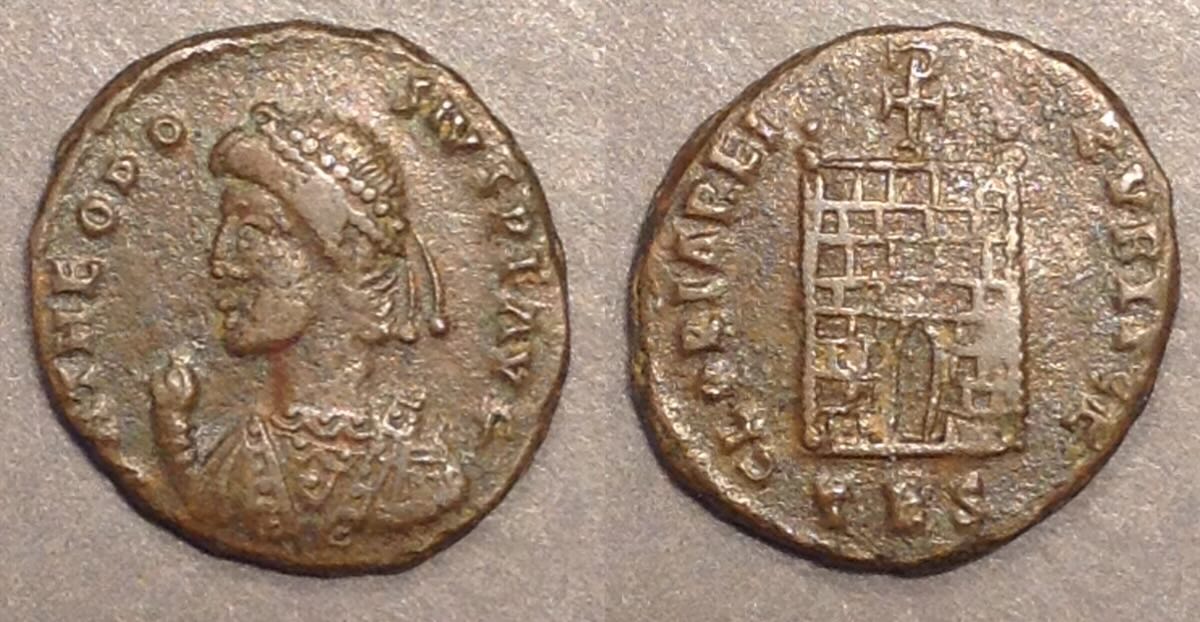
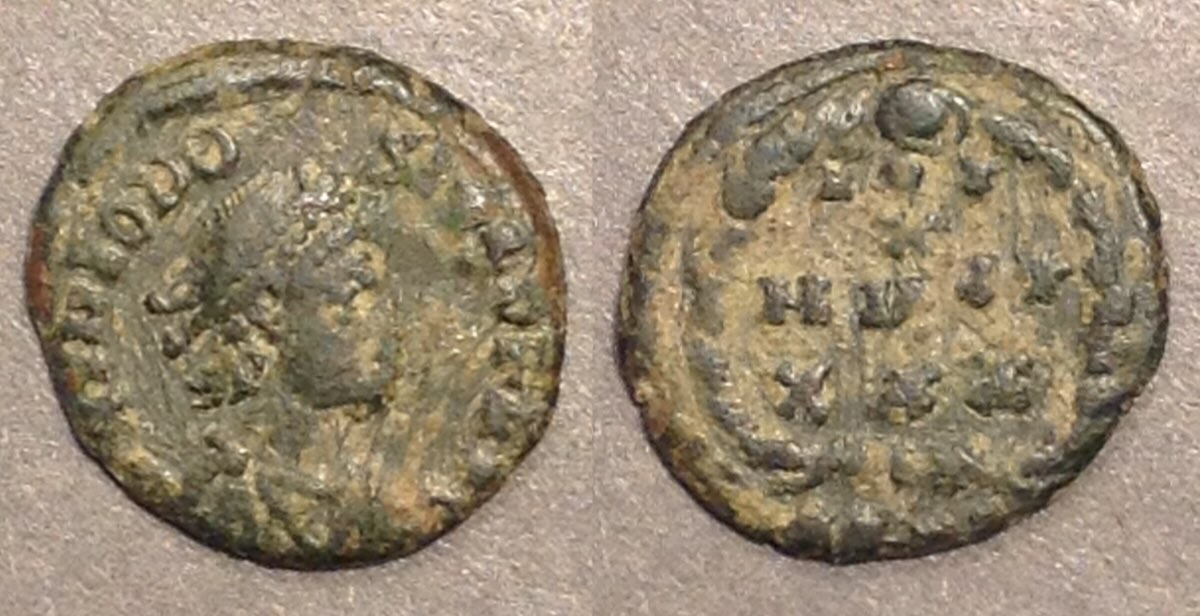


Theodosius

very rare


VOT/X/MVLT/XXX
From 10 to 30 is very rare.
Antioch


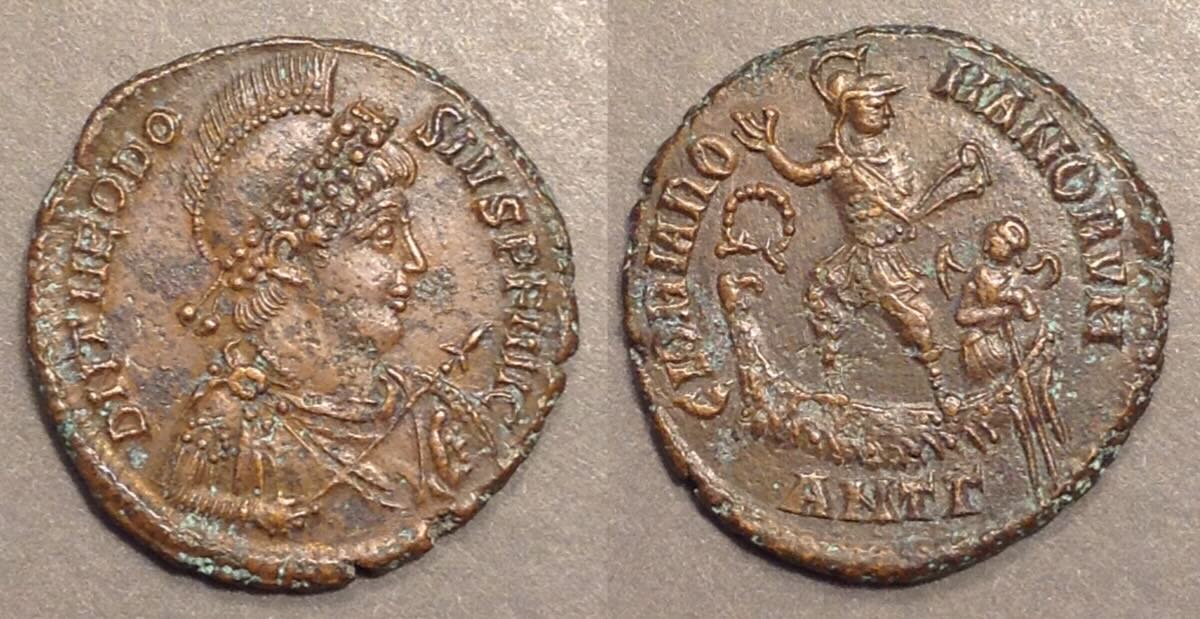
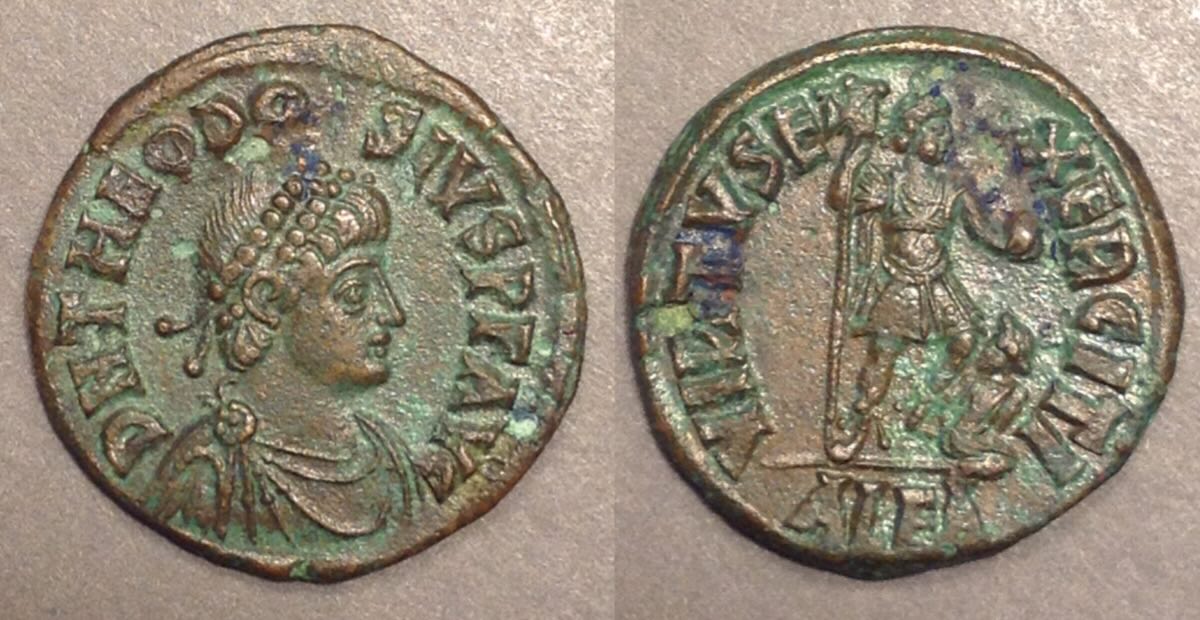
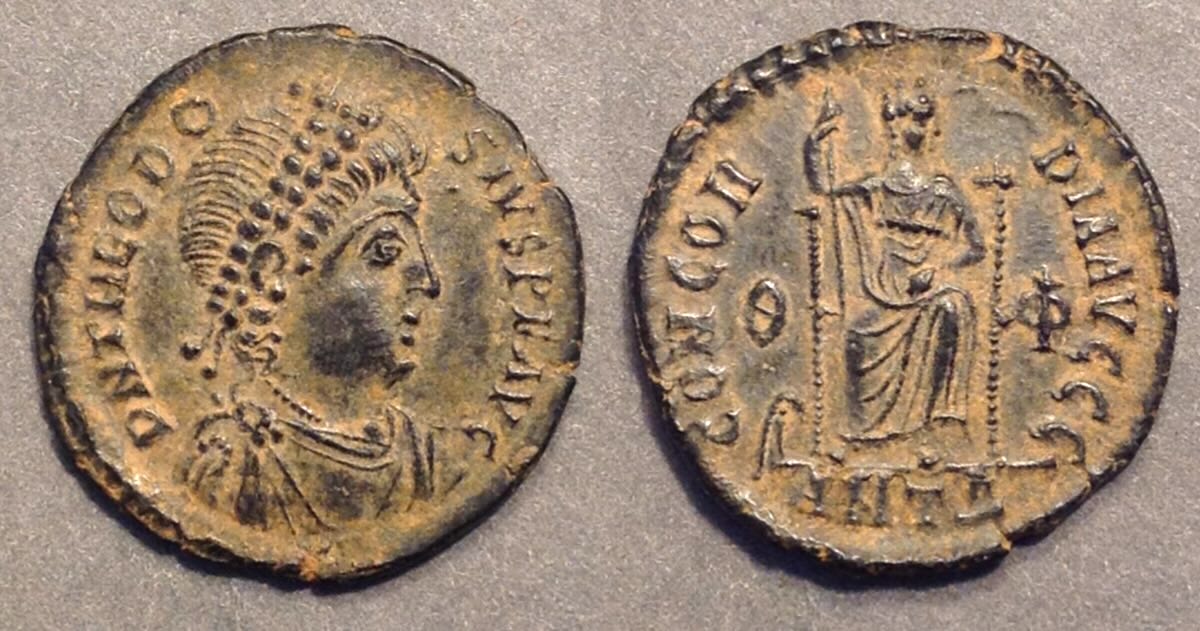
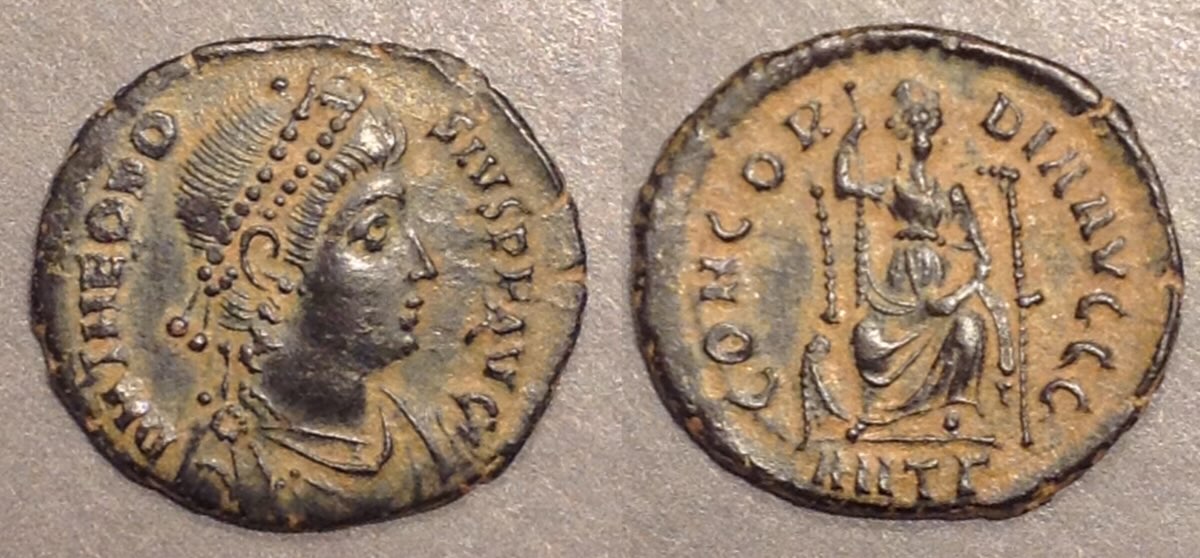
Theodosius. Excellent condition. 

Theodosius

GLORIA ROMANORVM

Gallry


VIRTVS EXERCITI


CONCORDIA AVGGG
no globe
ANTΔ


CONCORDIA AVGGG
no globe
ANTΓ


CONCORDIA AVGGG
Globe on right


GLORIA ROMANORVM
This reverse type is very common for Valentiniana and Valens, but less so for Theodosius.


VIRTVS AVGG

Galley

TES


SALVS REIPVBLICAE

Remarkably clear reverse


VOT/X/MVLT/XX
ASIS •


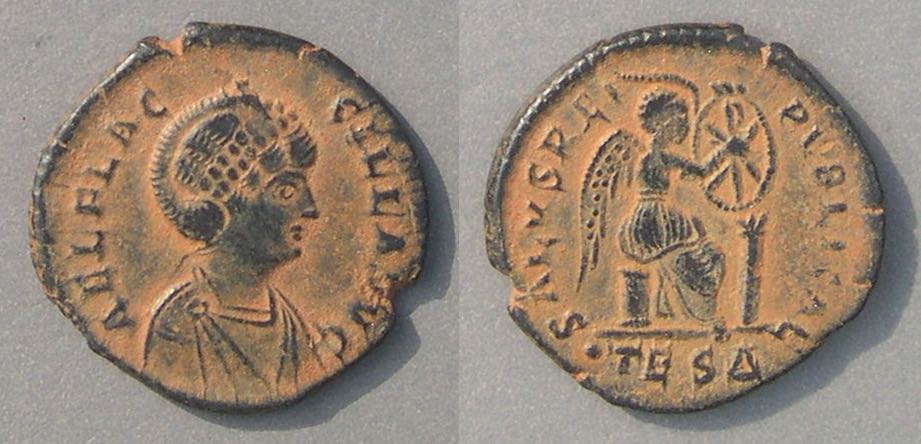
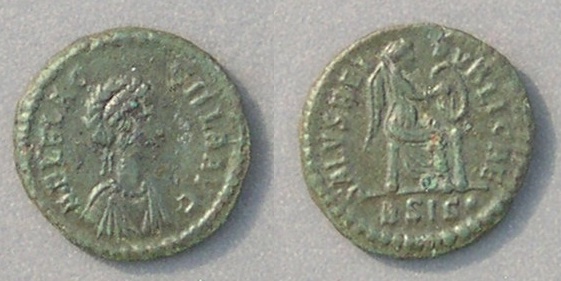
Aelia Flaccilla. She has only three types, none of which are rare. These are in nice condition. 

Aelia Flaccilla
wife of Theodosius

Common. Nice condition. 


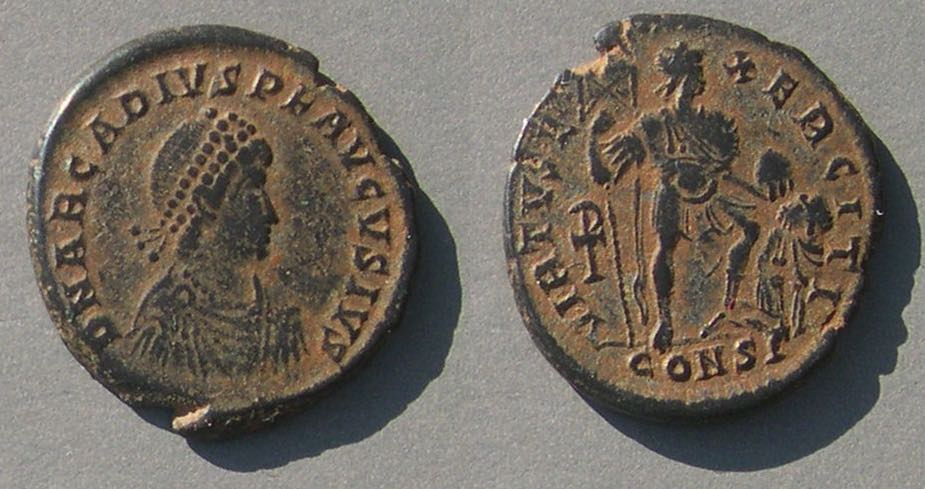
Arcadius

Arcadius
AE2

DN ARCADIVS PF AVGVSIVS [sic] 

All the coins from this issue spell "Augustus" this way. Is it because of changing pronunciation?
 
 
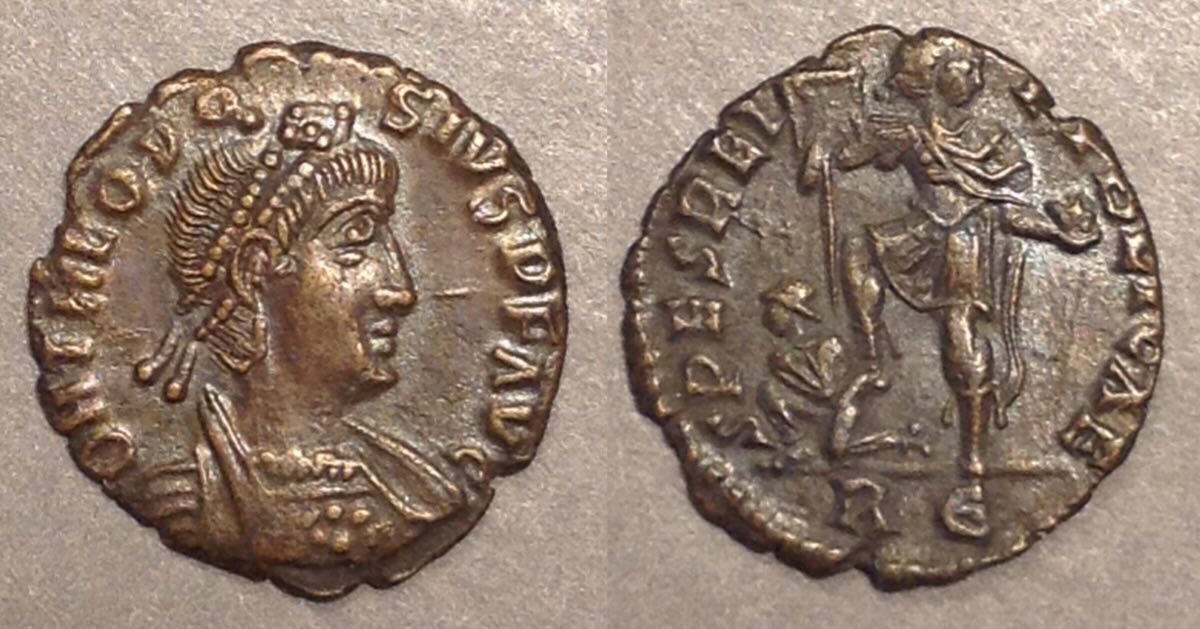
Honorius.  

Honorius
Bust 3/4 facing right


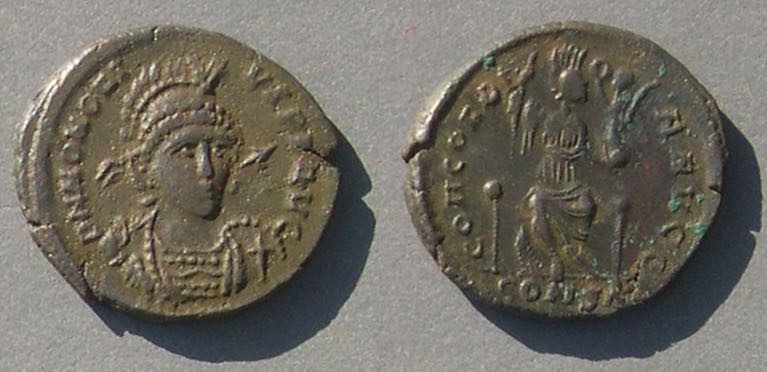
CONCORDIA AVGG


Honorius

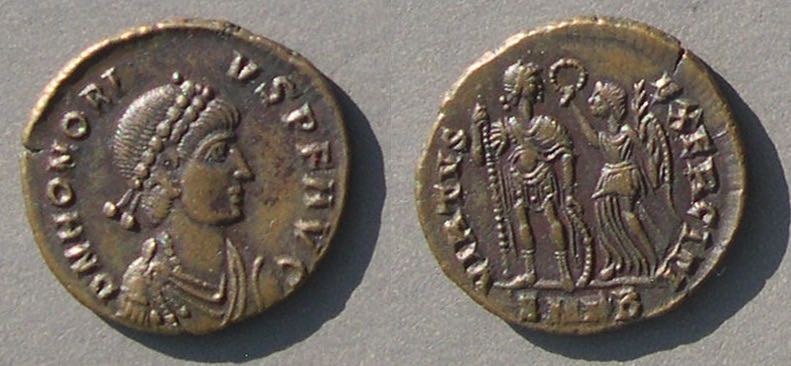
VIRTVS EXERCITI


Theodosius II, 402-450.  


Theodosius II
VRBS ROMA FELIX

Usually very crowded and in terrible condition. Very rare with this much legend.


Theodosius II
CONCORDIA AVGG
Facing bust


Eudocia.  
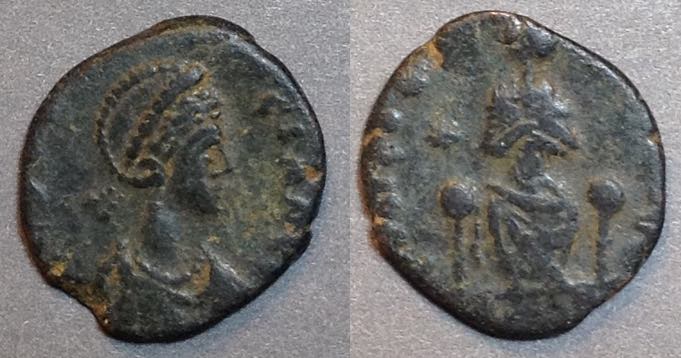
Eudocia (spelled with a "C")

Extremely rare
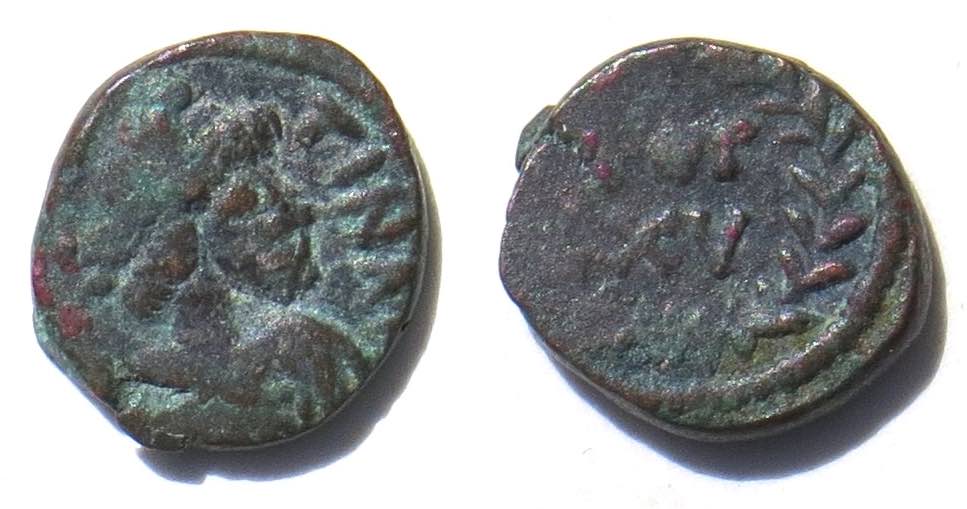


Valentinian III
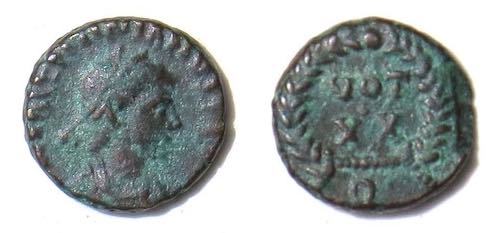
VOT
 XV

Very rare


Valentinian III

VOT
 XX

Rare


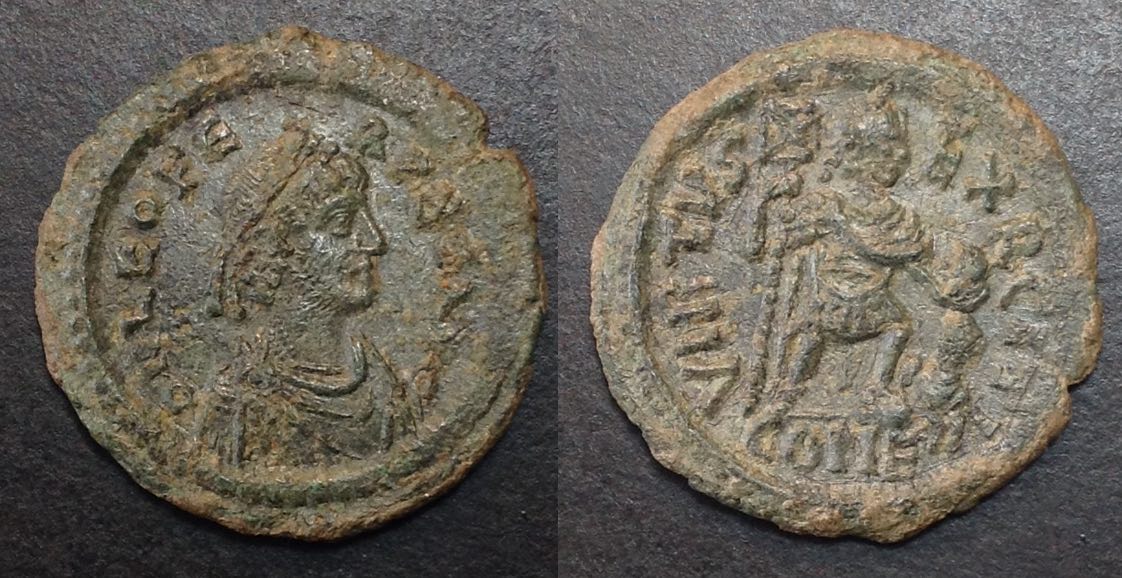
Leo I


Leo I
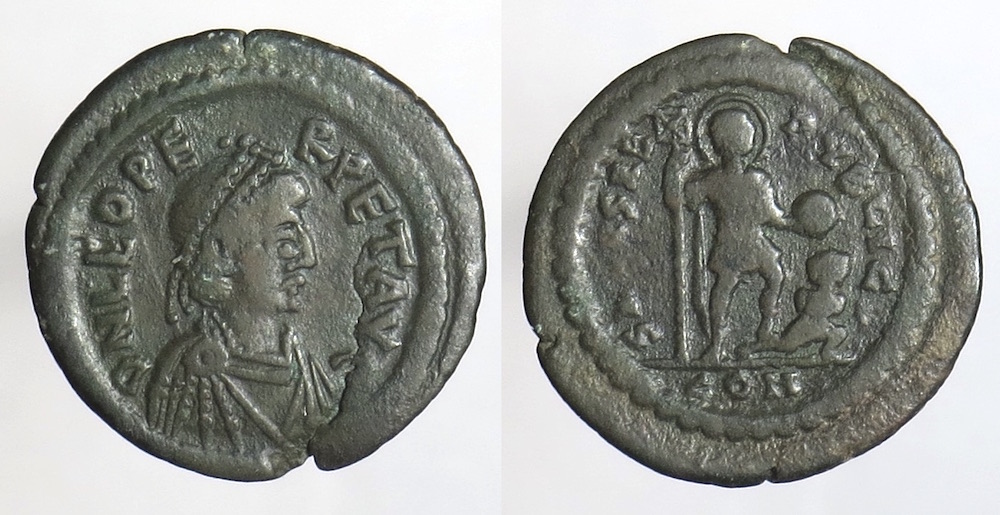
large flan
Legend variety unlisted


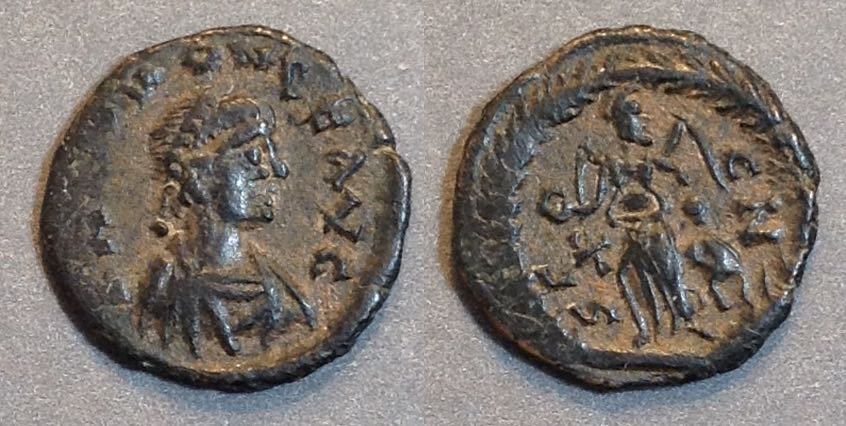
Zeno

Hahn plate coin.


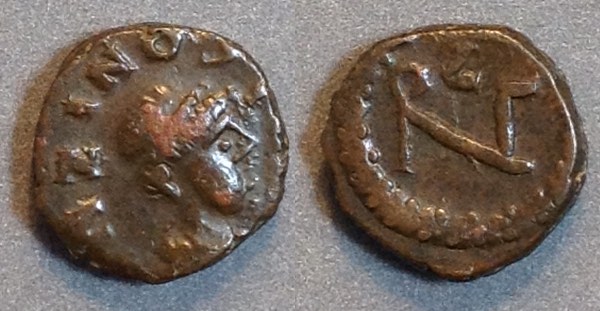
Zeno, spelled ZINO

I bought it from a small group of AE4s at Spink and walked it over to show it to John Kent at the BM, before he published RIC X.  He expressed interest and said, "Why do I think this is from Thessaloncia?" He offered to buy this coin for the BM and I knew Spink has a second example, so I offered to go buy it right then. I left and went back to Spinks where I got this one and bought their second example and took it back to him and sold it to the BM at my cost which was 15 pounds. He pulled the cash from a coffee can on his desk. The ZINO spelling is noted in RIC X, page 314, footnote to 958-60, referring to coins from Thessalonica. 
 

Basiliscus


Basiliscus


  Page 1 is here, page 2 here, and page 3 here. Other pages have Tetrarchal, Constantinian, and (this page) late Roman coins.