The Biga and its Animals on Ancient Coins

A biga is a two-horse chariot. However, in numismatics the term also applies to chariots pulled by two other animals or fanciful creatures. This site is an illustrated list of the animals and creatures that pull bigae on ancient coins. Most are on Roman Republican denarii. This page does not consider quadrigae (four-animal chariots). 

A biga is usually pulled by horses. They are common on Roman Republican coins. Bigae of some other animals are also fairly common on coins of the Roman Republic. Less common are bigae on coins of the Roman empire and on Roman provincial coins. On Greek coins bigae of horses (and perhaps mules) are common from Sicily (e.g. from Syracuse, Himera, Messana, and Catania), but bigae of other animals are rare on other Greek coins. 

The Animals are listed here and illustrated below. Horses (driven by Victory [next], LunaApollo, a Gallic warrior, Venus, Juno Sospita, a Roman warrior, or Hector
mules, goats, oxen, elephants, snakes (winged or not winged), lions, panthersstags, and peacocks

Other creatures: Centaurs, cupids, hippocamps (aka seahorses), griffins, unmatched pairs


Horses.  Most are on Roman Republican denarii.

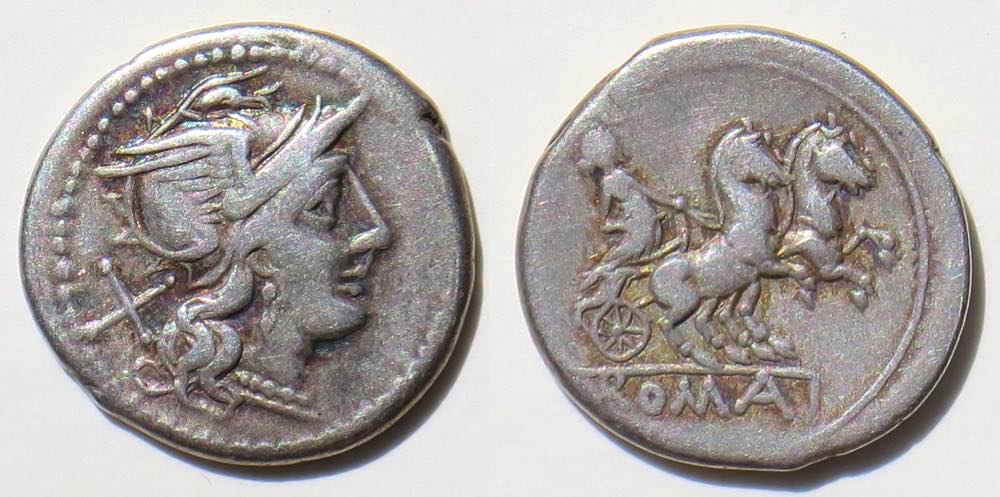
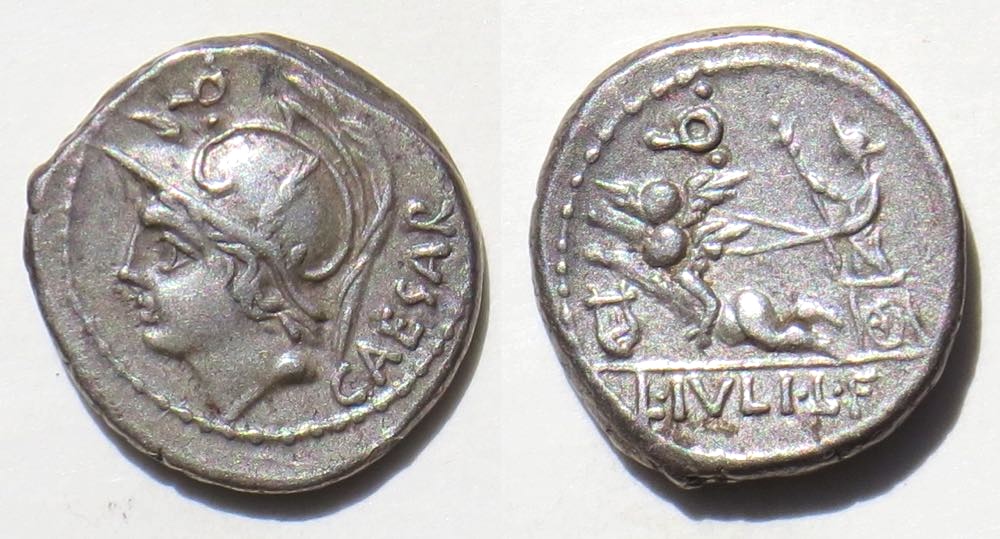
Driven by Victory. Victory is, by far, the most common driver of a biga of horses.
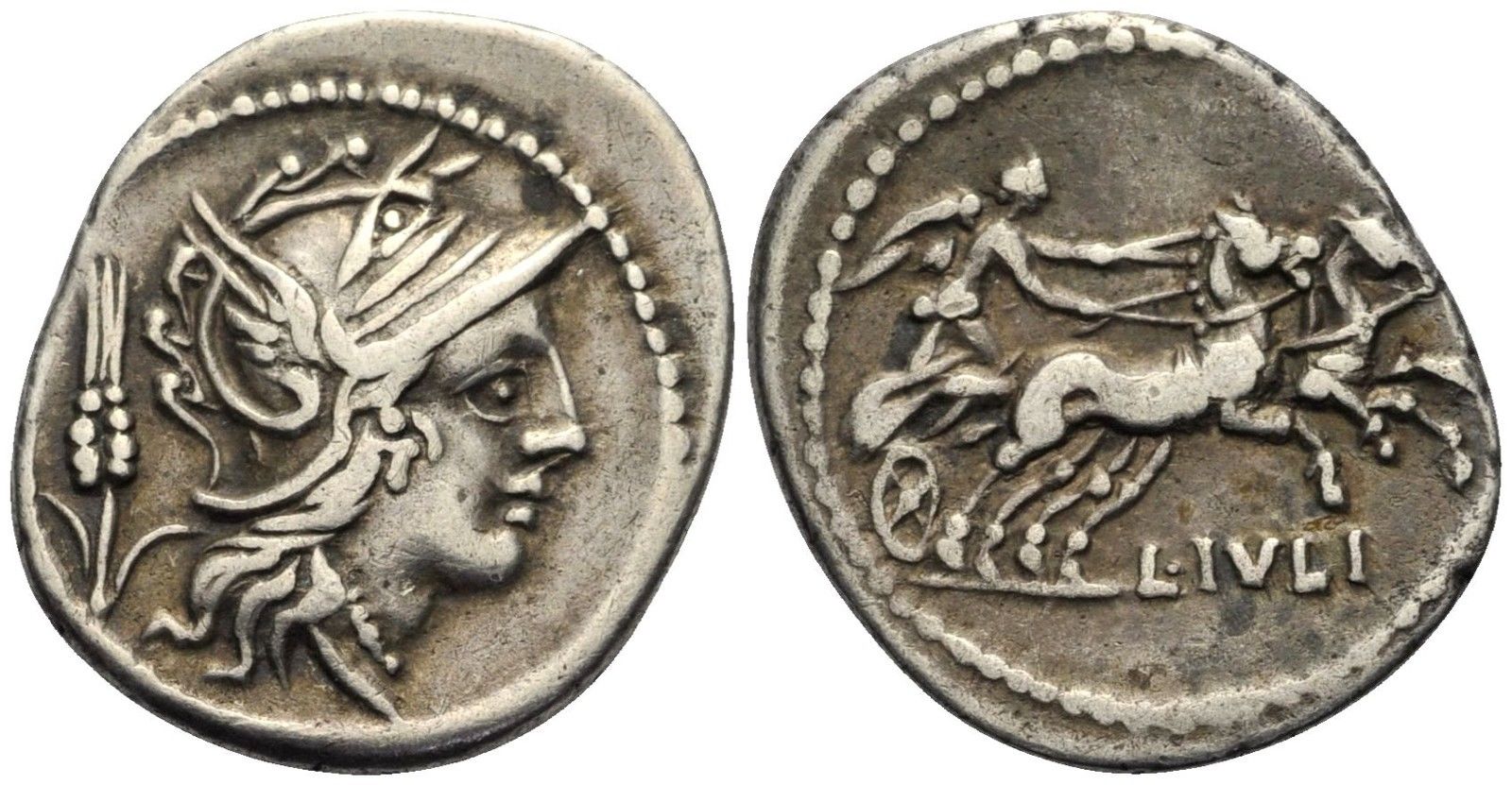

Driven by Victory
Roman Republican denarius
101 BC
Cr 323/1. Sear 201
L. JULIUS ("probably not a Julius Caesar" Crawford, page 327.)


Driven by Victory (a second design with the horses rearing, which is an unusal pose):
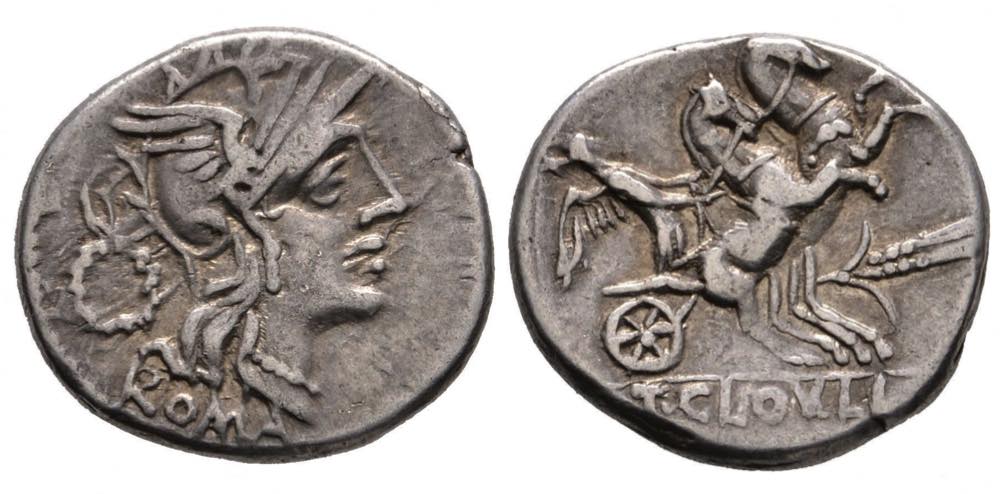
Driven by Victory
Roman Republican denarius

128 BC. 
Cr 260/1. Sear 136
T. CLOULIUS


Other Republican denarii with Victory driving are listed below


Driven by Luna

Driven by Luna
Roman Republican denarius

179-169 BC
Crawford 158/1. Sear 69
anonymous
The crescent identifying Luna is barely visible on this example
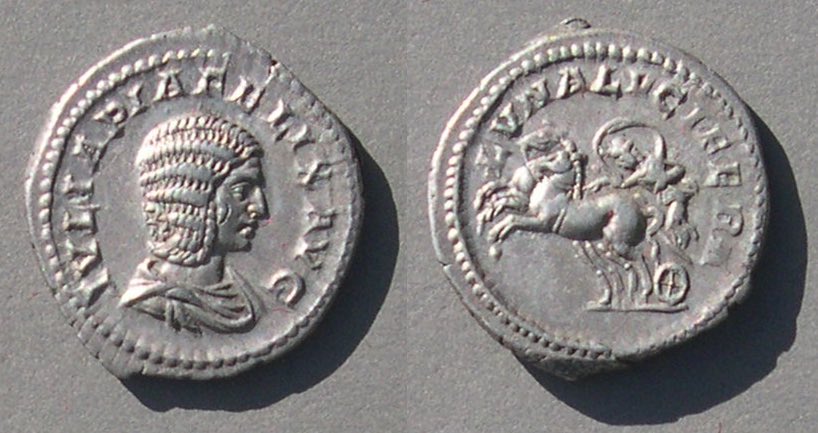

An imperial example:


Driven by Luna
Roman imperial denarius
Julia Domna, wife of Septimius Severus (193-211)
and mother of Caracalla (196-217). 
RIC 379c. Sear II 7101
LVNA LVCIFERA
Struck 215 under Caracalla
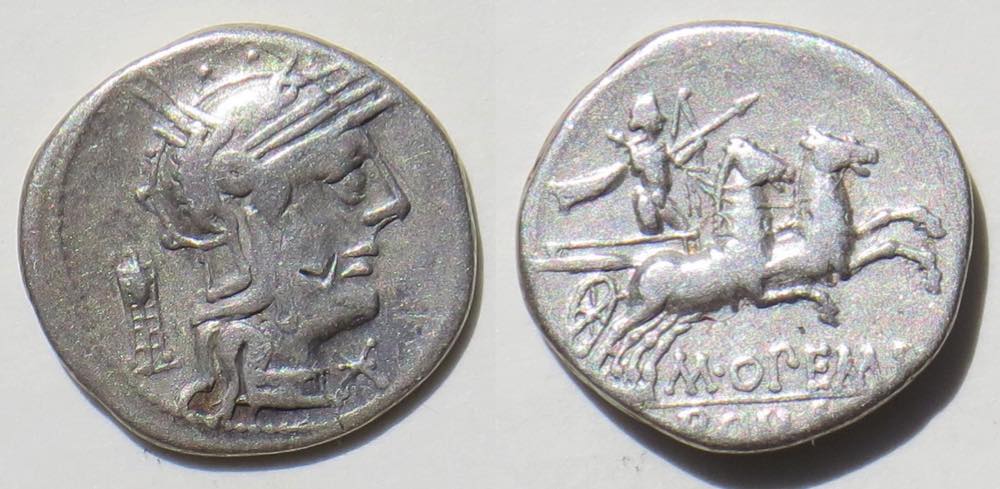


Driven by Apollo


Driven by Apollo
Roman Republican denarius

131 BC
Crawford 254. Sear 130
M. OPEIMIUS


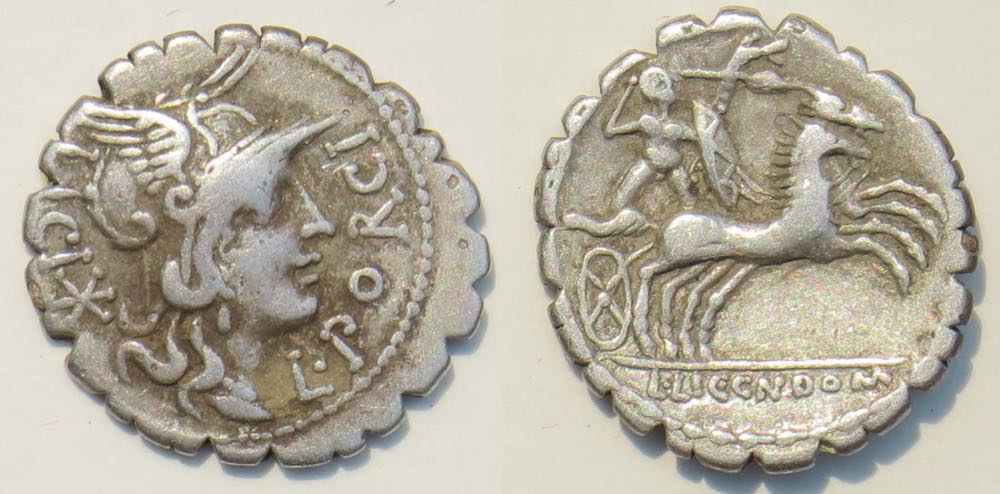
Driven by a Gallic warrior

Driven by a Gallic warrior
Roman Republican denarius
118 BC.

Crawford 282/5. Sear 158
L. PORCIUS LICINUS
(joint with associate Cn. Domitius)


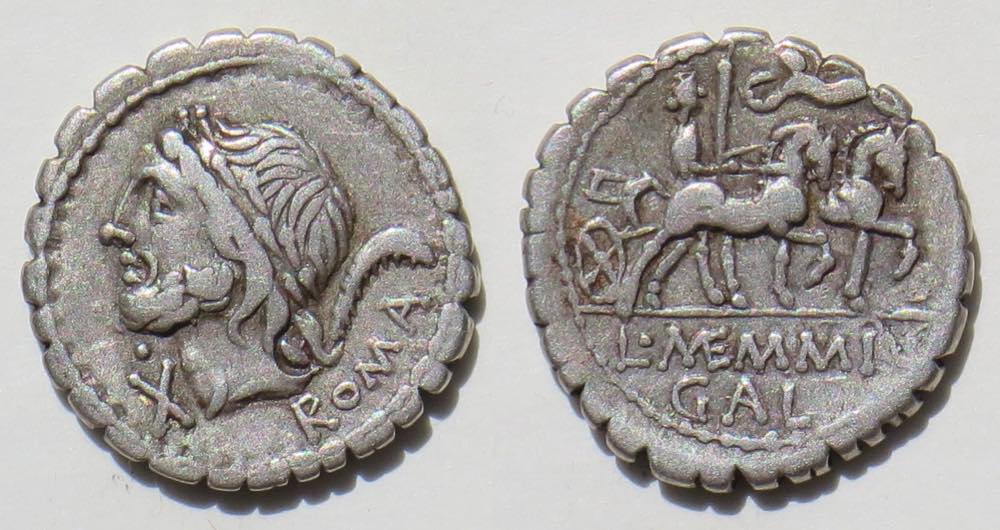
Driven by Venus

Driven by Venus
Roman Republican denarius
106 BC
Crawford 313/1b. Sear 190
L. MEMMIUS GALERIA

It is not obvious why this is identified as Venus. 


Cr 349/1 of 87 BC, Sear 262, is also driven by Venus. So is Cr 360/1b of 82 BC, Sear 284, P. CREPUSI and C. LIMETAN
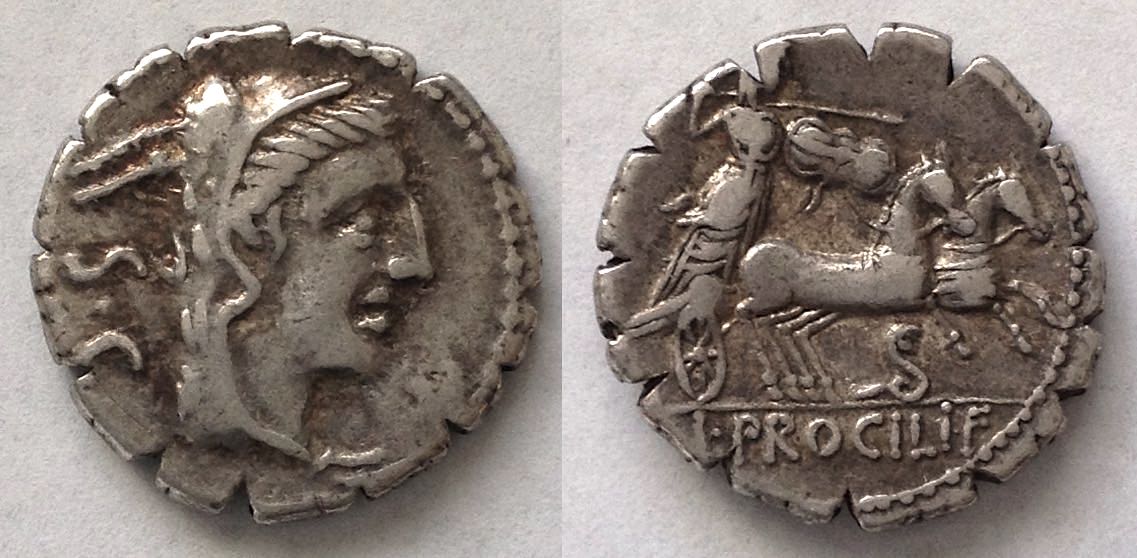
 

Driven by Juno Sospita


Driven by Juno Sospita, who has a distinctive shield
Roman Republican denarius
106 BC.
Crawford 379. 80 BC.
Sear 307
L. PROCILIUS


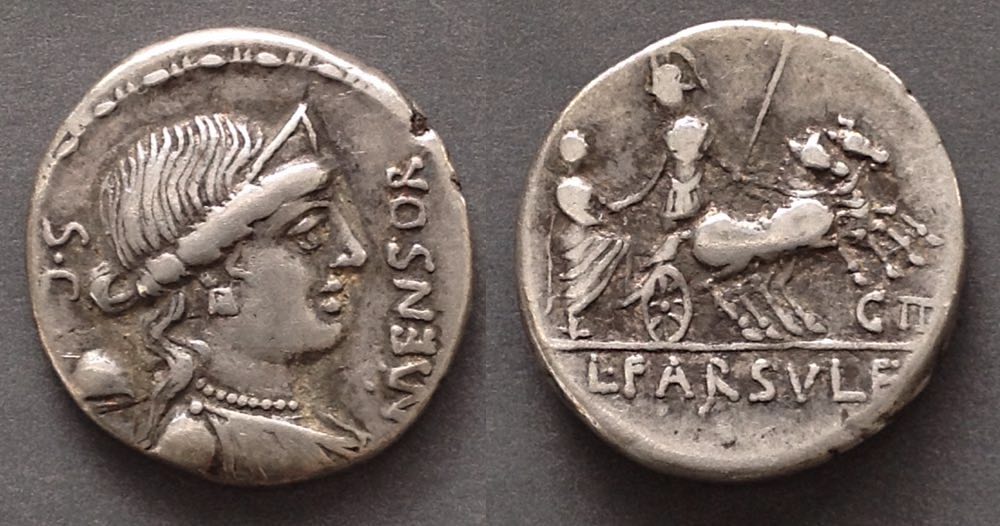
Driven by helmeted Roman warrior

Driven by helmeted Roman warrior
Roman Republican denarius
Crawford 392/1b. 75 BC.
Sear 329
L. FARSULEI MENSOR


Driven by Hector of Troy. An example of a biga of horses driven by Hector was shown by @LongShanks in this Numis Forums thread:
https://www.numisforums.com/topic/8919-a-biga-is-a-chariot-pulled-by-two-%E2%80%A6/#comment-118457


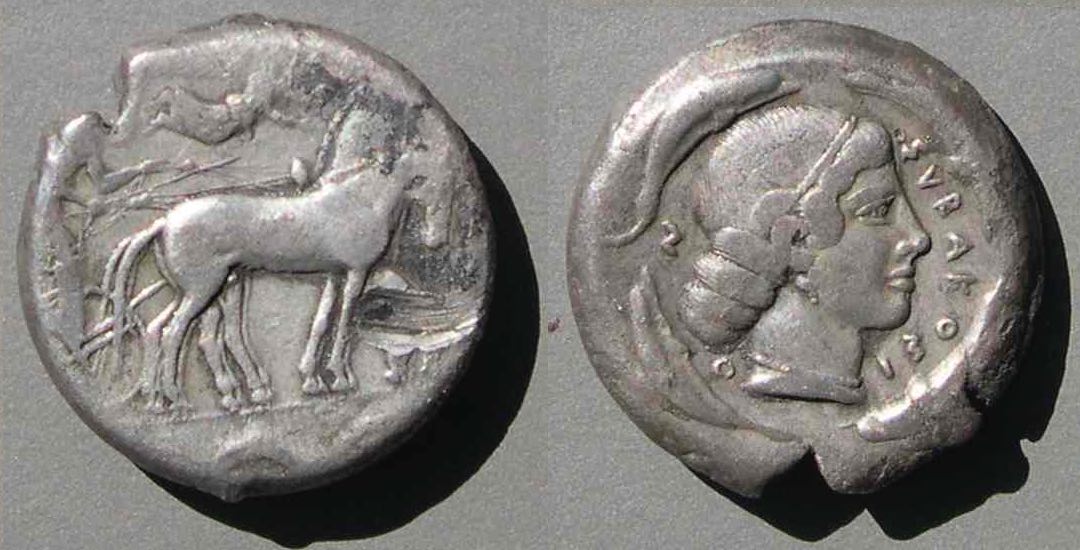
Greek. Several Greek cities in Sicily issued bigae with horses or mules (which can be hard to tell apart).

Biga of horses, driven by a "male charioteer."
Nike flying right crowning the horses.
Tetradrachm of Syracuse, Sicily. 474-450 BC.
24 mm. 16.95 grams.
Reverse: Head of Artemis-Arethusa right, four dophins around
ΣVRAKOΣION

Sear Greek 924.


An example said to be mules from Messana was shown by @Anaximander on Numis Forums in this thread:
https://www.numisforums.com/topic/8919-a-biga-is-a-chariot-pulled-by-two-%E2%80%A6/#comment-118457


Animals (other than horses) and fanciful creatures.


Centaurs
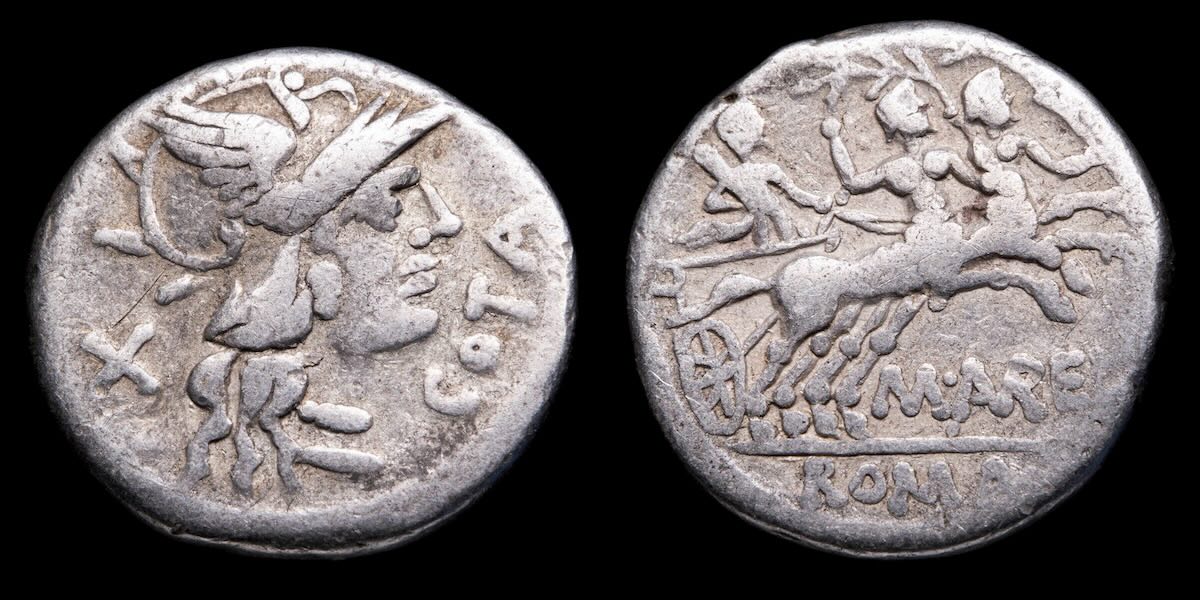
Centaurs
Roman Republican denarius
139 BC.
Cr 229/1a. Sear 106.
M. Aurelius Cotta
COTA up to right
Reverse: Hercules with club driving biga of centaurs holding branches right
M • AVRELI   (AVR ligate)
ROMA in exergue


Goats
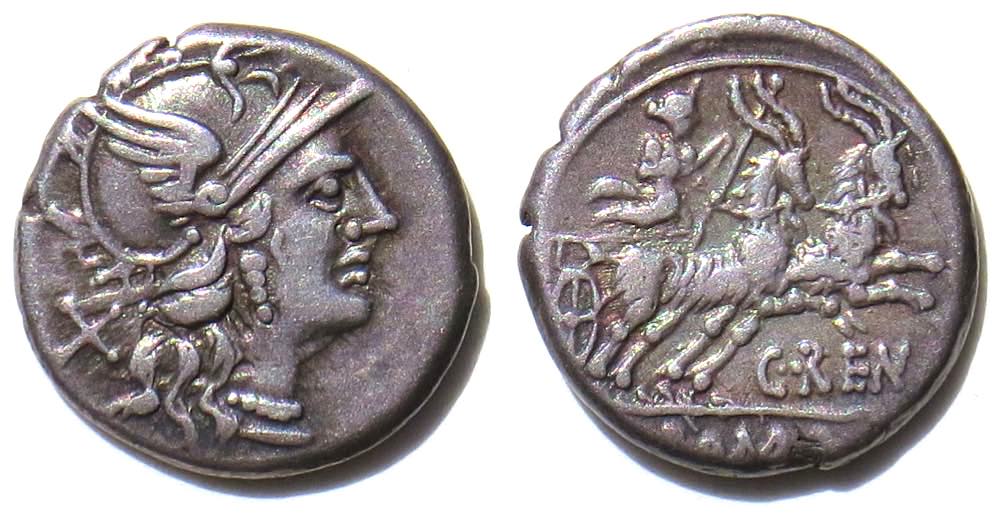
Goats
Roman Republican denarius
138 BC
Cr 231/1. Sear 108
C. RENI


Oxen

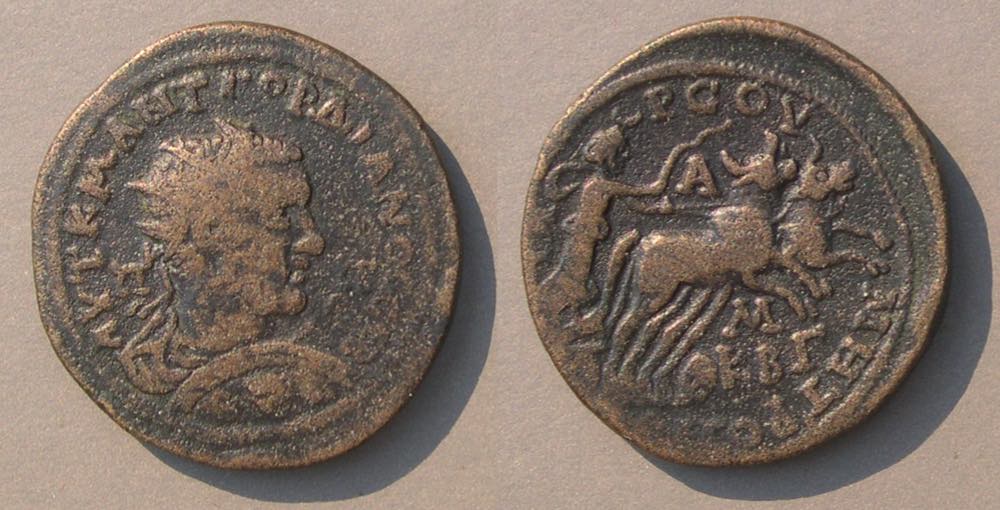
Oxen
A Roman provincial coin from Tarsos, Cilicia.
Very large. Larger than a sestertius. 36-34 mm. 28.82 grams.

Gordian III, 238-244 AD.
AVT K M ANTΓOPΔIANOC CЄB
Π  Π either side of the bust
TA-POCV MHTPOΠ A (in upper feld)
M
KBΓ below oxen. (BMC Cilicia disscusses this lettering without resolution)
SNG France 2 Cilicie 1671, with a different bust.


Elephants

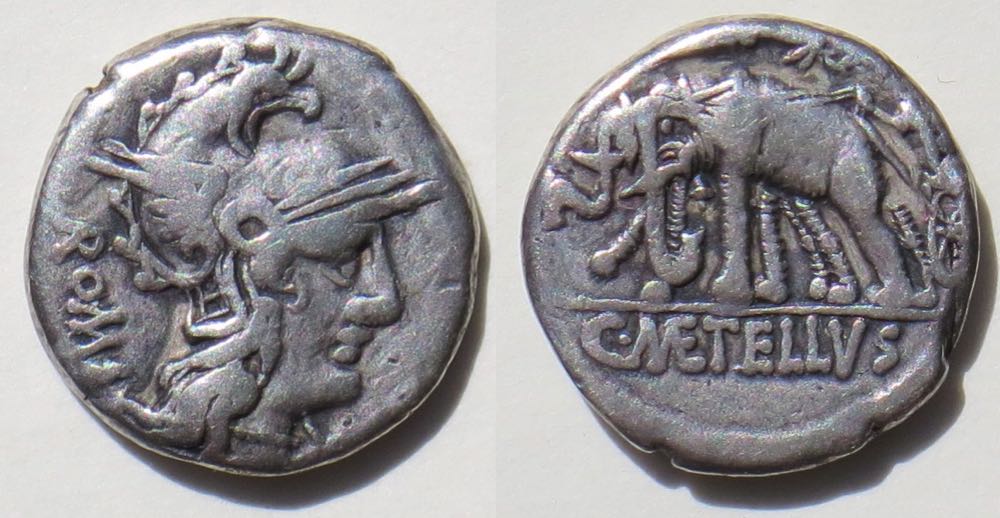
Elephants
Roman Republican denarius
125 BC
Cr 269/1. Sear 145
C. CAECILIUS METELLUS

(The Greek Seleucid King, Seleucus I, also has a type with a biga of elephants.)


Cupids
 
Cupids
Roman Republican denarius
103 BC.
Cr 320/1. Sear 198.
L. JULIUS CAESAR (not the famous Caesar)


Snakes (serpents)

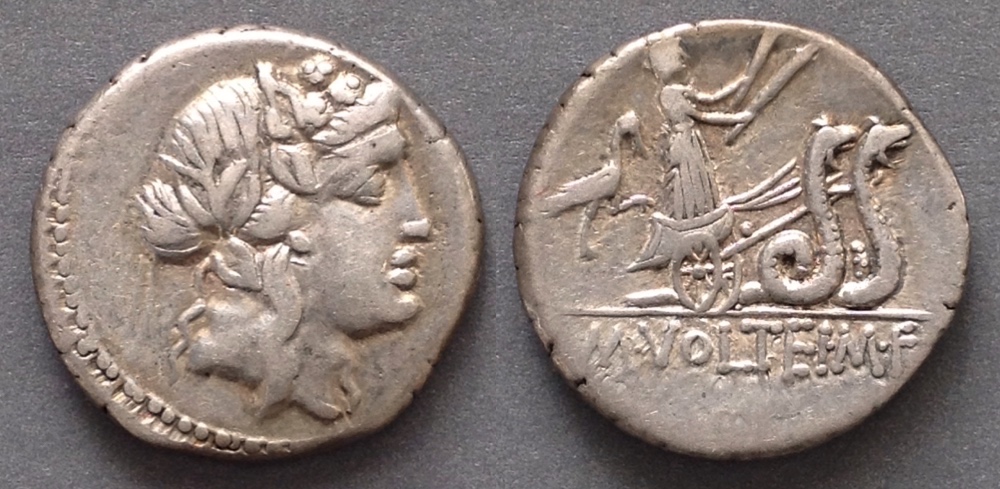
Snakes
Roman Republican denarius
78 BC.
Cr 385/3.  Sear 314
M. VOLTEIUS M. F.

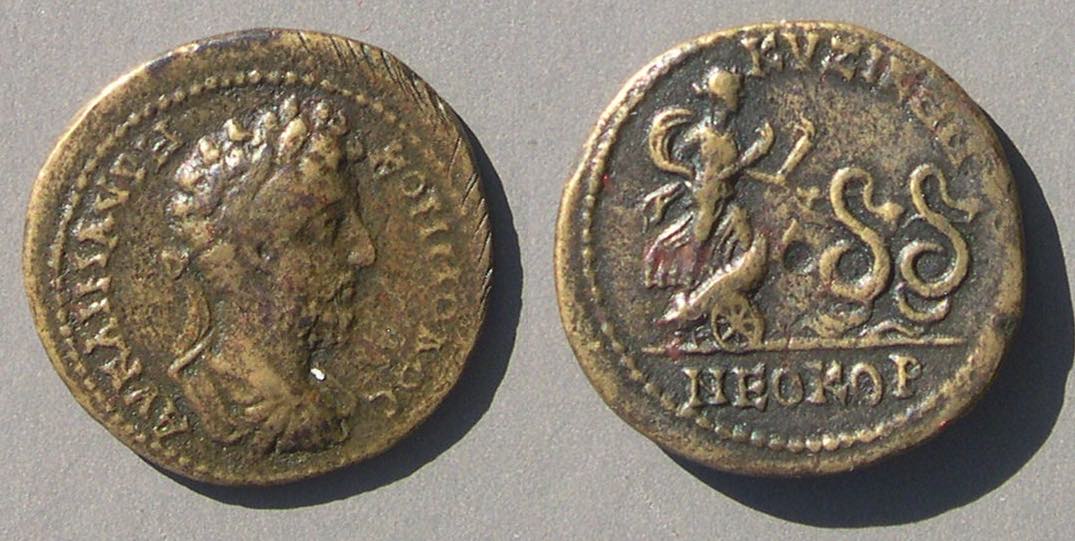
Snakes (serpents).

Snakes (serpents) on a Roman provincial coin from Cyzicus:
26 mm. 7.69 grams.
Commodus, emperor 180-193 AD.
Demeter standing in biga drawn by coiling serpents, right, holding torch in each hand

RPC online 4.2, Commodus, Cyzicus, temporary ID 2543.


Snakes are sometimes winged, as on a drachm of Alexandria, Egypt under Marcus Aurelius shown by @OrangeJulius on Numis Forums:
https://www.numisforums.com/topic/8919-a-biga-is-a-chariot-pulled-by-two-%E2%80%A6/#comment-118457

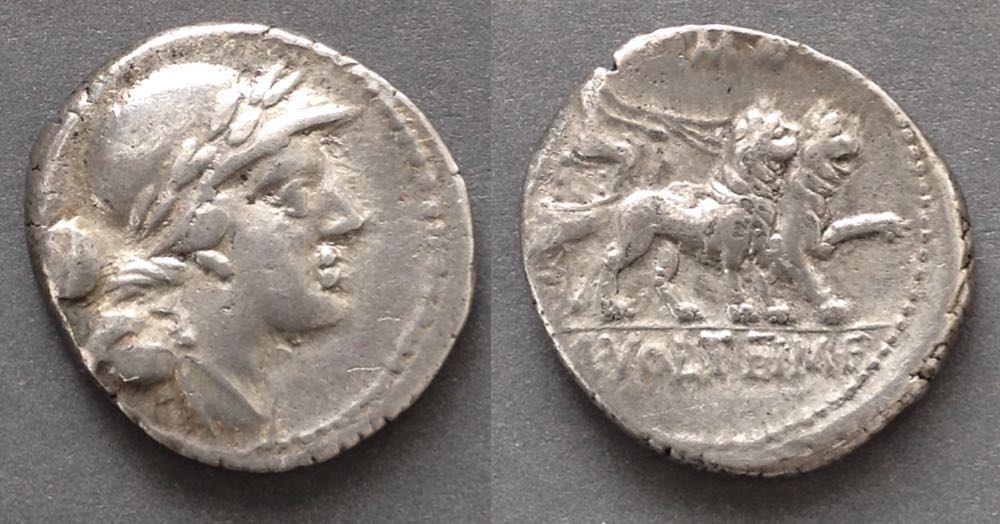
Lions

Lions
Roman Republican denarius
78 BC
Cr 385/4. Sear 315
M. VOLTEIUS


Panthers

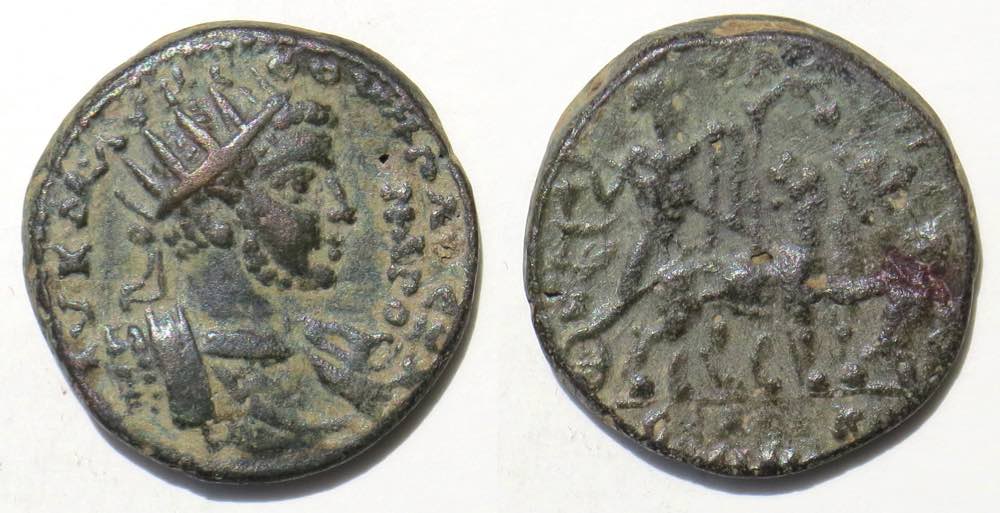
Panthers
on a a Roman provincial coin of Severus Alexander from Seleucia ad Calycadnum in Cilicia.
27 mm. 14.48 grams
Severus Alexander, 222-235 AD.
AVK M AVR C Є OVHP AΛЄΞANΔPOC  
Dionysos drives a biga with his animals, panthers.
CЄΛЄYKЄ  in exergue
Reverse of SNG France 2, Cilicie, 979. Not listed for Severus Alexander.


Another Roman provincial type with panthers was shown by @happy_collector in this thread on Numis Forums:
https://www.numisforums.com/topic/8919-a-biga-is-a-chariot-pulled-by-two-%E2%80%A6/#comment-118457

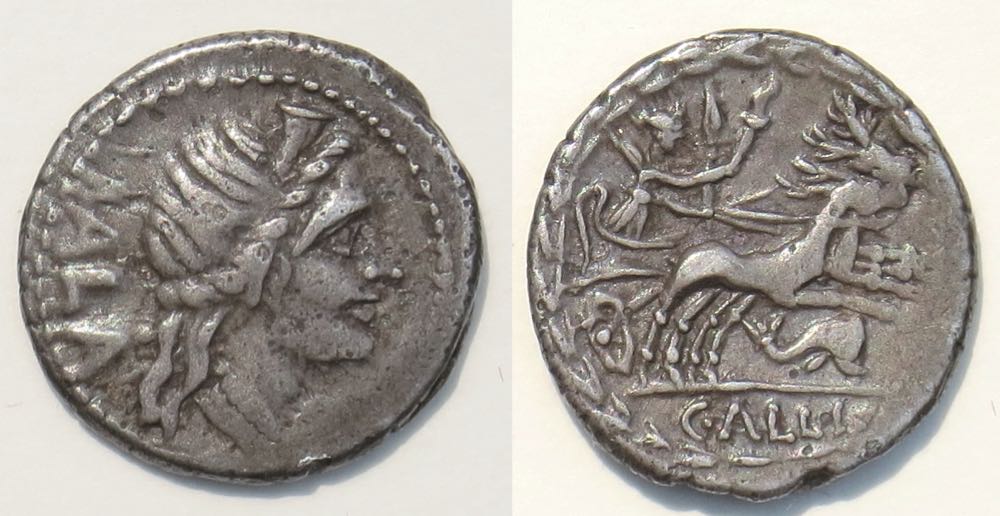
Stags

Stags
Roman Republican denarius
92 BC.
Cr 336/1.  Sear 221
C. ALLIUS BALA
Biga driven by Diana, dolphin below. 
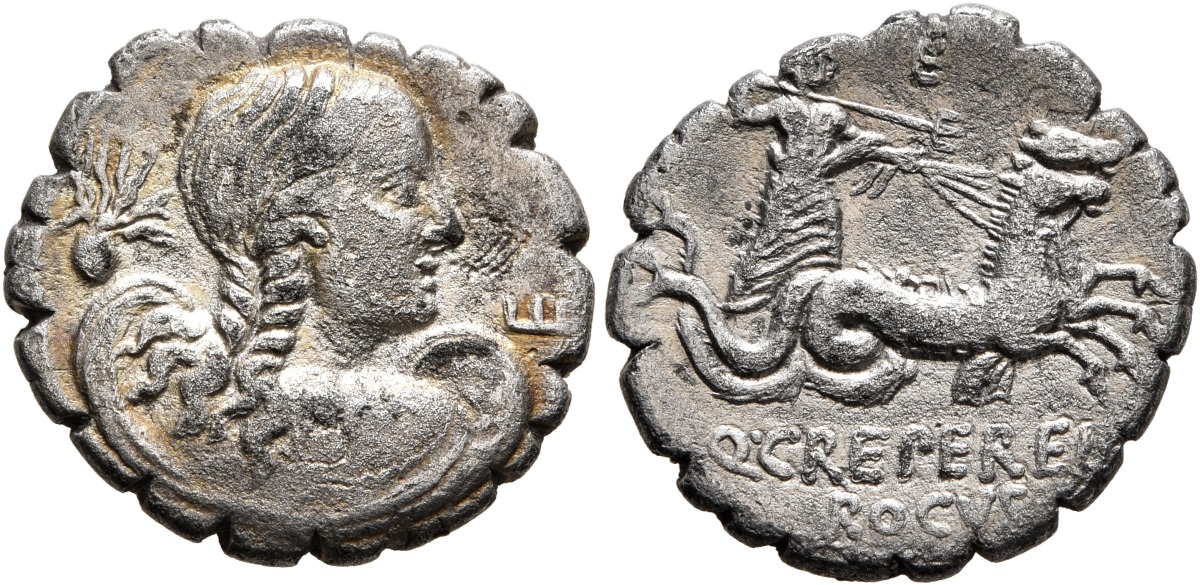


Hippocamps (aka seahorses)


Hippocamps (aka seahorses)
Roman Republican denarius
72 BC
Image courtesy of Leu Numismatics
Neptune with his trident driving a biga of hippocamps.
Cr 399/1a. Sear 335
Q. Cerpereius
 

Griffins  (very rare)
Here is a Roman provincial coin with a biga of griffins:
https://rpc.ashmus.ox.ac.uk/search/browse?volume_id=6&number=6211&city_id=&region_id=&province_id=&subprovince_id=&issue_id=&reign_id=&obverse_inscription_simplified=&reverse_inscription_simplified=&obverse_design=&reverse_design=&metal_id=&weight_min=&weight_max=&diameter_min=&diameter_max=&format=
Cleopatra VII has a rare AE 22 with a biga of griffins: RPC I 4501


Peacocks  (very rare) Another Roman provincial type with panthers was shown by @happy_collector in this thread on Numis Forums:
https://www.numisforums.com/topic/60-post-your-latest-ancient/page/140/#comment-154874 

"This one just came in the other night. It's a sestertius minted under Antoninus Pius from 138 AD to 161 AD in Cos. The obverse features a laureate head of Antoninus Pius, right "ΑΥ ΚΑΙΣ(ΑΡ) ΑΔΡΙ(ΑΝΟΣ) ΑΝΤΩΝΙΝΟΣ" (Emperor Caesar Hadrianus Antoninus). The reverse has Hera standing in a biga drawn by peacocks, holding a patera and a long sceptre, ΚΩΙΩΝ (of the Coans). I was extremely happy to add this to my collection at the price I got it at. A very unique and beautiful reverse design!"


Unmatched pair pulling the biga: A female panther and a satyr:
This very rare Roman medallion of Antoninums Pius was shown by @Realms in this thread on Numis Forums:
https://www.numisforums.com/topic/8919-a-biga-is-a-chariot-pulled-by-two-%E2%80%A6/#comment-118457

Later types, not ancient:  Napoleon has a medal celebrating the conquest of Egypt with a biga of camels. @Diogenes posted it in this thread (page 333) on Numis Formus. 
https://www.numisforums.com/topic/1124-anyone-up-for-a-game-of-coin-uno/page/333/#comment-162831
 

A list of Roman Republican denarii with bigae of horses with Victory driving:
Cr 200/1 of 155 BC, Sear 77, NAT
Cr 203/1a of 153 BC, Sear 82, C. MAIANUS
Cr 206/1 of 150 BC, Sear 85, SAFRA
Cr 261/1 of 128 BC, Sear 137, CN. DOMIT 
Cr 284/1 of 117/6 BC, Sear 160, M. CALIDIUS and Q. CAECILIUS
Cr 289/1 of 115 or 114 BC, Sear 166, M. CIPIUS
Cr 328/1 of 100 BC, Sear 207, P. SERVILIUS M. F. RULLUS
Cr 337/2c of 91 BC, Sear 223, D. JUNIUS L.F. SILANUS
Cr. 337/3 of 91 BC, Sear 225, D. JUNIUS L.F. SILANUS
Cr 344/3 of 89 BC, Sear 253, L. TITVRI L.F. SABINUS
Cr 345/1 of 89 BC, Sear 254, CN. LENTULUS CLODIANUS
Cr 352/1c of 85 BC, Sear 268, L. JULIUS BURSIO
Cr 366/4 of 82-81 BC, Sear 292, C. ANNIUS and C. TARQUITIUS
Cr 387/1 of 77 BC, Sera 318, L. RUTILIUS FLACCUS
 

Go back to the top of this page.

Go to the Table of Contents for this entire educational site.